
Need peaceful screen time negotiations?

Get your FREE GKIS Connected Family Screen Agreement

Messenger Kids

GDPR, Utah, Facebook, and Google: What Do They Have in Common?

It seems we may have FINALLY reached the tipping point for Internet safety. Governments are paying attention (GDPR), states are paying attention (Utah’s free-range parenting law), and Silicon Valley is paying attention (Google’s Family Link and Facebook’s Parents Portal). Guess why they’re paying attention! Because parents are demanding help. Parents now care, A LOT, about online privacy and preventing digital injury, and we are using our voices to make real change for our families. Today’s post is a quick summary of several things that have happened in the last few weeks that mean BIG THINGS are on the way to achieving screen safety for our kids.

General Data Protection Regulation (GDPR)

Today is GDPR’s implementation date. The new mutually agreed General Data Protection Regulation was adopted by the European Parliament and European Council on April, 2016 after four years of negotiation. The two-year preparation period allowed businesses and public bodies opportunities to prepare for the changes. These new data protection laws were developed to replace the 1995 data protection directive with the objective to “harmonise” data privacy laws and give greater protection and rights to individuals.

After the slew of massive data breaches in the past six months with giants like Yahoo, MySpace, and LinkedIn, we at GetKidsInternetSafe believe this is a very positive move toward customer awareness and overall privacy protection. Under GDPR, the “destruction, loss, alteration, unauthorised disclosure of, or access to” personal data has to be reported to the country’s data protection regulator. Also, companies and organizations who collect customer data are required to document and inform customers about the details behind their data collection practices and systematically monitor processing. For some companies, this may mean hiring a data protection officer (DPO) and obtain consent in some situations. Noncompliance could result in fines. GDPR also gives customers more accessibility to the data collected about them and information about how it’s processed and what it’s used for.

What does this mean for American companies? For most, it means they’re scrambling to get compliant with GDPR. Giants like Facebook and Google have released statements committing to GDPR compliance, while others have gone dark as they block European customers from their sites until they’re confident with their compliance to avoid steep fines.

Utah’s Free-Range Kids

May 8thUtah Governor Gary Herbert signed bill SB65 that allows kids to have some independence from their helicopter parents to earn independent problem-solving skills. Controversial for certain, I commend Utah for taking a stand supporting kids to branch out and walk to school, hang out at the neighborhood park, and wait in the car while mom or dad runs errands. I like the idea of parents making decisions for their kids without fearing law enforcement sanctions. Obviously, safety must be considered, but our kids long for a chance to spend time running and biking outdoors. Let’s give it to them!

Facebook’s Messenger Kids, Youth Portal, and Parents Portal

Facebook has been on the well-deserved hot seat lately. But I also want to commend them for reaching out to the child development expert community for partnership in the development of their Messenger Kids messaging app. Even some of us on their Youth Advisory Council were openly and outspokenly suspect of the potential risks of this child product, yet they are correct in saying that kids are on their parent’s social media platforms and messaging sites already. By developing a platform with kids in mind, they have implemented much-needed parent controls and socioemotional and educational features that enrich development and connection. Their new Parents Portal and Youth Portal promises to provide much-needed information that can help many of us get back on track with safety measures.

It’s a work in process, with testing and tweaks. But now that the bridges have been built, I believe Facebook may open their doors to all types of facilitation for connection. I love that corporate is cooperating with the academic and clinical communities in support of kids and families. I, for one, will continue to be a fierce advocate for family connection and safety and welcome collaborative, creative opportunities.

Google’s Family Link and Apple’s Families Web Page

Google’s Family Link and Apple’s Families Web Page are also newly live. Although there are improvements to be made, the focus is shifting to the potential for digital injury with kids and how to prevent it. That is what I’ve been clamoring for many years now. Good news!

With all the expert portals up, parents are getting the information they need to set controls. However, I also think the main issue is getting missed. It’s not only a corporate issue, or government issue, parent issue, or a kid issue … it’s a family issue. We’ve been helicoptering away to keep our kids safe and too many of us have lost the fun in being a family. It’s possible to limit for safety, be on screens, and be close as a family. That’s what GetKidsInternetSafe is all about.

Thanks for spreading GKIS info to friends and family. Have an awesome Memorial Day Weekend! Mine starts right now!

I’m the mom psychologist who will help you GetKidsInternetSafe.

Onward to More Awesome Parenting,

Tracy S. Bennett, Ph.D.
Mom, Clinical Psychologist, CSUCI Adjunct Faculty
GetKidsInternetSafe.com

Photo Credits

Photo by rawpixel on Unsplash

Screen Impact on Empathy

The Internet can bring out the worst in people. Some say millennials have empathy deficits due to screen communications replacing face-to-face experiences. If that’s the case, what about the younger iGen’s who were born with screens in their hands? Are they doomed? Are we destined to turn into robots with poor empathy skills? Today’s article tells us what empathy is, how it’s learned, and how screen use is impacting its development.

What is empathy?

Empathy is the capacity to understand and share another person’s perspective and emotions. It is the sadness you feel when someone you love is in pain or the joy of watching new parents hold their baby for the first time. Empathy is at the heart of human connection and is key to preventing cruel actions against others.

How do we learn it?

Kids learn empathy by watching their parents. We are prewired to learn it with specialized learning cells in the brain, called mirror neurons. Mirror neurons are part of a motor neuron that allows us to move facial muscles when expressing emotions. In Dr. Bennett’s book, Screen Time in the Mean Time: A Parent Guide to Get Kids and Teens Internet Safe, she says:

Our biology sets us up for success. In the 1980s, Giacomo Rizzolatti and his team of Italian researchers discovered that when macaque monkeys observed the behavior of other monkeys, the same neurons in their brains fired as if they themselves were performing the behavior (Pellegrino, 1992). In other words, the monkeys had specialized brain cells (called mirror neurons) ready to fire by observational learning. They learn and get practice by watching as well as doing.

Researchers now have evidence of similar mirror neurons in humans younger than twelve months old and hypothesize that mirror neurons are not only key in learning specific chains of motor behaviors but may also be what’s behind complex emotional learning like empathy and attachment (Falck, 2006). This genetic advantage means we are neurologically prewired to understand the intentions of others and unconsciously respond (Rizzolatti, 2006). We not only recognize logically what others are doing and feeling, but we also experience it with them. We are prewired to mimic, learn, and connect with each other.

Other factors necessary for the learning of empathy include:

  • the brain chemical oxytocin that sets us up to bond,
  • physical contact and nurture between parent and child,
  • parent-child fit,
  • warmth,
  • consistency, and
  • gently guiding communication.

Kids learn empathy better when it is modeled rather than when it is taught in the classroom.[2] They learn by interacting and watching how their parents respond to the cashier at a retail store or the server at a restaurant.

Empathy is also learned from how parents treat their children. If a parent is kind to their child, then the child will learn to be kind. Skilled caregivers reinforce empathic behavior when they provide an ongoing narrative about activities, validate emotion (confirm that they see and understand the child’s emotion), and praise children for prosocial behaviors like sharing and helping. The more practice and positive feedback kids get, the stronger their empathy skills. Of course, some kids are born with a natural talent to develop empathy based on genetics and personality. But with practice, all kids become less and less egocentric and more and more people-centered.

The Importance of Empathy

Teaching empathy is important because empathy helps us build relationships and adapt to stressful situations and setbacks. Doing a job well not only requires technical skills, but it requires empathy also.

In the professional sphere, empathy helps with negotiations, teamwork, interviews, and customer service.

On the playground, empathic children are good at making friends, keeping friends, and making others feel welcomed and cared for. They make the playground a safer place.

How Screen Time Interferes with Child Empathy

With all of us distracted by the cheaper version of connection from screen time, we are getting less practice with true empathy. Some experts believe that the rate at which young people and children express empathy has declined by as much as 25% in the past 10 years. [3]

Another way screen use interferes with empathy is by encouraging self-centeredness. Social media is believed to promote the obsession with self by allowing the user to edit and correct their image to the point of false perfection.[3] With the “perfect” virtual self to live up to, our nonvirtual selves often fall short of expectations. This can cause us to avoid real-life interactions and prefer screen interactions. We are more “connected” than ever with more and more people, yet we are getting more lonely, anxious, and depressed.

Ways Parents Can Promote Child Empathy

Narrate everyday activities while your kids watch and participate.

Make sure you include “feeling” words and challenge the child to imagine how other people might be feeling. For example, “Ooh this dinner is going to be good! It makes me happy to imagine the smiles on everybody’s faces when they take their first bite!”

Take the time to truly engage with eye contact, hugs, kisses, and tickles. Quiet snuggles count too.

Be sensitive to your child’s needs and let them know you “see” what they’re feeling. For example, “Oh honey, I can see you are getting tired and need a little break because you are frowning and rubbing your eyes. Let’s relax now and read a story.”

Set your child up for success by setting up a variety of playdates with all different ages of kids and adults.

Kids learn empathy by being nurtured, but also by nurturing themselves. Taking care of younger kids and following the instruction of older mentors offers various nuances for socioemotional skill-building.

Monkey see, monkey do.

Keep in mind that your behavior will be scrutinized and mimicked every second. Stay in the present, and practice a well-balanced online and offline activity diet.

Teach your children to “love and protect.”

Teaching your children to nurture animals and younger children is a great practice of empathy. Community service is also an awesome way to bring the family closer and teach kids philanthropy and gratitude.

Opt for interactive screen activities over passive screen time.

Thank you to CSUCI intern Elena Vachon for helping with the research for this article. Wondering how to optimize intellectual development along with socio-emotional development? Check out the article, GKIS Quick Tips for Intellectual Enrichment Through Screen Media for Preschool Age Children.

I’m the mom psychologist who will help you GetKidsInternetSafe.

Onward to More Awesome Parenting,

Tracy S. Bennett, Ph.D.
Mom, Clinical Psychologist, CSUCI Adjunct Faculty
GetKidsInternetSafe.com

Works Cited

[1] Bennett, T. (2017). Screen Time in the Mean Time: A Parent Guide to Get Kids and Teens Internet Safe.

[2] Upright, R. L. (2002). To Tell a Tale: The Use of Moral Dilemmas to Increase Empathy in the Elementary School Child. Early Childhood Education Journal, 30(1), 15-20.

[3] Bonnette, R. (2014). Rethinking Technology’s Impact on Empathy. Loyola University Chicago, School of Law.https://www.luc.edu/media/lucedu/law/centers/childlaw/childed/pdfs/2014studentpapers/Bonnette.pdf.

Falck-Ytter, T., Gredebäck, G. & Von Hofsten, C. (2006). “Infants Predict Other People’s Action Goals.” Nature Neuroscience Nat Neurosci9.7: 878-79. Web.How Parents Can Cultivate Empathy in Children, https://mcc.gse.harvard.edu/files/gse-mcc/files/empathy.pdf

Pellegrino, G., Di, L., Fadiga, L., Fogassi, V., Gallese, & Rizzolatti, G., (1992). “Understanding Motor Events: A Neurophysiological Study.” Exp Brain Res Experimental Brain Research91.1: 176-80. Web.Uhls, Y. T., et al. Five days at outdoor education camp without screens improves preteen skills with nonverbal emotion cues. Computers in Human Behavior (2014), http://dx.doi.org/10.1016/j.chb.2014.05.036

Rizzolatti, G., Fogassi, L., & Gallese, V. “Mirrors in the Mind.” Scientific American295(5) (2006): 54-61 SPECIAL SECTION: NEUROSCIENCE

Photo Credits

Human-Computer Interaction 96/365, Sashanovikova https://flic.kr/p/dpWva7

Photo by rawpixel.com on Unsplash

Photo by Juan Pablo Rodriguez on Unsplash

Is Facebook Messenger Kids Harmless Fun or a Gateway Drug for Compulsive Social Media Use?

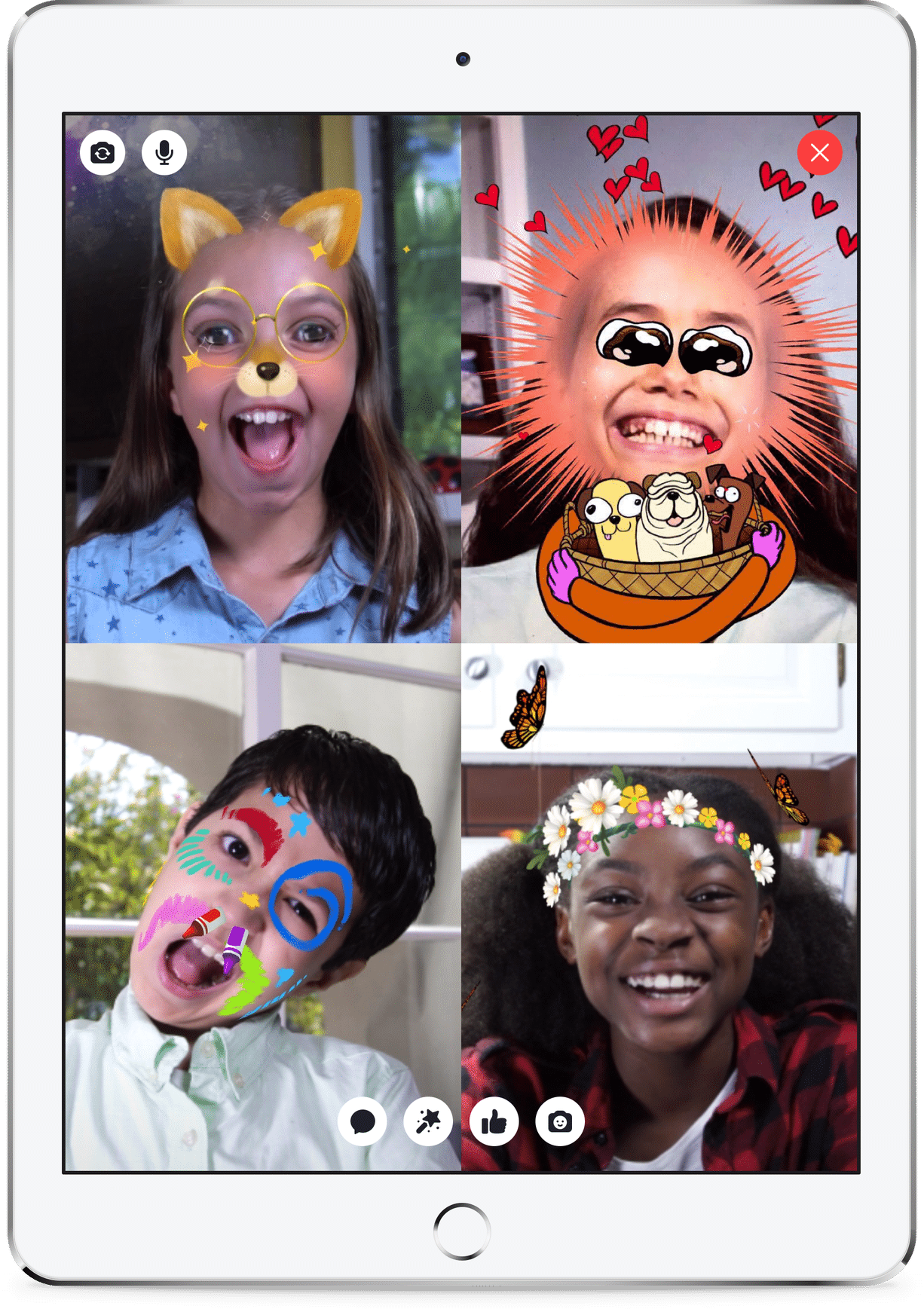
Facebook recently launched Messenger Kids, a free, stand-alone video chat and messaging app for children ages 6 to 12 to “connect with people they love but also has the level of control parents want.” Designed with kid preferences in mind, this app aims to please with one-to-one and group video chat or text thread, fun filters, masks, stickers and GIFs. Facebook says they have integrated features with the consult of a 100-member team with child safety and privacy in mind. Although I welcome the integration of kid-friendly features (finally!) that doesn’t sell to kids or collect information for marketing, introducing young children to a screen activity may be distracting at the least and addictive at the worst. Having participated with a team of experts talking about Messenger Kids, I believe Facebook has developed a much-needed product that can be very positive when used optimally with parent guidance.

Why now?

Historically, kids have been restricted from social media app membership without parental consent because of The Children’s Online Privacy Act (COPPA, 1998). This federal law imposes certain requirements on operators of websites or online services, like not collecting data from or advertising to children under thirteen years of age. Facebook is compliant with COPPA in that Messenger Kids won’t show ads, offer in-app purchases, or collect data for marketing. Also, in order to adopt the app, kids must have parent permission as an extension of the parent’s Facebook profile. Other safety features include parent control over their child’s contact list, child inability to delete messages, and an option to block users and report inappropriate content with parent notification. Kids can be found through Facebook search and parents must ask permission to see kid content to avoid spying. Facebook also says they won’t automatically upgrade users to an adult account when the child reaches 13 years old.

What are the privacy risks?

In response to privacy and security concerns, Democratic Sens. Ed Markey and Richard Blumenthal asked Facebook to specify what data is collected and what they’re planning to do with it, if information about child device location is being collected and stored, and whether Messenger Kids will be walled off from the Internet. Facebook has said collected information will only be used for infrastructure purposes to improve the app.

What are the behavioral risks?

As a clinical psychologist and screen safety expert, I am pleased that Facebook has delivered a product with child safety in mind. After all, surveys reveal that most kids are using apps before age thirteen that don’t have safety features. Messenger Kids offers families an option without the same risk profile as Instagram, Snapchat, Twitter, or KIK. However, there are still some risks to consider before allowing your child to adopt Messenger Kids.

First, we are all well aware of the compulsive nature of social media use. According to Apple, we check our iPhones an average of 80 times a day, 30,000 times a year.[i] Nearly 60% of parents think their teens are addicted to their mobile devices.[ii] With features specifically designed to keep people using, social media can lead to addictive use patterns that distract us from healthier activities and nonvirtual relationships. The younger the brain, the higher the vulnerability to habit formation and brain wiring changes. I’m not entirely satisfied with the argument that without this, kids are going to use less safe social media anyway. It’s kind of like letting your teen drink at your house since they’re going to do it anyway…Maybe the answer is don’t let them drink in the first place.

Do we really want children as young as six years old to have that kind of opportunity?

After all, child screen use is so new we have no idea what kind of long-term impact these kind of use patterns will have. Behavioral conditioning is an intentionally embedded component of  Silicon Valley tech products to increase profits. I believe the old adage, “If you can’t see the product, you are the product” may apply here. Furthermore, just because parents can monitor child behavior doesn’t mean kids won’t impulsively offer or view inappropriate or embarrassing information that can lead to shame and cyberbullying. The younger the child, the higher the risk. As a parent, are you ready for your child to adopt the “training wheels” for social media independence?

On the other hand, we must keep in mind that Messenger Kids is a messaging app, not a social media app. Parents have full monitoring control and must approve the contact list. This app is a fun way for kids to connect to other kids and family members, with playful adjunct features like masks and stickers. Facebook has said that this is not a product designed to profit off of children. Instead, Facebook believes it is good business to build products that people love to use.

Things I learned when Facebook asked me to participate in a working session with child and technology experts:

I believe that the best outcomes are reached through collaboration from people of all different viewpoints. As a result, I was very pleased to accept the invitation of Facebook to participate in a discussion with a panel of experts. I believe that being a part of the solution means getting in there and working with industry, academia, and with front-line teachers and practitioners. Obviously, I am under the restrictions that are typical of nondisclosure agreements when one works with a company about a product. However, it is appropriate to share my impressions having interacted with Antigone Davis, Head of Global Safety for Facebook, and the Facebook employees who have developed and continue to work on Messenger Kids.

I am somewhat unique in that I have lots of day jobs, all relating to psychology and families. I have had a private practice for over 23 years working with kids, teens, and adults. I teach addiction studies, parenting, and clinical psychology at CSUCI and supervise interns writing from a screen-media research perspective, and I’m founder of GetKidsInternetSafe, my love project. I’m fond of saying that I’m the MacGyver of psychology in that I take the theories and research findings from academia and apply them to real people in my practice, adjusting and tweaking as I go. From this perspective, I have a lot of opinions about the benefits and risks of screen activities to the American family.

Having interacted with the impressive panel of experts Facebook invited to the Facebook Global Safety Summit, I came away with the feeling that Facebook is being thoughtful and open about their child products. They are conducting their own research, generously open to feedback, and clearly dedicated to an ongoing dialogue about what families want and need. Let’s face it, they are experts with what they do and have enormous reach. I believe they have the potential to provide positive child and family service, and they’re taking that role seriously. As the company has matured, they seem to realize that they have a precious social responsibility to their customers and were very enthusiastic to hear from those of us who have dedicated our careers to child and family advocacy. I’m feeling pretty good about Messenger Kids, yet believe that kids and parents still need more education and support to best implement this fun communication tool while optimizing learning and connection on screen and off screen.

What should you keep in mind if you want to try out Messenger Kids for interactive digital play?

  • Stay engaged during the on-boarding process and visit the Messenger Kids FAQ page.

  • Recognize that this app was not designed for education, but rather as an alternative to adult social media apps that kids were already using. Not only must parents create a Facebook profile for Messenger Kids setup (another customer?), but Facebook branding has just been launched in your child’s tender consciousness. Ready, set, go!

  • Start a teaching dialogue about privacy, marketing, and balance. Familiarize your kids with the rules at a developmentally optimal level for their age and understanding.

  • Adopt the GKIS Living Agreement digital contract found in my book, Screen Time in the Mean Time: A Parent Guide to Get Kids and Teens Internet Safe.

  • Once on-boarded, your child has launched a dynamic digital footprint within the walled garden of their contact list. This may be their first introduction to digital messaging. Exciting yes, but supervision and building teaching opportunities are important for positive outcome.

  • Set up a creativity kit next to the computer with play props, dress up clothes, art materials, and toys. When you are having a conversation on Messenger Kids, encourage your child to act out a fun, creative activity like pretending to prepare and serve you lunch, writing a poem and presenting it, or choreographing a dance. Augmenting virtual reality with fun nonvirtual reality keep kids engaged with a balanced life of two-dimensional and three-dimensional play. Building relationships and play are still critical learning opportunities for the developing brain.

  • Watch to make sure your child doesn’t exhibits behaviors suggestive of compulsive use or addictive patterns.

  • Encourage your child to attend to the other person’s words, facial expressions, and feelings while chatting. Recognize that fun animations may be distracting, so they need your prompts and teaching narrative to learn social skills and digital citizenship.

  • Most importantly, offer an enriching balance of virtual with nonvirtual activities, a key to healthy development.

For additional information about another popular child app, check out The GKIS Sensible Parent’s Guide to Musical.ly.

I’m the mom psychologist who will help you GetKidsInternetSafe.

Onward to More Awesome Parenting,
Tracy S. Bennett, Ph.D.
Mom, Clinical Psychologist, CSUCI Adjunct Faculty
GetKidsInternetSafe.com

Works Cited

[i] Bajarin, B. (2016). “Apple’s Penchant for Consumer Security.” Tech.pinions, 18 Apr. 2016, techpinions.com/apples-penchant-for-consumer-security/45122.

[ii] Common Sense (2015). The Common Sense Census: Media Use by Teens & Tweens. www.commonsensemedia.org/sites/default/files/uploads/research/census_executivesummary.pdf

Photo Credits

Facebook