Imagine discovering that the “innocent” cartoon emoji pinging on your teen’s phone is not harmless fun, but instead a secret drug deal? To help you recognize dangerous dealings, I interviewed a recovering addict whose parents had no idea what he was up to until it was too late. With our Screen Safety Toolkit, you can get a head start with screen safety and prevention. The Screen Safety Toolkit is a resource guide that includes our best recommendations, how-to information, and easy links to our favorite easy-to-onboard parental control systems. Today’s GKIS article shares the true story of a young addict’s emoji workarounds, how to spot dangerous online dealings, and offers great tips to maintain your children’s safety when interacting online.
What are emojis?
Emojis are small digital icons that are readily available on screen devices. Emojis range from facial expressions to common objects, places, animals, and more. According to a report from the emotional marketing platform Emogi, about 92% of online users use emojis.[1,2]
The Pros and Cons of Emoji use
Pros
Emojis add fun and excitement to conversations and social media posts- help convey emotions in online chats. They are particularly helpful because of the lack of nonverbal cues online, such as body language or facial expressions. For example, testing “sure.” suggests annoyance, while “sure 😊” suggests happy agreement.[3]
Cons
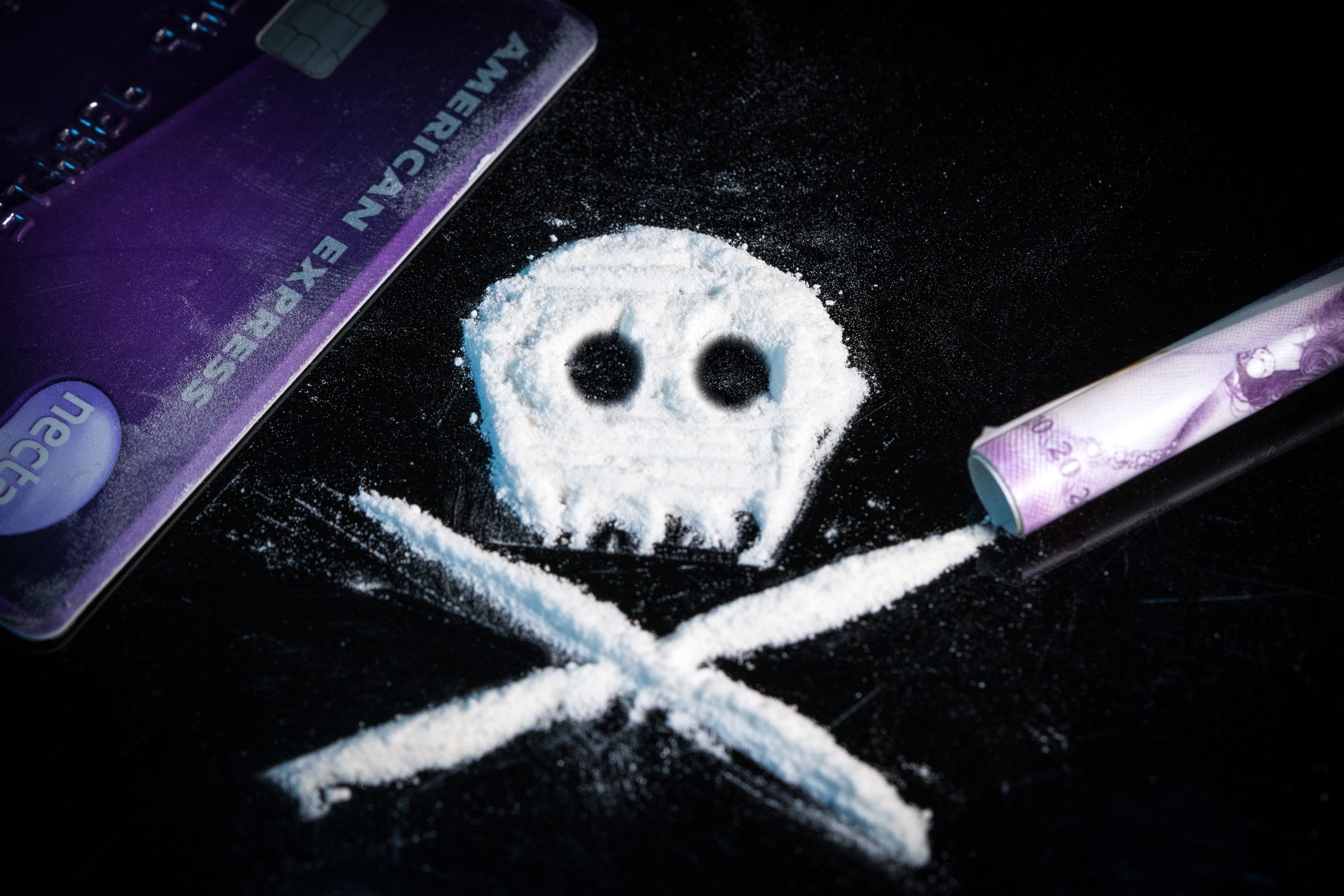
Although emojis were originally intended to represent simple concepts, teenagers also use these symbols for encrypted messages about drugs and other illicit activities. Encrypted emoji messages enable life-threatening drugs to reach communities faster, easier, and cheaper.
At a glance, a conversation on your child’s phone may appear to be about being at the gas station but instead is about buying marijuana laced with fentanyl, a synthetic opioid that is 80-100 times stronger than morphine.[4,5,7,8]
How to Tell if Emojis are Indicative of Illicit Drug Use
According to the Drug Enforcement Agency (DEA), the use of emojis alone should not be indicative of illegal activity. Concerns should be raised if the use of emojis is simultaneously accompanied by changes in behavior or appearance or a significant loss or increase in income. The DEA has even published drug decoding sheets for the public’s awareness.[4,6]
A Young Addicts Story
To better understand the workarounds of encrypted messaging, I interviewed a recovering addict. He reported that when he first started his drug use, he would use specific social media platforms to help keep his drug addiction a secret from family and friends.
Here are the tips he revealed:
Snapchat
The DEA reports that Snapchat is the number one social media platform for online drug activity, and my contact confirms that he and his dealers used it too. He explained that Snapchat is an application where people can keep conversations hidden. Snapchat has specific settings that allow users to quickly view pictures, videos, or messages that will disappear after viewing.
Privacy settings on Snapchat also allow users to ensure that only specific people can view what they refer to as “stories.” The young addict remembers his drug dealers adding him as a friend on Snapchat. From there he would track emoji-coded advertisements on their “stories” that revealed which drugs were available for sale.[6]
Venmo
Venmo was another platform that was used by the young addict. Venmo is an application that allows money transfers between users. LendEDU revealed that nearly 1/3 of their survey participants admitted to using this app to pay for drugs.
My interviewee admitted that this was not initially the way he paid for his drug transactions. Instead, before gaining the trust of his drug dealers, they’d come to his home to drop off the drugs and receive payment in only cash after sending an emoji encrypted text that they were outside. His mother reports being very scared to find out that her son’s drug dealers knew where their family lived, which made her reluctant to report the drug dealer to law enforcement officials despite figuring out his identity.[9]
Encoded Texts
The mother I interviewed confirmed that encrypted text messages are a useful way to suppress adult suspicion. She explained that, if it were not for other indicative factors like his drastic weight loss, mood swings, and incomes loss she would have never expected phrases such as, “Do you have kitty cat?” to be an encrypted message referring to the drug ketamine. She remembers seeing other emoji codes and “cute names” for drugs, but not giving them much attention initially. She said she was overwhelmed trying to research on how to stop dangerous online conversations and seek the help he needed.
If you worry things are getting by you, let go of the guilt and let us do the research for you! Researching digital safety tools is overwhelming! But lucky for you, we’ve made it easy. Our GKIS Screen Safety Toolkit is a resource guide perfect for those that need smart tech tools for filtering, monitoring, and management plus some time to find workarounds.
Dr. Bennett recognizes that it’s no longer possible to live a screen-free lifestyle or monitor 100% of the time. And it can be terrifying to know that kids can become victims of online predators and drug dealers. Our family-tested and outcome-based course helps you close screen risk gaps and improve family cooperation and closeness. Check it out to minimize risks and have easier dialogues for better parent-child relationships.
Teen curiosity online can be dangerous and teens don’t always make sound decisions due to lack of experience and poor impulse control. Our GKIS Social Media Readiness Course allows teens an opportunity to start taking accountability for their actions online and become proactive instead of reactive.
The story of the young addict demonstrates how parents can easily miss indications of digital injury and serious problems. Teenagers are becoming more innovative on how to keep their parents in the dark, such as emoji encrypted messages. With our GKIS Online Safety Red Flags For Parents, parents will learn what behavioral red flags they should be on the lookout for that may signal that a child is suffering from a digital injury.
Thanks to CSUCI intern Ashley Salazar for researching and co-authoring this article. If you suspect your loved one is struggling with substance abuse, please reach out for help. Contact your health insurance carrier or call SAMHSA’s National helpline for more resources and advice.
I’m the mom psychologist who will help you GetKidsInternetSafe.
The United States is in an opioid crisis. No longer are illegal drugs like heroin, or its synthetic, more powerful cousin Fentanyl, only used by inner city addicts and rock stars like Michael Jackson and Tom Petty. Thanks to chronic pain and an overuse of prescription painkillers, Americans from all walks of life are addicted and turning to cheaper and illegal options on the street and online. After two thirteen-year-olds overdosed on fentanyl recently in Utah, the US sought its first indictment of Chinese drug traffickers.
The Opioid Crisis in Perspective
Highly addictive opioids include legally-available prescription pain medicine like Percoset and Oxycontin, as well as the more powerful, illegal drugs heroin and fentanyl. Opioids impact the brain stem, which regulates life-supportive functions like heart rate and breathing. There is little difference between the amount of the drug necessary to get high and the amount that results in overdose. As a result, overdose is common and results from gradual asphyxiation due to suppression of breathing. There has been a seven-fold increase in US overdose from opioids since 1999. In 2014, there were 30,000 opioid related deaths in America. By 2015 that number had increased to 55,000, rising to a staggering 64,000 in 2016. This is almost eight times more American deaths than the post-9/11 wars in Iraq and Afghanistan.
What is fentanyl?
Fentanyl is an extremely powerful opioid that was responsible for the death of Prince and, more recently, Tom Petty. It is far more addictive than heroin. It induces euphoria and relaxation by affecting the areas of the brain that regulate emotions and pain. Up to 100 times stronger than morphine and 50 times stronger than heroin, just coming into skin contact can result in overdose. It can be taken as a tablet, lozenge, lollipop, transdermal patch, nasal spray, powder that can be smoked, or injected. Although available by prescription, fentanyl is also being made in illegal labs in Mexico. Raw materials are commonly smuggled in from China.
Fentanyl is commonly diluted with other substances like heroin, rat poison, or baking soda for increased profit, thus purity varies from batch to batch. Fentanyl has experienced a growing popularity among heroin users who crave more purity. Only two milligrams of fentanyl (the size of four grains of salt) is enough to kill an average adult.
What is online drug trafficking?
People not only buy drugs on the street, they also buy it on the dark net. The dark net is a hidden underground network where sellers and buyers can evade law enforcement with anonymity and clever encryption. They pay with digital currency, called bitcoin, and the drugs are delivered in their mailbox.
There are currently over 20,000 listings for opioids and more than 4,000 for fentanyl being sold on just one of the leading dark net drug markets.
From 2004 – 2010, emergency room visits resulting from prescription opioid abuse in children younger than 20 years old rose by 45%.
In 2015, 55% of people who died from an overdose of fentanyl additionally tested positive for heroin or cocaine, compared to 42% between 2013 and 2014.
A supervised injection site in Canada found that 90% of the heroin used there tested positive for fentanyl. Drug users have become more tolerant to stronger substances, reinforcing demand and raising death rates.
Two Utah Teens Overdose
Grant Seaver and Ryan Ainsworth were 13-year-old best friends from Park City, Utah. They overdosed after older local teens ordered fentanyl from the Internet, also called U-47700, “pink,” or “pinky.” Investigators uncovered conversations about the drug through their social media accounts.
Grant’s father spoke out after the devastating incident saying, “It’s unimaginable that Grant could gain access to a drug like Pinky so easily and be gone so quickly, poof. The pain and brutality of this tragedy is crippling.” A 15-year-old teenager from their community has been identified and charged with distribution of a controlled substance and reckless endangerment in connection with the deaths of Grant and Ryan.
Chinese Drug Traffickers Charged with Criminal Indictments
In a precedent-setting move, the U.S. Justice Department held a press conference stating that two major Chinese drug traffickers have been identified and are up for indictment. The two men identified are Xiabing Yan, 40 and Jian Zhang, 38. Tracing the whereabouts and identifying men like Yan and Zhang is challenging because, like most online drug traffickers, they use multiple identities to conceal their activities, shipments, and profits. They take advantage of the fact that the fentanyl molecule can be distorted in a multitude of ways to create an analogue that is not listed as illegal under US and Chinese law. When regulators are able to identify the new drug and illegalize it, the manufacturers swiftly switch to a new unlisted fentanyl analogue.
The U.S. and China have no formal extradition treaty, thus getting the men here is difficult. Yan was previously charged in a Mississippi federal court with producing and selling illicit substances. The case was brought about by a routine traffic stop, which resulted in the unearthing of a “domestic drug ring that sold various synthetic cannabinoids, called “spice” or “bath salts.” According to Rosenstein, federal authorities “identified more than 100 distributors of synthetic opioids involved with Yan’s manufacturing and distribution networks.”
What You Can Do to Protect Your Kids from Online Drug Sales:
Educate: There are many educational programs such as Teen Challenge of California that provide youth with knowledge and skills to help them avoid drug misuse and abuse. Research what programs are available in your area and get your teen Volunteer opportunities can be a great addition to college or job applications.
Talk to your children about drugs: Teens who have talked to their parents about drug abuse are half as likely to abuse them as those who do not. Make sure they understand that prescription drugs are not considered safer than any other drug. Be accurate about benefits and dangers. Discuss reasons people choose or are tempted to abuse drugs and offer healthy alternatives.
Get specific about fentanyl: Do not leave out the details, be specific about the drug fentanyl and its associated risks. Let them know that it’s being sold as counterfeit OxyContin, Xanax, and other prescription drugs.
Set a good example: If you’re using prescription drugs, do so responsibly and explain the purpose for your prescription(s), as well as the risks.
Don’t keep your prescriptions easily accessible:
Be proactive: Ask your children questions. Know who their friends are, where your child is going, and what kind of activities they are participating in. Ask specifics like, if they have ever been around any drug use. Show sincere interest without being judgmental or overly protective.
Keep your teen active: Facilitate hobbies and extracurricular activities for your child that interests them and keeps them engaged.
Get them treatment sooner than later if needed & have all member of your family participate in the process.
Our hearts ache for the families of the victims. Dr. Bennett attended Tom Petty’s last concert and is still heartbroken over his death. We need to do better!
Thank you to CSUCI Intern, Katherine Bryan for informing parents about online drug trafficking and the threat it poses to young people. For those who are not familiar with the dark net or the underground drug trafficking site called the Silk Road, please read our previous article, GKIS Sheds Light on the Dark Net: Drug Traffickers, Child Pornographers and Nude Selfies.
I’m the mom psychologist who will help you GetKidsInternetSafe.