Imagine having a personal assistant on your wrist to help you respond to messages, make calls, and track all types of fitness data. The newest wearable technology, like smartwatches, can do all of that and more. Wearable technology is advancing so rapidly that we are consumed by it. But being consumed can have its downsides for some people. Is wearable negatively affecting your health or helping your productivity?
What is wearable technology?
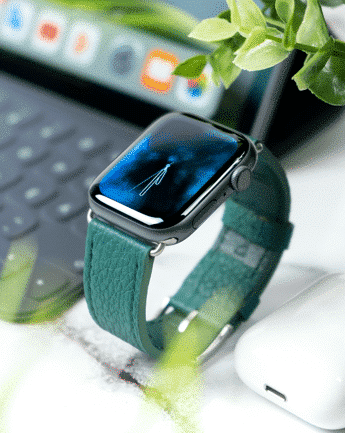
Wearable technology has been around for decades. In the 1970s, the calculator wristwatch and the Sony Walkman were launched. In the 1980s, the first digital hearing aids came on the market. In current times, major advances have been made in the wearable technology. From Bluetooth headphones to activity trackers to the Apple Watch to Snapchat Spectacles, wearable tech is wildly popular and keeps growing[1]
One of the most popular forms of wearable technology is fitness trackers. Fitbit is one of the leading contributors to the wearable technology industry. In 2018 alone, the company sold over fourteen million activity trackers. Currently, Fitbit has several different devices on the market including a weight scale that graphs your week’s weight, wireless headphones, watch activity trackers, and even activity trackers designed specifically for children.[2]
We at GKIS believe in smart screen use. To that end, we offer smart courses, like our Connected Family Course and our Screen Safety Toolkit, to help families dial in on the sweet spot of fun learning with a reasonable balance between virtual and screen-free activities. We recognize that screen technology can be a benefit in communication, learning, storage, and efficiency. It can be entertaining, helpful, and motivating. That is why we don’t encourage screen-free parenting. Instead, we believe that education, awareness, insight, and smart planning are behind best-used principles. The same applies to wearable tech. By considering these pros and cons, you’ll be best equipped to dial in on what’s right for you and better informed to facilitate smart management with your kids.
The Pros of Wearable Technology
One major positive aspect of wearable technology is health and fitness tracking.
Activity trackers continuously collect users’ health and fitness data including the number of steps taken, heart rate, calories burned, foods eaten, and sleep quality, among other things.[3] Health data can be important for people managing health issues because the data generated can give you a better understanding of behavioral patterns and motivate you to stay on the right track toward health and fitness goals.
Documented data can also help you communicate more effectively with your doctor.
Personal safety is another positive aspect that wearable technology provides.
Many pieces of wearable technology automatically track GPS and can notify an emergency contact if it detects something that went wrong. For example, an Apple Watch can detect a hard impact and will notify emergency services in the area and then text the emergency contact.[4] This is an important safety feature that has the possibility to save lives. While not all wearable technology has the ability, many of the activity trackers record the GPS of the device.
The Cons of Wearable Tech
One of the cons of wearable technology is product marketing, specifically persuasive upsells for further products.
Upsell refers to offering consumers additional products or upgrades after they’ve already made a purchase.[5] Wearable technology upgrades include new and improved devices and access to additional services. For example, Fitbit offers a subscription service that offers daily insights about fitness habits, access to workout programs and coaching exercises, and a wellness report developed by doctors.[6] The features of the subscription program seem intriguing, but the reality is that many people will stop using the features but continue to pay for the subscription.
Another negative aspect of wearable technology is compulsive data tracking or excessive checking and tracking of data.
Dr. Bennett says she has treated clients who suffer from behaviors characteristic of exercise addiction with wearable tech enabling unsafe patterns.* She elaborates that, not only can data tracking become too much of a priority over other life activities, but users can also fall into a compare and despair cycle. Rather than measuring feelings of satisfaction and well-being and promoting a healthy body image, some people are vulnerable to comparing their data to a “standard” data set that is general for the entire population. Seeing how their data compares to the standard may trigger chronic anxiety because the user is duped into thinking they are not performing as well as they should. Wearable tech users must seek expert medical advice instead of comparing their data to a standard that may not apply to their specific characteristics.[7]
A third negative aspect of wearable technology is the notifications that cause a distraction to the user.
On most smartwatches, notifications appear for messages, emails, and health statistics. Receiving those notifications may cause the user to get distracted from what they were previously focusing on. When tasks are constantly getting interrupted by notifications, we lose our ability to prioritize tasks. We also burn more oxygenated glucose, our brain’s fuel, when we frequently toggle between tasks. This can leave users irritable, fatigued, and less productive overall.
We at GetKidsInternetSafe believe that interrupting notifications should only contain time-sensitive information that needs to be addressed immediately rather than ads urging you to worry, stress and spend more money.[8] Dr. Bennett encourages batching notifications. This means setting certain windows of time to browse through all notifications at once instead of interrupting daily activity several times a day.
Thank you to GKIS intern, Makenzie Stancliff for alerting us about the risks of wearable technology. Check out the Screen Safety Toolkit for information on safety systems and apps and tips on building your own screen safety toolkit for your children.
I’m the mom psychologist who will help you GetKidsInternetSafe.
*Although exercise addiction is not officially recognized as a behavioral addiction by the American Psychiatric Association, many clinicians see impairment due to excessive fitness tracking and exercise that significantly interfere with healthy life functioning.
Photo Credits
Photo by Daniel Korpai on Unsplash
Photo by Carlos Muza on Unsplash
Photo by Charlotte Karlsen on Unsplash
Works Cited
[1] The Past, Present and Future of Wearable Technology. (2016, November 17). Retrieved from https://online.grace.edu/news/business/the-past-present-future-of-wearable-technology/.
[4] Use Emergency SOS on your Apple Watch. (2019, September 19). Retrieved from https://support.apple.com/en-us/HT206983#.
[5] Upsell. (n.d.). Retrieved from https://www.thefreedictionary.com/Upsell.
[6] Langley, H. (2019, August 28). Fitbit Premium: How the new subscription service will get you fit and healthy. Retrieved from https://www.wareable.com/fitbit/fitbit-premium-guide-how-it-works-7534.
[7] Keller, B. (2014, November 12). Self-tracking, to the point of obsession. Retrieved from https://www.invivomagazine.com/en/corpore_sano/tendances/article/66/self-tracking-to-the-point-of-obsession.
[8] Spinks, R. (2018, October 8). One simple thing you can do for better mental health: turn off your push notifications. Retrieved from https://qz.com/quartzy/1416069/turn-off-push-notifications-for-better-mental-health/.
Imagine paying someone to body shame you every hour of the day. Shame! Shame! Shame! … Introducing the Fitbit! This device is a constant reminder of just how unfit you are. Many of us resist stepping on that scale, because we really don’t want to know our day-by-day weight. But we are willing to buy a shame generator. Why do we need a Fitbit to tell us that our jeans don’t fit anymore?
What is a Fitbit?
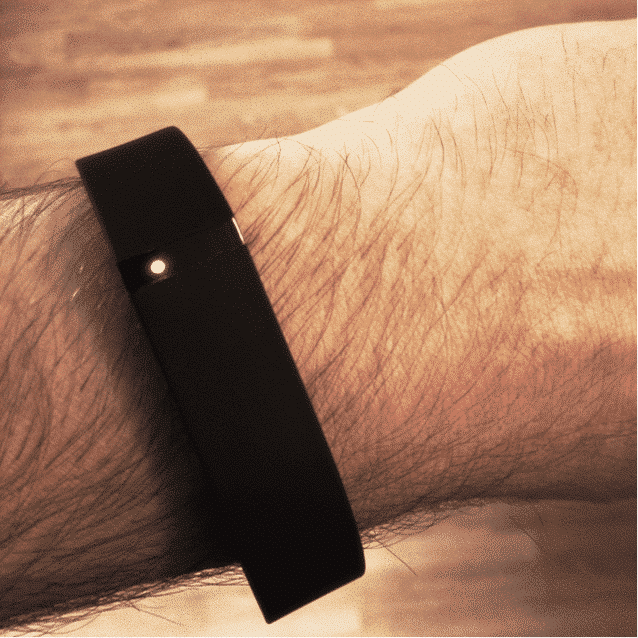
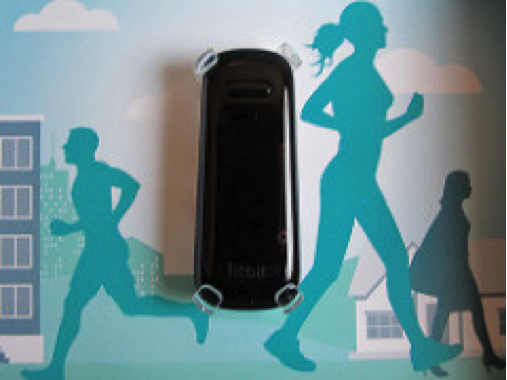
A Fitbit is a small electronic device you wear on your wrist that tracks your daily activity, exercise, food, weight, burned calories, heart rate, and sleep.
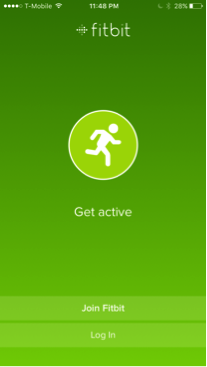
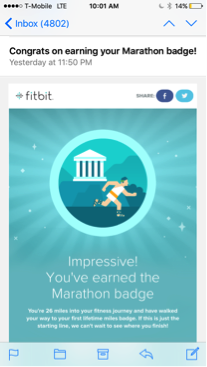
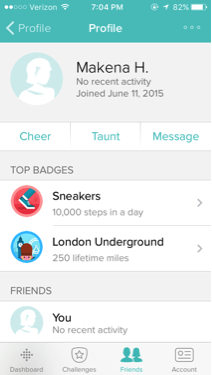
A Fitbit syncs wirelessly to your smartphone or computer. Fitbit software then provides customized graphs and charts that show your progress. Each time you reach a milestone, you get an achievement badge notification, which you can share with friends. You can also sync with other Fitbits to have a group challenge. You can taunt, cheer, and message your friends to make it more competitive.
Why do we want a Fitbit?
Fitbits are selling like hot bread on a rainy day. According to the Fitbit reports, 4.5 million devices were sold in the second quarter of 2015. The company expects to gain revenue in the range of $1.6 billion to $1.7 billion for the whole year.
A Fitbit can make us feel like we are finally doing something to improve our health. I have a friend that pesters me to get one. He wants me to be as fit as him, but in reality, I’m in a better shape. Since he bought this device, his self-esteem has shot through the roof. The device sends him daily notifications to let him know how great he is.
The Fitbit is fashionable, and it’s the latest technology in the fitness industry. It comes with different colors to match your clothes and looks like a watch. As we see more people purchasing it, we feel like we need one.
The risks of the Fitbit
Shame generator: Although the Fitbit provides positive inspiration for some users, it creates shame and anxiety in others. It’s intended to incentivize you towards a healthier lifestyle. However for many, instead of feeling rewarded by Fitbit data for a life well-lived, many feel punished instead for not living up to goals and expectations. What happens when you didn’t reach your daily steps or when you did not receive that accomplishment badge you were running for?
For me, the Fitbit is a shame generator. When it grasps on to your wrist, it sends subliminal messages that we may interpret as, “Are you not working out because you are too lazy?” or “Isn’t your friend doing better than you?” Some of us with a more self-deprecating way of thinking will interpret the messages as, “You are not completing your daily goals because you are fat!” Just think about the amount of times you’ve stepped on a scale and made a bad remark about your physique.
And if it’s not enough to shame you real-time on your wrist, Fitbit will also link to your social media accounts. No longer do you need to soak in shame or self-approval alone. The Fitbit’s social media options allow you to announce to friends and family each daily failure or accomplishment. Compulsive fitness wrist checking with a side of compulsive checking for social media likes. Delicious!
Compulsive data tracking: I first decided to write about this topic when Dr. Bennett told the story during our meeting about a friend who bought their 5 and 7 year olds FitBits. She felt that teaching a child to compulsively track data about their bodies sends the wrong fitness message. Good health is more about enjoying activity in the moment rather than chasing data points on graphs.
But the Fitbit is designed to create compulsive use. According to Dr. Bennett, the Fitbit uses randomized “chatter” messages at a variable ratio of reward to keep people locked on Fitbit data in the same way video game developers and other marketers sell their products. A variable ratio of reward means that the consumer gets rewarded at irregular intervals during use. This method is proven to inspire compulsive use. Using a variable ratio of reward on slot machines is how casinos make money. The hope of an occasional payout keeps gamblers gambling even when they are losing their bottom line.
Privacy and data theft: Like other consumer products that make up the Internet of Things, The Fitbit is collected very personal data that is being stored and analyzed by unknown eyes. At first one might think the data is meaningless. However, consider what kind of information that could be extrapolated from your email address, heart rate, weight, sleeping patterns, and exercise patterns, including your GPS history. It’s one thing for a corporate entity to have that kind of personal data, but there have been several malicious hacks to Fitbit users to date. Fitbit says they are working on a more secure system but also admit that staying ahead of hacker attacks is a bit of a cat and mouse game.
I have to admit, even with my knowledge of the risks, I’m still tempted to get one because I think is a remarkable piece of technology. But two things keep me from paying for one, I am cheap and I’m majoring in psychology. This combination makes me feel like the Fitbit is unnecessary and potentially harmful to my privacy and self-concept. I refuse to pay more than a hundred dollars to know how many steps I take. If somebody gifted me the Fitbit, I would kindly accept it. But truthfully I think I’d find myself resenting the compulsion to consume unnecessary fitness data.
How to be fit without a Fitbit
By buying this device your fitness habits are unlikely to change. You need to take initiative. If you know that you need to sleep more, then do it. I believe that we already know how much sleep, food, and physical activity is necessary for optimal health. Why do not need a hundred dollar device to tell us what we already know?
If you buy a Fitbit because you think it will make you lose weight, the truth is you are only buying a trackingThe Fitbit provides data, but you must do the work.
What is the point of keeping track of your steps? Stop stressing about the amount of steps you didn’t walk and instead enjoy the walk real-time by practicing mindfulness exercises. As you walk … observe, listen, and feel your surroundings. Don’t let technology distract you from the real-time rewards of a beautiful walk in the sunshine.
Let the mirror and the fit of your clothing inform you about your progress. Why do you need artificial intelligence to tell you how good you look?
If you want a group challenge, why not plan a date with your friends. Go out and actually interact with them. Taking the time for a fun activity with your friends is far more fun than online competition.
Take control of your life and research what is good for your health. Avoid paying money for something you can get for free.
Most importantly, this device is basically a notebook. Why not get an actual notebook to record your progress? It is more accurate and less expensive.
Remember, SHAME IS LAME. What do you think? Scroll down and leave a comment letting us know if you love your Fitbit for rewarding good fitness or your are building resentment from the shame factor. 🙂 If you want to read more about the Internet of Things, check out Dr. Bennett’s article, “Why I Think Hello Barbie is Not a Smart Toy to Buy.”
Thank you to Cristian Garcia, CSUCI intern, for authoring this awesome GKIS article!
I’m the mom psychologist who will help you GetKidsInternetSafe.