
Need peaceful screen time negotiations?

Get your FREE GKIS Connected Family Screen Agreement

drtracybennett

7 Important Research Findings About TV That Every Parent Needs to Know About

blog21_familytv-768x512

Parents often tell me that they struggle to regulate their children’s screen media use because it’s simply overwhelming. Research and regulations regarding children and television viewing have been firmly in place for many years. It makes sense that this well-traveled path is a good place to start with parenting in the digital age. Once you tackle and implement TV-watching rules, you have developed critical skills necessary to effectively tackle other screen media. Today’s article is designed to help you build mastery and confidence in actively parenting your family’s TV-viewing choices.

How often does your child watch television? If you answered that question with any response other than “never,” you must consider TV as your co-parent. Does that make you shiver? Well it should considering the proliferation of sex, violence, and just plain meanness that is included in even children’s television programming. The truth is, if your child is watching TV (or any screen media for that matter), then they are being affected and parented by what they are watching. The following research findings provide the pros and cons of child TV watching and will help you in your quest to becoming an even more awesome parent.

  • Parent guidance is necessary to lead kids to the best choices of TV programs.

Children’s programming is designed to attract viewers rather than provide education. As a result, broadcasters guided by profit aren’t great co-parents.

It doesn’t take long flipping through channels to recognize the amount of inappropriate programming available on even daytime TV. Programming channel availability on your television is a great first step to awesome parenting, followed by co-viewing and active guidance. Our family happens to have a kid TV as well as an adult TV. My husband and I deliberately selected the channels (and games) available on the kid TV for quality academic and prosocial content. The kids are only allowed access to the adult TV with permission or for family co-viewing.

Kids learn more when they are interested in the theme of the program and tend to prefer programs with social-emotional themes over programs with academic focus (Calvert, 289). When you are making parenting decisions about channel availability, I suggest you seek your children’s opinions and actively negotiate to reach a happy and productive outcome. And as always, this is a living agreement. In other words, you will need to revisit and renegotiate as your children get older and gain a larger variety of abilities and interests.

  • Regulation has made a difference in availability and quality of children’s television.

In 1990 the Federal Communications Commission (FCC) enacted the Children’s Television Act (CTA). CTA was designed to give parents better information, more clearly define core educational programming, and increase the amount of children’s television programming. Since CTA was implemented, access to quality children’s television programming in the US has improved with genuinely positive result (Calvert, 324). This regulation was developed due to a grass roots movement by concerned parents like us! This is a hopeful precedent considering the work we still need to do as the Internet continues to encroach unregulated into our children’s lives.

  • Children as young as a year old can learn to avoid dangerous things from simply watching actors on TV.

In a 2003 study by Mumme and Fernald, 32 12-month olds were recruited from a middle-class, predominantly white community. Four objects that they’d never played with before (a letter holder, a ball with weird bumps, a garden hose adapter, and a plastic valve) were shown on a TV screen along with an actor emotionally responding to those objects (neutral, happy, or fearful) with a simple verbal description (“look at it”). The infants’ parents sat next to them reading a magazine. When later given the objects to play with, it was discovered that the infants avoided the objects to which the actor responded fearfully. They approached the neutral and positive objects the same. Surprisingly, 10-month olds were not affected by what they’d seen on TV. Just two months of development seems to make a huge difference.

Even if your children are passively viewing adult TV shows, they are being affected by the show’s emotional content. Just because your child is young or viewing alongside a parent, doesn’t mean they’re not being negatively affected by inappropriate content.

  • Preschool children who watch educational TV are often better prepared for school (Wright, 1347) and even better students in high school (Anderson).

It’s not necessary to cut out TV completely to be an awesome parent. In fact, there are some great programs out there that will benefit your children’s overall academic success!

  • Children who watch prosocial TV programs demonstrate more kindness towards peers and animals.

 Not only will quality television make your kids more successful at school, but also with others!

  • When you’re making TV program selections, remember that age makes a difference in child choice of TV programs and the ability to understand complex plots.

Younger children choose and watch more educational and informational television programs whereas older children prefer entertainment programming. Because broadcasters know this, there is less educational content targeted at older kids. In regard to quality of viewing, older children learn more from all types of programming (Calvert, 318). As cognitive abilities develop, kids are increasingly able to identify factors relevant to the central plot, recognize order as the story scheme, draw inferences about the feelings and motivations of the characters, and recognize cause-effect relationships within the program.

Just as you stock your child’s reading shelf with kid’s books rather than adult novels, it’s important to shelf age-appropriate TV programs. Websites like https://www.commonsensemedia.org can be helpful when evaluating program content.

  • When parents discuss and support the lessons kids learned from TV viewing, kids are more likely to apply lessons in real life.

In regard to the kinds of lessons kids learn from TV, kids most often report learning social-emotional lessons, then information, physical well-being, and cognitive skills lessons (Calvert, 303).

Although our kids have a kid TV at their disposal, we still regulate viewing time and choice. The babies particularly clamor for “movie night,” because it’s their favorite thing to share a series or TV with us co-viewing. My husband and I like to reinforce the academic and social lessons weaved within what we’ve watched in later discussions. Not only is it a gift to provide enriching programming to your child, but it is particularly valuable to share your thoughts, values, and zany humor with them during family quality time. Our movie nights and later discussions help us really get to know our kids. When we see the kids amped up about certain themes and topics, we often head to the bookstore or library for books that they’ll be more likely to read. Win-win!

At this moment I’m flying to South Carolina with my 20 year-old to move her in for the fall semester. Believe me as I sit here with tears in my eyes marveling at the woman she has become, it’s important to soak in every precious parenting opportunity while you can. Some day sooner than you’d like, they’ll be spreading their wings in pursuit of their own wide open spaces.

I’m the mom psychologist who will help you GetKidsInternetSafe.

Onward to More Awesome Parenting,

Tracy S. Bennett, Ph.D.
Mom, Clinical Psychologist, CSUCI Adjunct Faculty
GetKidsInternetSafe.com

Works Cited

Anderson, D.R., Huston, A.C., Schmitt, K.L., Linebarger, D.L. , and Wright, J.C. “Early childhood television viewing and adolescent behavior”. Monographs of the Society for Research in Child Development 66 (2001) (1, Serial No. 264). Web.

Calvert, Sandra L., and Jennifer A. Kotler. “Lessons from Children’s Television: The Impact of the Children’s Television Act on Children’s Learning.” Journal of Applied Developmental Psychology 24.3 (2003): 275-335. Web.

Mumme, Donna L., and Anne Fernald. “The Infant as Onlooker: Learning From Emotional Reactions Observed in a Television Scenario.” Child Development 74.1 (2003): 221-37. Web.

Wright, J.C., Huston, A.C., Murphy, K.C., St. Peters, M., Pinon, M. Scantlin, R.M., and Kotler, J.A. “The relations of early television viewing to school readiness and vocabulary of children from low-income families: The early window project.” Child Development 72 (5) (2001): 1347–1366. Web.

CLICK HERE for some fun kids TV ideas!

Has Protective Parenting Put Your Child at Risk? Avatars 100 vs. Villagers 2

Blog20scoreboard-768x768

Good parenting can be overwhelming, and we need all the support we can get to do it well. Being pulled in all directions while trying to provide the safest home for our children is leading to problems like isolation and the overuse of screen media. It’s time to address the problems and build a better village. Less screen time, more active parenting, praise, and validation and facilitation are critical! I’ll show you how to get that done in this week’s GetKidsInternetSafe (GKIS) article.

Reflective Listening & Validation

Corbyn* is my ten-year-old son. Yesterday he woke up on a frantic mission to get a Play Station game he wanted. First thing in the morning he hopped out of bed, gathered up his wrinkled dollars and scattered quarters, and counted out $19. Thinking he had $36 saved, he was bitterly disappointed. So naturally, he turned to Sidney*, his 12-year-old sister and BFF, and accused her of stealing $17. Then, still frantic, he turned to the next nearest lightning rods, Mom and Dad, and accused us of not following through when we owe him chore money. He wasn’t attacking in a deliberate, organized way, but rather with a more pained and desperate tone.

I heard of this drama first when Sidney marched into the bathroom while I was putting on my makeup and staged an impressive protest dripping with indignation. When I told her to bring in the offender for a discussion, she sheepishly said, “No, Dad handled it.” (We really get on them for splitting between us when there’s an issue.)

Next, my husband arrived with Corbyn in a body lock trying to tickle the offender into submission. From the tears threatening in my son’s eyes, my heart knew this was not going to do the trick. I understand my son like a lime knows a lemon; we speak the same emotional language. So I broke the offender from his hug prison and attempted good parenting; validation and facilitation of problem-solving.

I know, stop with the shrink talk already. Essentially this means I let Corbyn know that I saw his feelings and heard his plea, then encouraged him to seek a better strategy than attacking his support system one by one. Although tempted, I didn’t yell and threaten, shame, or abandon him to his frenzy. I let my heart do the talking. And it worked.

It went something like this: “Corbyn, I hear you really want that PlayStation Game, and you are disappointed you only have $19. Attacking your best friend and us, your best supporters probably isn’t your best strategy. Maybe you should apologize and ask us for help instead.” Of course, this initially made him more emotional because he let down his guard. But it also gave him the hope and support he needed. Within a few minutes, Corbyn had the plan to collect his birthday money, pick up dog poop, and collect the cash he needed to get his prize. Crisis averted, everybody was happy, and my husband complimented me for being awesome. Most importantly, Corbyn learned an important lesson in problem-solving: chill out, seek your village, and get it done!

My parenting strategy in this instance isn’t groundbreaking, nor am I the perfect parent. But psychology research has demonstrated that validation and facilitation raise emotionally healthy kids. And the lack of it may lead to significant emotional issues.

blogsadgirl

In today’s frenzied digital age with parents working more hours than ever and distractions at every turn, we aren’t doing enough good parenting. When I was little, kids were set loose in the neighborhood until a porch light came on. There’s a useful debate to be had about if this was better for children or not. But that aside, what we are inarguably failing at is providing the “It takes a village” sentiment.

Our generation is so afraid of child predators that we have swaddled our children at home. They get bored and drift in front of screens for too many hours; ironically connecting to the very portal that child predators have expertly learned to exploit. YouTube, video games, social media, and the Internet cannot provide the critical parenting skills our kids need to thrive. Keeping them home with unlimited use of technology is neither protection nor providing parental guidance.

I embedded Margaret Heffernen’s brilliant TED talk “Dare to Disagree” at the end of this blog. Her inspiring message is that openly addressing conflict is critical to learning. That we must create an environment for our children that encourages open information, active problem-solving skills, and the moral courage to tackle challenges. That means being too permissive with our kids, or alternatively shutting them down because it takes too much time to parent will leave them vulnerable, without the affection and guidance they need.

As a clinician, I fully agree with Ms. Heffernen. Throughout my career, I have repeatedly seen that a common factor among my most distressed patients is an attachment disruption; a parent who, for a multitude of reasons, wasn’t present for the child. And among those without a strong parenting presence, those that were gifted an attachment from an extended family member, a coach, a teacher, or somebody in the village who cared about them and spent time were saved.

When I was a teenager my father would bait me into fierce debates by saying something mildly offensive. By the end of the discussion, he would skillfully slide into a moderate position on which we could both agree. It wasn’t until I was much older that I recognized he was coaching his sensitive, anxious daughter to confidently defend a position, a skill critical to my happiness and success. And, in an entirely different way, my mother served as a role model for developing important life skills like grit, ambition, and assertiveness. I didn’t get to spend a ton of time with my hard-working parents, but these quality moments were crucial to my development. And beyond my immediate family, I can identify many adults who provided meaningful guidance along the way.

Here are today’s GetKidsInternetSafe TIPS:

  • Spend time and listen:

    • Validate your child’s emotion (“I can see you’re feeling sad”)

    • Identify the problem (“What happened?” “What needs to be solved?”)

    • Facilitate problem-solving (“What’s your goal?” “What steps can get you to your goal?”)

    • Praise (“I love how you talked that through” “You really know how get things done!” “I love how you speak from your heart”)

  • Get your kids involved in activities and with other trusted adults who happily support them.

  • Limit screen media time.

I love the enthusiasm of GetKidsInternetSafe subscribers and can feel the GKIS Revolution building. Thanks for being courageous by facing these issues and taking the extra steps to be more awesome and, rather than pointing fingers at each other, coming together in a commitment to our best parenting. Ironically, the Internet is helping us find our village. Now go out and build it for the kids directly in your community! And don’t forget to forward this article to those who may share your passion.

I’m the mom psychologist who will help you GetKidsInternetSafe.

Onward to More Awesome Parenting,

Tracy S. Bennett, Ph.D.
Mom, Clinical Psychologist, CSUCI Adjunct Faculty
GetKidsInternetSafe.com

*name changed to protect child privacy

Photo Credit

Child of the pure, unclouded brow by Nick Kenrick, CC by-NC-SA 2.0

Is it a Scientific Finding or a Sensational Headline?

blog-11-classroom

The issue that got under my skin today is how sensationalism sells and how this has misled us and distorted “news.” As more of us rely on screens and social media to alert us to important world issues, yellow journalists are setting up fake virtual offices to create inflammatory, sharable articles. Each click-through brings money into their pockets from ads. That means a gullible public pays cons to misinform us. The cons recognize the more outrageous the claim, the more attention they get, and the more money they make. They have learned that repeating inflammatory statements over and over can lead to their adoption as facts. Does an intentionally groomed and misled public threaten American democracy?

The First Amendment

Our founding fathers created our governing system with the expressed intent of rule by the people. To protect the freedom and power of the people to be informed and vote, they wrote the first constitutional amendment protecting the free exercise of religion, the freedom of speech, the freedom of the press, the right to peaceably assemble, and the right to petition for a governmental redress of grievances.

They believed that the free flow of information to the American public from a press that serves as a credible watchdog keeps powerful officials in check. This was considered critical to American freedom.

Sensational Headlines

I started GetKidsInternetSafe (GKIS) because, despite being somewhat tech-savvy with great personal and professional resources, I was struggling to create a workable plan for managing my children’s technology use. I’d take a stab at this and that but either get distracted along the way because the plan was too cumbersome or become completely frustrated and throw up my hands. Ultimately I’d end up doing very little and feeling chronically guilty.

My anxious search was exasperating partly because the Internet is flooded with sensational headlines that exaggerate risk! Even responsible reporters sometimes bypass credible experts in favor of interviewing somebody willing to be provocative rather than factually responsible.

Then another article would counter-react with the opposing but also exaggerated viewpoint. Furthermore, sometimes even credible experts are inaccurately quoted. I was so frustrated trying to get sensible information that had persuasive evidence backing it, that I’d just give up in defeat.

As I turned to my family, friends, and colleagues, they just looked blankly back and said, “Yep! Exactly! I’m paralyzed too. Tracy, if you can’t do it with your expertise, then we’re doomed.”

Doomed? No way, not when it comes to kids. So from there, I sought out the smartest, most creative, most energetic hotshots I knew and launched GKIS. I decided to do the hard work and comb through the psychology research, news articles, academic theories, and tried-and-true parenting strategies to create a comprehensive, easy parenting course that works.

Religion and the Internet

As I was researching for my book Screen Time and Mean Time and my GKIS parenting courses, I ran across an article titled, “America’s Less Religious: Study Puts Some Blame on the Internet,” by Elise Hu on NPR. The article states that as Internet use has grown, people have become less religious. A study by computer scientist Allen Downey reportedly “found a causal relationship among three factors – a drop in religious upbringing, an increase in college-level education, and the increase in Internet use.” A causal relationship? They were saying that less religion causes more internet use and more education. That makes no sense. I’ll tell you why that’s a false claim.

The Experiment

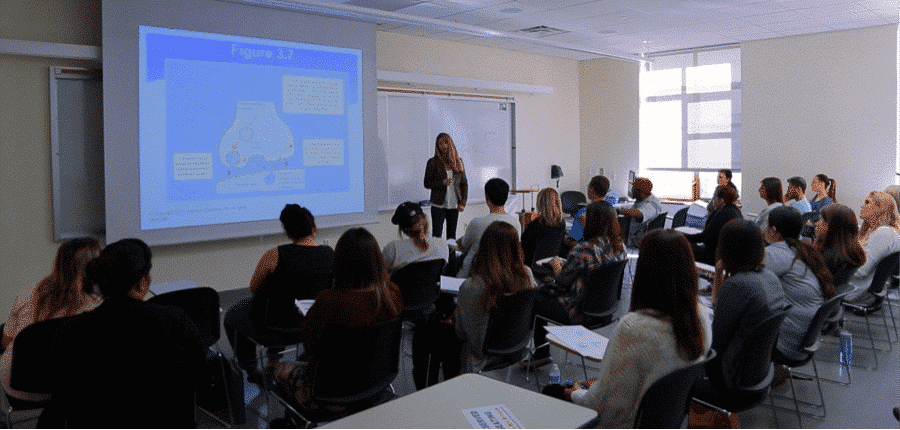
I teach my university students that the only type of study that yields evidence about a causal relationship is an experiment. An experiment is conducted in the laboratory where you take two groups of subjects and expose one to the experimental variable (the independent variable)  and then measure the outcome for both groups (that measurement is the dependent variable). If the groups’ outcomes are the same, your independent variable did not have an impact. If they are more different than could happen by chance, then your independent variable did have an impact. You have to do other things to make sure your experiment is high quality, but the main point is that you have to act upon your subjects – not just survey or observe them.

Observational studies only suggest that there may be a relationship, but they cannot rule out unidentified outside (extraneous) variables that may contribute to the relationship between the study variables. More to the point, because they’re observational, these studies have no way to determine which – if any – of the variables they’re studying is causing the outcome and which is being affected. Causal claims are impossible to support if you have not conducted an experiment.

Yet this NPR article suggests that, since Downey can’t think of that third variable, there must not be one. And with a logistical regression method, voila! He can claim Internet use has killed religion! Pffft. This is a blatant misrepresentation of the data. Yes, based on the statistics those three variables appear to be related. But we don’t know if increased Internet use led to less religion or if less religion led to increased Internet use. A fourth unrecognized variable may have led to both, like maybe Internet use led to more screen time which led to more Facebook which led to more overwhelm which led to less leaving the house which led to less religiosity. I mean honestly, we don’t know until we integrate all variables or, better yet, design an experiment!

In this case, it is unclear to me if the researcher made these irresponsible claims or if the reporter misreported, but the article is flat wrong in its conclusion and misleading to the readers.

Dr. Rochelle Tractenberg

As a social scientist, I was irritated. So, in my ranting mood, I sought out my friend brilliant Georgetown double Ph.D. biostatistician Dr. Rochelle Tractenberg, and asked her to give us a quick and informed comment about her reaction to the NPR story about this study. You can’t get a more credentialed expert with statistics than Dr. Tractenberg. She responded:

My friend and colleague Tracy Bennett asked me to contribute some comments in response to the frustration she felt – and felt she needed to share with you! – after reading the media coverage of what seems, based on this coverage, to be a very weak study. I am a scientist myself, and I coach other scientists in the design and write-up of their work. I completely agree with Tracy about this media coverage!

As a person who sees “scientific articles” every day of the week, I am frustrated by how any “science” gets talked about in newspapers, on TV, blogs, “the Internet,” and radio. Probably the most common problem is that people outside of the field of science often believe that, if a scientific article made it through to publication, then it must be good, true, or right. That is just not true! Just because a paper was published in a “peer-reviewed” journal doesn’t make it good, correct, or meaningful.

I think a wider problem is that

_____________________________________________

journalists should not be trusted to sift through what was published to bring “what matters” to the public’s attention.

_____________________________________________

Just because a news outlet covers a paper’s having been published doesn’t mean the paper is accurate or even interesting. You might not know that new scientific papers are published every second of every day; probably TWO others were published in the same week on the exact same topic, with the opposite <maybe even the same!> results as whatever paper the media are covering that day. The question the reader must ask is, WHY WAS *THIS PAPER* CHOSEN FOR THIS REPORT? Very probably it was chosen because “it sounded interesting!” The CHOICE to cover a particular paper reflects the journalist’s interest and not the importance of the paper – not for its field and not for the public.

The purpose of scientists in publishing their work is usually to test theories and contribute new knowledge, but journalists’ purposes are to attract readers (if you have ever read a scientific paper, you can see plainly that it was NOT written to attract readers!).

_____________________________________________

That means that people who get their “science” from journalists do not actually get “science.”

_____________________________________________

Science moves in truly small steps and very few newsworthy “breakthroughs” ever occur, although news media make non-scientists believe that they happen often. Exceptions may come from fields like archeology or astronomy – where observations and not experiments are reported; if a new dinosaur was discovered and reported in the general media then it probably IS important!

Scientific papers follow very specific rules – including that they must consider the work that was done before and how their new results fit with those older results (whether the new results agree or disagree with the dominant theories). They must also always describe the limitations of their work and suggest what more might need to be done in future research.

Media coverage follows very different rules; the article Tracy found was probably chosen because it is provocative – it could not have been chosen for the NPR story because it is true (impossible to tell!) or well done (it wasn’t). I would go so far as to say that all that a reader really can “learn” from a news story on something scientific is that “that research is going on.” A reader should NEVER infer from a news story about research that something important for daily life has been learned.

faculty.photo.may2010Rochelle E. Tractenberg, Ph. D., M.P.H., Ph.D., PStat®
Director, Collaborative for Research on Outcomes and -Metrics
http://crom.gumc.georgetown.edu
Associate Professor
Neurology, Biostatistics, Bioinformatics & Biomathematics, and Psychiatry
Georgetown University Medical Center

[Read more…] about Is it a Scientific Finding or a Sensational Headline?

An Awesome Teacher, An iPad, and a Herd of Little Entrepreneurs

girls_on_ipad-817x1024

Even if you are the parent who wants to wait to introduce technology to your child, America’s elementary school system has embraced technology in the classroom. Despite the risks that GetKidsInternetSafe highlight in covering this very important topic, it is irrefutable that technology is an incredibly rich resource when interfaced with traditional teaching methods. Today’s blog is an acknowledgement that when done well, technology’s interface with elementary education is a great thing!

One thing I’ve learned as a business owner, and in life, is the importance of knowing the limitations of my scope of expertise, and to outsource to those who are experts when I have an unanswered question. One of my favorite parts of the GetKidsInternetSafe project is consulting with a multidisciplinary team of experts in order to best inform you about the challenging topic of kids and Internet safety. It’s impossible for one person to be an expert in all of it. So I’m pooling the best there is so you don’t get lost in the search, like my husband and I did at first when trying to get our kids Internet safe.

For the record, I have a doctorate in clinical psychology, not education. All it took to learn my limitations was a few volunteer field trips as a parent when the teachers gave me the little ones who were a “hand-full.” The teachers and I laughed as I thanked them for their everyday expertise. Phew! An hour of clinical session is a WHOLE different ballgame than an hour with 20 little rugrats!

My admiration for educators is one of the reasons I’m so excited to watch my oldest daughter pursue her lifelong dream of being a kindergarten teacher. Although she is still in college and thus still in the exploratory process, she is starting to dive deep now and recently volunteered in a second grade classroom. She was so jazzed by the experience; she told me all about it in an hour-long phone call yesterday. It was inspiring to learn how technology is being resourced in those classrooms where the teacher goes the extra mile. I want to share some of what I’ve learned with you so you too can celebrate what opportunities technology is creating for our kids. Astounding really!

The second-grade class Morgan observed has integrated iPads in their everyday learning. For example, in a lesson about business and finance the teacher tasked her students to come up with a business idea, a product, a budget, and a public relations campaign. Throughout the month they were able to earn dollars for academic tasks that they could spend in a student store during “shopping week.” Morgan said their creativity and enthusiasm was amazing, with one boy selling Lego classes and another girl painting nails. She said the variety of products was awesome and the kids were super into it. She particularly loved how the dollars were kept in a pile on the teacher’s desk and the children would simply walk up and collect their dollar for each task with total accountability. That day, she observed the kids had each made a sales page collage and emailed the product to their teacher for grading. All on the iPad!! Second grade!!

Another task Morgan observed was language arts and reading comprehension. Each day the teacher would read a book aloud to her students. For those who preferred to read alone or with a partner, they simply left the room and went into the library to check out a book at their reading level on their individual iPad. After completing the story, they would answer five reading comprehension questions from the book. The next story, customized to their reading level, would then be made available for checkout. That means each child was reading and tracking at their individual reading level with independence. Morgan was amazed to see children that ranged from first grade reading level to eighth grade reading level all engaged in the task. No kids left behind indeed!

And the third task I wanted to share doesn’t even involve technology, but simply good citizenship. Morgan was delighted to see how the teacher provided facilitation, but required the kids to do their own social problem solving. The example she shared was when one boy left a game for his friend to cleanup, the teacher simply brought the boys together and challenged them to negotiate a solution. Morgan said the teacher didn’t lead them, but would simply reinforce skills with comments like, “That’s excellent sharing from your heart Johnnie,” and “Now what can Michael do to make it up to you so you’re not resentful and your friendship can be as good as ever?” Morgan said the boys worked it out and left with a clear and mutually agreed upon solution. Oh my gosh! As parents we can take a page from this teacher’s playbook for sure.

In closing, I wanted to sprinkle some positives into this week. Just remember when you get discouraged about the dangers of technology use, don’t forget that the benefits are transformative as well. Black and white thinking is not the answer to a complex problem. Please join the dialogue with comments after this blog and on our GetKidsInternetSafe Facebook page! How has technology helped your students in the classroom?

Thanks for your support and, as always, please share this blog link with anybody else you think has an opinion about kids and Internet safety.

I’m the mom psychologist who will help you GetYourKidsInternetSafe.

Onward to More Awesome Parenting,

Tracy S. Bennett, Ph.D.
Mom, Clinical Psychologist, CSUCI Adjunct Faculty
GetKidsInternetSafe.com

Watch this TED talk that demonstrates how technology helps kids learn better and helps us better track their process!

Opportunity, Concern, Hard Work, Leadership. Time For a GetKidsInternetSafe Revolution!

blog17ostrichrevolution

Like Tracy Chapman crooned, “Talking about a revolution sounds like a whisper.” Each day I am inspired by experiences that seem divinely connected. I hope today’s article, which includes some TED talks and a wacky story about how I met my husband, triggers in you the inspiration to be a smarter parent in the digital age and join the GetKidsInternetSafe (GKIS) Parenting Revolution. It is time!

You know those days when the universe hands you experiences that somehow connect? And when that happens, you feel compelled to DO SOMETHING? It’s as if you’ve just received a gift and must decide whether to unwrap it and delve into something deliciously important or simply fold laundry and carry on with your day?

This morning the universe handed me two TED talks, a psychology ethics and law conference, and a scary clinical story of the week. Morgan referred me to the first TED talk after she saw it in a college education course (embedded at the bottom of this article). In this award winning presentation (2013 TED Prize), educational researcher, Sugata Mitra, describes his brilliant experiment where he placed a computer in a hole in the wall facing a slum in India with no instruction and no supervision. After a few weeks, researchers returned to the computer to find that groups of children had taught themselves, and each other, complex theory, even when it wasn’t in their own language! When he repeated this experiment with an adult standing by to provide praise (still no instruction), the children performed even better! He argues that our education system is outdated and argues for reform. Mr. Mitra’s experiment highlighted some important variables discussed within GetKidsInternetSafe. Specifically, technology is an excellent motivator and learning tool for our children, and adult affection and supervision remains essential for our children’s healthy cognitive and emotional development. He also highlights the need for analysis and redesign to educate our children in the digital age. OPPORTUNITY.

In regard to the clinical situation that struck me this week, ethics restraints inhibit me from describing it in detail. But let me just say it involves two vulnerable adolescents who acted out sexually at school in a way that was clearly inspired by pornography exposure. These types of situations are extremely distressing for all involved and happening at a frequency I’ve never before seen in my 20-year clinical career. CONCERN.

I also attended a law and ethics conference this week. Although my colleagues and I sometimes dread these conferences due to the discussions about informed consent and computer firewalls, I always leave energized make a difference as a psychologist. HARD WORK.

The second TED talk I included illuminates the courage needed to start a movement and touches upon the importance of, not just the movement’s creator, but also the first follower. As a get-to-know-each-other piece, I’ll tell you a story about how I learned that my most comfortable role is first follower and why, although initially irritated about it, I eventually learned to embrace this aspect of my personality (and snag my awesome husband). After all, my leadership style is what pushed me to start a much-needed revolution in parenting in the digital age when I wasn’t seeing enough of us was stepping up to lead. I’m hoping that it will inspire you to analyze what leadership role best fits you and to join the GKIS PARENTING REVOLUTION!

Blog17drumette

In the early 1990s, with four years of clinical psychology coursework out of the way, I started my hard-won internship at the local Veterans Administration (VA) Hospital. Within the first month, I signed up to participate in a 4-day Tavistock conference. The mission of this conference was to join an assortment of other mental health professionals to learn about group process. Essentially, the conference participants were tasked to form small groups and interact with each other while trained staff interpreted unconscious process. With this structure, participants learned what role(s) they took in a group by analyzing their own and other’s behaviors during prescribed tasks.

People often ask my husband and me how we met. It is always a fun story to tell them that we met and fell for each other during this weird and wonderful conference. (This is also where my husband says it was a nude conference – which it wasn’t.)

The attended with my friend, Pam, who was a mother of two and the wife of a fundamentalist minister. Being in graduate school, she was exploring all parts of her personality and impulsively attended the conference wearing a leather jacket and smoking cigarettes. (Graduate school made us all a little crazy, ha-ha.) She and I ended up in the same small group as a tall, bearded psychiatry resident from UCLA named Dan. It wasn’t long into the first day when I found myself seeking him out during the breaks. I remember becoming intrigued by his rebellious spirit and when he made some sort of Greek mythology reference, I swooned because I found him brilliant, sexy, and Tracy-level nerdish.

So to make a long story short, despite my efforts to pretend I was a consummate professional and not lusting on this mysterious psychiatry resident, Dan and I ended up co-leaders to the weirdest assortment of characters at the conference. Normally, I would have bailed on this group of wacky strangers in favor of joining friends, but I didn’t want to leave Dan, and he didn’t want to leave me. So fresh out of the Navy and disgusted with our hippy ideas, Dan shook his head as we voted for a “tribal leadership” style. This meant we took turns leading based on the group we were meeting, including my friend Pam’s group who wore crowns of leaves, called themselves “Athena,” and would only acknowledge the women in our group. See? Crazy town.

Just to touch on some highlights of our weird conference, let me say that many people dropped out from the stress. Our group took double lunches and was the only group to refuse staff support. By the end the conference, our group was voted the most in need of psychological intervention. (I exaggerate, but it’s mostly true.) Also by the end of the four days, Dan and I were half out of our minds with weird psychology process and attraction for each other. We learned so much about how we tend to lead as individuals, and this knowledge inspires me to step up when I see a need and to enlist support to make a real difference. As Dan and I walked to our cars to go home the last day, he became the first (and last) man I ever actually asked out. And, true to what we learned in the conference, we teach our three kids that being a leader is a gift that must be developed.

My anxiety about what I was seeing in practice and in my own home inspired me to start www.GetKidsInternetSafe.com. It is evident from the feedback I am getting and the learning along the way that we more than education, WE NEED A GetKidsInternetSafe PARENTING REVOLUTION!

The “Hole in the Wall” TED talk pointed out that our kids have mind-blowing learning opportunities if we embrace it with them! My clinical experiences tell me that some real damage is being done because we aren’t doing our best parenting, and the time to act is NOW! And the ethics conference reminded me that putting work into a new project is intimidating and sometimes difficult, but doing the right thing always outweighs the easy thing. And finally, the “How to Start a Movement” TED talk confirmed that it is time we take the reins in this Wild West time of unsupervised/unregulated technology. I’m up dancing people, grab your jazz hands and run to the grassy knoll. We have some real work to do!

There are lots of inspiring posts on my GetKidsInternetSafe Facebook page. Please give me some “likes” by connecting with the grey social media buttons on the side bar and recommend www.GetKidsInternetSafe.com to those you would grab by the hand to join you for an inspired interpretive dance! Time to get the GKIS PARENTING REVOLUTION launched!

I’m the mom psychologist who will help you GetKidsInternetSafe.

Onward to More Awesome Parenting,

Tracy S. Bennett, Ph.D.
Mom, Clinical Psychologist, CSUCI Adjunct Faculty
GetKidsInternetSafe.com

Photo credits:

Trambourmajor by Niels Linneberg, CC by-NC-SA 2.0

Dr. Bennett’s Developmental Psychology Crash Course for Children Ages 0-2 Years.

babygymboree

Last week’s article “Should Babies Be Allowed Screen Time?” offered hard guidelines for parents of babies and toddlers. I went right into the WHAT to do in response to the concerns parents come to me with. For some, that is sufficient. But for others, they want to know more WHY in order to feel confident about my recommendations.

This article offers a developmental psychology review/crash course outlining the developmental tasks children are trying to master between the first two years of their lives. With this information you can decide for yourself if screen time would enhance, be neutral, or interfere with your child’s development.

Brain Development

Brain imaging and recording technology has improved dramatically within the last decade, increasingly providing detailed evidence of brain changes throughout the developmental process. In general, the brain continues its remodeling process from infancy to adolescence, with different brain areas showing dramatic progressive change (neuronal growth) and later regressive change (neuronal elimination). This fine tuning results in more sophisticated abilities with age. (Brown).

The mind is a collection of mental modules (specific mental faculties tuned to particular types of environmental input).  Each module must be stimulated in order to progressively develop. Therefore, nature (the child’s inherited brain hardware) develops in relation to nurture (experience of the environment). Developmental psychologists call this nature via nurture.

    • Along with the increased number and variety of brain cells that grow during infancy, myelination will also continue throughout adolescence (Brown). Myelination is the process of sheathing axons (brain cells) with white matter to insulate them and allow them to conduct the electrical impulses that create “thinking.”
    • In regard to the sequence brain structure maturation, remodeling appears to go from phylogenetically older to newer brain structures.
    • As higher brain structures develop, we see neonatal reflexes disappear while others develop into more complex strings of behavior.
      • In the first two weeks, babies are developing healthy respiration, circulation from the umbilical cord to the lungs, body temperature regulation, and feeding and elimination processes.
      • From three weeks to twelve months, babies are acquiring self-regulated skills of locomotion (crawling and walking), manipulation (hand skills), and self-feeding with solid food. They are beginning to establish a sleep pattern and maintain a sleep–wake cycle, explore sound production in preparation for speech, and establish initial sensorimotor schemes and mastering object permanence. Over time, sleep and behavior patterns change and the baby will develop increasingly complex skills such as visual scanning, reaching and grasping, social smiling, self-soothing, crawling, and walking.

Cognitive & Motor Development

The work of developmental psychologists demonstrate that during the sensorimotor stage of development (0-2 years old), children must physically manipulate objects in a complex environment while simultaneously receiving instruction and stimulation from loving caregivers. With the child’s biological blueprint for learning already in place, environmental enrichment allows the baby to transition from being a reflexive being to mastering purposeful, goal-directed behavior. Parents show the baby how and what to think, slowly building the complexity of teaching with a delighted dance between baby and parent.

  • Research demonstrates that children learn better in collaboration with others rather than alone. For example, children are more likely to engage in symbolic play if they are playing with somebody else rather than by themselves. The more sophisticated the child’s tutor in advancing the complexity of the play, the quicker the child’s skills advance. Working with another person increases the child’s motivation to learn, requires the child to articulate ideas, allows the child to build upon another’s increasingly complex cognitive strategies, and teaches the child how to understand the beliefs and feelings of others (build empathy).
  • It has been hypothesized that babies have mirror neurons in multiple parts of the brain that facilitate imitation and learning. A mirror neuron fires both when an action is observed and when the action is actually executed. In other words, the neuron mirrors the other person’s behavior as if it was actually being carried out. Mirror neurons are thought to be a genetic advantage that allows us to anticipate and understand the actions of others prior to learning the activities ourselves, as if the baby was genetically primed for specific types of learning. Researchers believe that mirror neuron systems develop before 12 months of age and proactively facilitate the learning of empathy and language (Falck-Ytter).

 Language Development

In order for young children to develop all aspects of language, they must have frequent conversational engagement with caregivers. Research shows that parents tend to create a supportive learning environment, starting with parentese (short, simple, high-pitched, repetitive sentences that is awesome at getting baby’s attention), with the parent gradually speaking with longer and more complex sentences just ahead of the child’s ability.

  • Intonational prompts by the parent are often successful at affecting a baby’s mood and behavior.
  • Children of parents who frequently expand, recast, and otherwise extend their children’s speech acquire complex speech more quickly.
    • During their first year, a baby’s burgeoning familiarity with the phonological (sound) aspects of language is laying the foundation for language development.
      • Newborns show preference for mom’s voice over any others.
      • At 2-3 months, infants can distinguish consonant sounds.
      • By 7 months, they have learned the first rule in pragmatics (social language) to not interrupt and wait for your turn to talk.
      • By 8-10 months, babies use gestures and facial expressions to communicate and eventually pair with words and then sentences.
  • Babies are active, rather than passive, learners and, therefore, thrive with interactive stimulation.

Emotional Development

Parental interaction has a profound impact on how emotions develop and what strategies are employed for emotional self-regulation. The better the “fit” between parent and child, the more secure the attachment and the better the child learns to regulate emotion.

  • Babies develop various emotions in their first two years of life, all of which are highly influenced by how parents react. Young children gradually shift from relying on caregivers for emotional regulation to self-regulation.
    • By 6 months old, infants have learned some regulation by turning away or seeking objects to suck with boys being more likely to elicit soothing from caregivers than girls.
    • At 12 months, infants will rock, chew on objects, or move away to soothe.
    • By 18-24 months, we see toddlers requesting action from caregivers, distracting themselves, and actively suppressing anger or sadness.
  • There is even evidence that 12-month olds avoid and react negatively to an object that elicited a fearful reaction of an adult on TV. Watch out parents, even teeny-tiny ones are affected by programming choice!
  • A critical contributor to healthy attachment is the bidirectional, synchronized routines that parents and infants establish over the first few months of the baby’s life. Even as young as two months, babies will show distress by a parent’s lack of emotional responsiveness. (Is it fair to think the child would be distressed watching a nonresponsive character on a screen?) With the coordinated, consistent dance between parent and child, babies learn how to trust the world and build self-regulation. Babies use animated social and verbal expressions, like smiling and crying, to communicate as well as to respond to caregiver expressions and verbalizations. This skill is called social referencing. Babies do best with attentive, delighted, patient caregivers who are present and consistently engaged. The more practiced the dance routine, the better the caregiver and baby get at interpreting each other’s signals and making necessary adjustments, eventually blooming into a mutually satisfying strong reciprocal attachment. The more quality time a caregiver spends developing the dance, the healthier the attachment.
  • Attachment occurs in four phases:
    • 0-2 months – undiscriminating social responsiveness (baby orients to all humans),
    • 4-5 months – discriminating social responsiveness (recognizes familiar people and becomes anxious with strangers),
    • 7 months – active proximity seeking (actively seeks contact with familiar people),
    • 3 years – goal-corrected partnership (has learned to predict the behaviors of primary caregivers and adjusts own behavior to maintain physical closeness) (Bowlby).
  • Inconsistent caregiving due to depression or other caregiver characteristics (history of abuse, unhappy marriage, poverty-stricken, overwhelmed, substance abuse, etc.) are more likely to result in resistant attachment and a child who is clingier, cries, and gets angry in his effort to get emotional support and comfort. Other unhealthy attachment styles result from rigid, self-centered caregiving characterized by impatience, unresponsiveness, and negative feelings about the infant or from overzealous parents who provide too much intrusive stimulation (avoidant attachment). Disorganized/disoriented attachment (also unhealthy) results when the child has experienced neglect or abuse. And to make things even MORE complicated, child temperament and the “fit” between mother and child is the primary contributor to how the insecurely attached child responds to his caregiver.
    • The more secure the attachment, the better the child is at complex and creative problem solving and symbolic play, demonstrates more positive emotions, and is judged by others as more attractive.
  • During toddlerhood, children are learning to develop autonomy versus shame and doubt. During toddlerhood, we see primarily parallel play with peers (playing next to each other rather than with each other) progressing into more complex  interactive socialization. With play, toddlers explore personal boundaries and are starting to develop a conscience.

It’s been awhile since most of us had a developmental psychology class. There’s no better time to review this information than while you’re in the middle of shaping your perfect, tiny little human. I hope this justifies your heroic efforts to manage screen media effectively with your family. I know it gets harder by the year! If you know other caregivers who may like a brush-up, do me a favor and pass it on!  To get the free article download “Three Powerfully Effective Ways to Get Your Kids Internet Safe”, click here.

I’m the mom psychologist who will help you GetYourKidsInternetSafe.

Onward to More Awesome Parenting,

Tracy S. Bennett, Ph.D.
Mom, Clinical Psychologist, CSUCI Adjunct Faculty
GetKidsInternetSafe.com

Works Cited

American Academy of Pediatrics Council on Communications and Media Executive Committee

Bartzokis, G. (2005). Brain Myelination in Prevalent Neuropsychiatric Developmental Disorders: Primary and Comorbid Addiction. Adolescent Psychiatry, 29, 55-96.

Bowlby, John. Attachment and Loss. New York: Basic, 1982. Print.

Brown, Timothy T., and Terry L. Jernigan. “Brain Development During the Preschool Years.” Neuropsychology Review 22.4 (2012): 313-33. Web.

Common Sense Media

 C.S. Mott’s Children’s Hospital National Poll on Children’s Health

Falck-Ytter, Terje, Gustaf Gredebäck, and Claes Von Hofsten. “Infants Predict Other People’s Action Goals.” Nature Neuroscience Nat Neurosci 9.7 (2006): 878-79. Web.

Goswami, U. (2015). Children’s Cognitive Development and Learning. Research Reports: CPRT Research Survey 3 (new Series). http://cprtrust.org.uk/wp-content/uploads/2015/02/COMPLETE-REPORT-Goswami-Childrens-Cognitive-Development-and-Learning.pdf

https://kaiserfamilyfoundation.files.wordpress.com/2013/04/8010.pdf

Mumme, D., & Fernald, A. (2003). 12-month olds avoid and react negatively to an object that elicited a fearful reaction of an adult on TV. Child Development, 74(1), 221-237.

Piaget, J. (1952). The childs conception of number. London: Routledge & Kegan Paul.

Because giggling babies NEVER gets old: