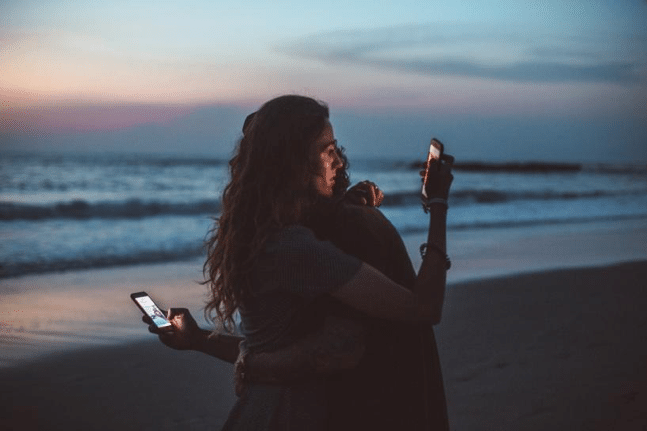
Feeling unproductive, unmotivated, and notice that you are wasting countless hours scrolling through social media? A social media cleanse may be a great decision to improve your well-being. In this week’s GKIS article, we will provide a step-by-step guide to putting down your phone and getting that much-needed break your mental health deserves. To help your tween or teen demonstrate they have the knowledge, problem solving ability, and judgment for social media, check out our Social Media Readiness Course. It’s an online course for tweens and teens that offers information about the risks of digital injury due to social media and psychological wellness tools. With a quiz for each module, they work their way through independently so their graduation certification demonstrates mastery of content. Of course, you can take it too if you’d like. It’s like driver’s training but for the internet!
According to pewresearch.org, 70% of Americans use social media.[1] For adults, the most popular social media platforms include YouTube (73%) and Facebook (68%). In contrast, 63% of teens use Instagram, making it the most popular social media platform amongst young users ages 15-25.[2]
According to the American Academy of Child & Adolescent Psychiatry, 90% of teens have used social media and teens spend an average of nine hours a day on social media.[3] Participants of a research study conducted by the Pew Research Center found that 74% of Facebook users visit Facebook daily. People of varying ages spend a lot of time on social media.
We use social media to view funny memes, stay connected to friends and family, meet new people, share opinions and information, show off passions and creative pursuits, advertise businesses, and even get news. Most of us find it extremely rewarding and feel we’ve got it under control. But for others, social media can negatively impact mental health.
Risks of Social Media Use
I’m a millennial who’s been using social media for 10 years. I’ve experienced a wide range of negative effects due to my social media use, including feelings of insecurity and not being good enough, anxiety, and the big one, fear of missing out (FOMO).
For years, I followed my friends’ and Instagram influencers’ profiles and wondered why I wasn’t as happy as them or why I couldn’t travel the world and have a life of fun and excitement. I often compared myself to others on social media and it hurt my mental health. In her book, Screen Time in the Mean Time, Dr. Bennett calls that “compare and despair” and believes it is a common contributor to teen anxiety and depression.
Social media can be a toxic place, especially during these unprecedented times. It’s too easy to spend hours on Google trying to figure out if you have COVID-19 and spend another 45 minutes scrolling through Facebook comments of people arguing over politics. Feelings are high and extreme opinions are rampant. According to helpguide.org, social risks include increased feelings of isolation, depression, anxiety, and insecurity.[4]
The Benefits of a Social Media Cleanse
To get away from negativity, a social media cleanse may be the answer. The benefits of a social media detox include:
More free time for other things, like research about a favorite topic
To research this article, I deleted all of my social media apps including my all-time favorite, Instagram, about a month ago. I was concerned that I was averaging too much screen time (6 hours a day), and I wanted to be more productive and connect more with my boyfriend and family.
My first week of being social media free was by far the hardest. But it became much easier after that. I often felt the urge to redownload my Instagram app, but for the most part I have been able to stay away.
The benefits of staying offline have really paid off for me. Almost immediately, I felt it was easier to fall asleep at night (since I was not on Instagram or TikTok late). I’ve also felt a reduction in stress, anxiety, and anger. Now I don’t feel the need to check my friend’s social media just to see what they’re doing all the time. Instead, I reach out directly to friends to reconnect.
I worried that if I deleted my social media accounts, I would feel more disconnected from my friends. But instead, I’ve kept in touch with them more than before my social media cleanse. Relationships and connections are important to me, and I’m glad that I’ve been able to connect in a more meaningful and sincere way. Overall, I’m happy with the results. I feel more mindful and present in my everyday life, my sleep has improved, I’ve experienced less stress and anxiety, and I have more free time to get work done and spend time reconnecting with the people I love.
Do You Need a Social Media Break?
Here are some red flags that may signal that you are ready for a social media cleanse:
You spend most of your free time on social media.
You feel like you need to share or post often.
You find it hard to focus on schoolwork or other life responsibilities.
You feel an increase in anxiety and stress after spending time on social media.
You feel more lonely, unmotivated, and less creative.
You are experiencing feelings of low self-esteem or low self-confidence.
You feel anxious without your phone.
You feel guilty or ashamed about the amount of time spent on social media.
How to Get Started
There are many ways to jump-start your social media cleanse. You can stop your phone use cold turkey, or you can delete one or two apps at a time. You can also cut down your friend list to only those you have a close, personal relationship with to cut out the less meaningful posts. Find whatever works best for you.
Here are some tips for getting started:
Deactivate or delete your social media accounts.
Delete social media apps from your phone.
Connect with family and friends in alternative ways.
Set a time limit on your phone to cut back on overall phone use.
Check your daily Screen Use and make adjustments if needed.
Set a specific “phone bedtime” before your actual bedtime (At least 3o minutes before you go to bed is recommended).
Make your bedroom a phone-free zone.
Turn your phone on “Night Mode” to decrease blue light emissions.[6]
Most importantly, remind yourself why you decided to go on a cleanse in the first place. And remember, your cleanse doesn’t have to be a permanent decision, you can always go back.
Enriching Activities to Reconnect Offline
There are endless possibilities for new enriching activities. You can practice meditation, pick up a new skill, or do that thing you’ve been meaning to do. Here are some fun ideas to reconnect with your loved ones:
Family game night
Family movie night
Cook a family dinner. Make it exciting by trying a new recipe or cooking an old family favorite.
Have a family yoga or workout session.
Practice meditation and deep breathing (alone or with family).
Using this extra time to reconnect and spend valuable time with your family is great, but it’s also important to spend time hanging out with yourself. Start by catching up on your sleep, creating a playlist, or reading a favorite book. Don’t feel pressured to constantly look for something to keep you busy unless that’s what you want to do. This is a well-deserved break. Do whatever you want with it and enjoy!
If you’re interested in learning more helpful tips about parenting in the digital age, check out the GKIS Connected Family Course. The GKIS Connected Family Course is family-tested and outcome-based and helps you close screen risk gaps and improve family cooperation and closeness.
Thanks to CSUCI intern, Remi Ali Khan for researching social media cleanses for this article.
I’m the mom psychologist who will help you GetKidsInternetSafe.
According to the International Labor Organization, there are an estimated 40.3 million victims of human trafficking globally, with 25% of those victims being children.[1] All youth are vulnerable to human trafficking. However, youth that are in foster care, identify as LGBTQ+, have run away, and are from abusive households are at the highest risk.[2] With online recruitment on the rise, grooming can take place right under our noses. This GKIS article covers what you need to know about human trafficking to keep your family safe from online predators.
Human Trafficking and Grooming
Human trafficking is “the acquisition of people by improper means such as force, fraud, or deception, with the aim of exploiting them.”[3] Often traffickers groom their victims online for days and even months before asking to meet in real life. Grooming is the act of building a relationship and trust, with the intent to manipulate and exploit the other person.[4]
As devices become more accessible to younger generations, their chances of encountering an online predator increases as well. With this in mind, we must take proper precautions when granting children screen-time. Let us help you with our free Connected Family Screen Agreement, a step-by-step digital contract that will help you clarify expectations, implement an expert action plan, and create a connection for safety and resilience. You can find the opt-in box in the right-hand corner of the GetKidsInternetSafe home page.
Recent Findings
According to the U.S National Human Trafficking Hotline, the number of trafficking crisis cases increased by more than 40% following shelter-in-place orders.[5]Crisis cases are defined as cases that require assistance with transportation, shelter, and law enforcement involvement within twenty-four hours of the report. Because of stay-at-home orders and mandated quarantines, the captivity of victims is being reinforced. The pandemic has also cut off economic opportunities, leaving people to become vulnerable to exploitation in exchange for basic needs.
A 2019 data report from the Polaris Project found that the three most common trafficking situations include sex trafficking (escort services, illicit massage businesses, pornography), labor trafficking (domestic work, agriculture, traveling sales crews), and a combination of the two.[6] In addition, this report indicated the average age of victims of sex trafficking as seventeen and labor trafficking as twenty-two.
In a 2016 survey conducted by Thorn, 260 survivors of domestic minor sex trafficking reported that technology is increasingly being used as a means of making contact for recruitment. 55% of those survivors reported meeting their trafficker via text, websites, and apps.[7] Further, findings show that traffickers weaponize virtual communication to contact and groom multiple victims at a time.
Grooming Tactics and Testimony
Online recruitment comes in different forms, including boyfriending through dating apps, fake job listings, and online marketplaces.[8]Boyfriending is defined as feigned romantic interests in order to form a trusting relationship with the victim. Trafficking recruiters use this tactic to lure their victims with intimacy, security, and sweet nothings.
Rebecca Bender shared her experience with boyfriending and human trafficking in her 2020 YouTube video with Anthony Padilla. A single mother at 18, all she wanted was to get herself and her daughter to a better place. She met a man online that promised her security. After six months of dating, she took a leap of faith to be with him.
One night when they went out, the man turned the car around to a strip of buildings without lights. He told her that she needed to pay him back (for moving expenses to Las Vegas), by participating in escort services. He used fear and physical abuse to get Rebecca to comply. Little did she know that she would become enslaved for the next six years with three different traffickers.
Since her escape, she has become an advocate in the fight against human trafficking. She offers the advice, “If anyone is forcing you to do something you are not comfortable with, it doesn’t just have to feel like this big, giant word of human trafficking.”[9] She elaborated that secretive jobs, frequent traveling, and hypersexuality (beyond your boundaries) within a relationship could be signs of exploitation. If you or someone you know is a victim of human trafficking, the National Human Trafficking Hotline is fully operational at 1-888-373-7888.
Psychological Manipulation
According to Psychology Today, three psychological staples behind grooming include instilling fear, manipulation, and coercion.[10]
Fear
Fear, aggression, and anger are emotions that trigger the amygdala within our brains.[11] The amygdala is like our smoke detector, in that it helps us determine how to respond to a threat.
Because the amygdala develops before our prefrontal cortex (our calm reasoning center), teens often make decisions based on an emotional response rather than experience-informed logical reasoning.
Predators are adept at identifying vulnerable targets who demonstrate immaturity, blind obedience, or those who have a social and economic vulnerability (e.g. youth living in unstable households, living in poverty, or participating in early drug/alcohol use).[12]
Manipulation and Coercion
Coercion and manipulation in the context of human trafficking typically come in the form of ultimatums and threats to maintain control over their victims. Because kids do not have the cognitive development or experience to reason through complex situations, they often fall back on obeying authority when faced with conflict. Predators exploit this vulnerability to reinforce control.
Everyday Real-Time Accessibility
According to a report from January 2015 to December 2017, data from the Polaris Project shows that common internet platforms used for recruitment include Facebook, dating sites, Instagram, and websites like Craigslist and online chatrooms.[13] Increasing, child screen access offers accessibility and opportunity.
Earlier this year, a video of a 37-year-old mother going undercover as an 11-year-old girl on social media went viral.[14] Within hours of creating the Instagram account and being clear that she was underage, an influx of explicit messages from strangers flooded the inbox. From there, the undercover team arranged to meet the predator and he was arrested. Videos like this one demonstrate that kids can be easy targets online. For more information on accessibility and sensible tips, check out Dr. Bennett’s GKIS article on sex trafficking.
Oversharing on Social Media
Victims are often identified as targets based on their willingness to overshare online. Different platforms provide opportunities for oversharing, including locations identified with geotagged photos, the Snap Map on Snapchat, and the Check-In feature on Facebook. Some platforms even require your location on your phone to be turned on to gain access to specific filters. To learn more about the dangers of these location features, check out this GKIS article about oversharing.
Online Gaming
Kids can also be readily groomed by predators on gaming platforms. A relative of mine told a story of how she received a message when she was fifteen years old from another gamer she met in the game’s online public lobby. He sent her a message asking for pictures, demographic details, and her home address (even after clarifying that she was only fifteen). He told her, “It’s okay that you’re fifteen, I’m eighteen, it doesn’t matter.” After being denied, he confessed he was twenty-two years old.
With the help of information and insight she’d gained from open, informative family conversations, she knew that his behavior was dangerous. She instantly blocked him and has not heard from him since. What might have happened if her parents hadn’t been proactive in offering education and support?
Among Us is a game that is currently popular among youth. I recently investigated this game for risk. Sure enough, in the public lobby of the game, it was common to see minors exchanging ages and Snapchat handles. I have even seen children as young as nine playing this game (one being my cousin), and streamers as old as thirty playing as well.
Although your message may be directed towards one person in that online lobby, the chat feature is open for 5+ other strangers to see. There is an option to censor the chat for inappropriate comments, but the unmoderated chat cannot be turned off completely. The game does provide the opportunity to play in a private lobby that requires a code. If your child plays this game, I suggest this option for friends and family. For more information about the dangers of games containing chat features, check out this GKIS article about the dangers of online multiplayer games.
Social Media Readiness Course
With all of this in mind, our children must understand the bigger picture of screen safety and online accounts. It is our responsibility as parents to do everything in our power to protect our children, but you don’t have to do it alone. GKIS offers our Social Media Readiness Course. Tailored for kids, our Social Media Readiness Course helps tweens & teens get educated about the risks of digital injury as well as Dr. B’s tested psychological wellness techniques. Using modules and mastery quizzes, this online course offers expertise to parents and kids, so they can maintain a healthy alliance against digital injuries and online predators.
Thanks to CSUCI intern Kaylen Sanchez for researching the digital age of human trafficking for this GKIS article.
I’m the mom psychologist who will help you GetKidsInternetSafe.
[9] Padilla, A. [AnthonyPadilla]. (2020, Nov 10). I spent a day with HUMAN TRAFFICKING SURVIVORS. [Video File]. Retrieved from: https://youtu.be/KGE_CUj0f1s