Need peaceful screen time negotiations?

Get your FREE GKIS Connected Family Screen Agreement

cutting

Anthony Bourdain and Kate Spade: Why Americans are Suicidal

Another tragic news story this morning; Anthony Bourdain committed suicide in his France hotel room. Chef, author, and host of the wildly successful series “Parts Unknown,” 61-year-old Bourdain seemed to have the dream life to the rest of us. This news after famous 55-year-old designer, Kate Spade, was pronounced dead by suicide Tuesday. She left behind a 13-year-old daughter. Devastating. So many speculations about depression and marital conflict. We are all asking, why? How could this be?

It’s not just celebrities that struggle with emotional overwhelm. Too often parents in my practice sit on the edge of my couch terrified that their child’s social media post about wanting to “go dark” and their announcement that they have the lamest parents ever is the red flag that they could lose him to suicide. Teens tell me how burdened they are with worry about their friends who are cutting, using drugs, and talking of suicide. They keep their confidence and listen; all the while caught in terror that telling an adult will violate the loyalty code but not telling may result in a more tragic consequence. Those who are suicidal leak their pain out bit by bit, desperately grasping for a moment of contentment and calm. Suicide rates are up by 25%, yet we aren’t clear what factors support this devastating trend.

Although many suicidal people are depressed or addicted to drugs or alcohol, many are not. The one thing suicide completers have in common is a perfect storm of events that culminate in five minutes of the courage it needs to escape their current situation. For those who are suffering from terminal illness, chronic pain, addiction spirals, mental illness, and/or horrific life circumstances, we can kind of understand that logic. After all, who hasn’t dreamed of a moment of relief when mired with emotional or physical pain?

Those Left Behind

What we don’t understand, and in many circumstances can’t forgive, is how can the suicidal burden friends and family with such devastating feelings of confusion and loss. When one loses a loved one to suicide, they are left ruminating over what they missed, how they might have intervened. They grieve, and they rage. They become trapped in that vicious cycle of fear and confusion similar to the suicide victim, usually for far longer than the suicide victim contemplated their plan. With postmortem analysis, there’s no opportunity to discover all the pieces of the puzzle or intervene for recovery. The decision to give up has been made for them, usually without sufficient explanation or warning. If one didn’t know better, it would seem suicide is a violently hostile behavior aimed at all those who love.

We must know better, for the sake of Asia Argento, Andy Spade, and Frances Beatrix Spade. And please, please, please don’t judge or shame the victims left behind. I’m disgusted with online comments blaming parents and spouses. They are suffering so much already. They need our love and compassionate support more than ever.

The truth is, most suicidal individuals I have worked with explain after recovery that they simply couldn’t generate any other alternative to escape their overwhelming feelings of hopelessness. That in the midst of it all, they were simply numb to possibilities.  This brings me to three important points when dealing with suicidal ideation.


Take the Time

First, to recover from life crisis, one must be prepared to take the time to process powerful feelings with the intent of working through them. That means recognizing that in the phase of emotional numbing or overwhelm, parts of the brain are actually offline. They are not available to fill in the overall picture of understanding and insight. Often it takes time to sketch in the emotional factors necessary for insight and emotional mastery. As our brain and feelings come online again, we will feel a range of sometimes baffling emotions. For some that is experienced as a slow drip, while for others it will be a firehose. For most, those feelings wax and wane based on situational cues, resulting in a rollercoaster of experience. Painful and sometimes seemingly impossible, tolerating the leaning in is necessary for the stretching of the soul that is wisdom.

To support those struggling to lean in, help them establish peaceful moments for honest, investigative discovery. These moments of authentic insight weave into profound wisdom over time that becomes the tapestry of who we really are. Coming out of a crisis with a more integrated and thorough understanding of oneself and others is called post-traumatic growth. Sometimes it is at times of extreme pain that one becomes capable of understanding the precious elements of life. The key is to lean in and patiently recognize that recovery is imminent.

Encourage Active Problem Solving

Second, work to achieve recovery by actively problem solving and making an activity schedule (take a walk, shower, eat breakfast, visit a friend, make a meal, listen to rejuvenating music, write in your journal or engage in some type of creativity). Psychology researchers have identified active problem solving as an important contributor to recovery. Active problem solving is the ability to generate and implement discrete steps to make the situation better. In contrast with passive problem solving, or relying on others or fate or luck to fix things, active problem solving can pull in just enough hope to get help or find reasons and ways to stay living until things get better.

Agreeing to Silent Witness May be Emotional Abuse

The final point I’d like to offer is how to provide the best support to a friend or loved one in pain. Too often young people in my practice shoulder the devastating burden of the emotional chaos that their friends express in private online disclosures. To seek help is a breach of trust and loyalty. But to endure the pain with the friend can wear one down to the point where they too are depleted of passion, hope, and joy. Is the solution to tell adults for help and risk angering the friend who seems incapable of tolerating yet another disappointment?

The answer is, absolutely. Every day I teach clients that being there for those we love is the fuel of intimacy. However, when one crosses the line to self threat, either with self harm, drug abuse, or suicidal threats, private disclosure can become emotional abuse. When friends fish for support with threat and then demand secrecy, they are burdening others in a helpless shackle of emotional violence. Unloading pain on a loved one without taking steps for recovery traps them as a devastated and impotent audience to destruction. That is not friendship.

If you or somebody you love is struggling with emotional overwhelm, numb hopelessness, or an inability to actively problem solve, take these steps for relief:

  • Reach out for professional help.

  • Recognize that these feelings are temporary. The permanent solution of suicide is too devastating to all of those who love you to be a reasonable option.

  • Give yourself the occasional self-compassionate, quiet time it takes to gently process your feelings as you engage in the routines and rituals of everyday life.

  • Avoid alcohol (a depressant).

  • Seek restorative sleep, exercise, and clean, delicious food.

  • Postpone big decisions.

  • Allow your friends the privilege of support and surround yourself with pleasant memories and precious future plans.

  • If you are witness to self-harm threats, whether this is your loved one, your friend, or your child’s friend, notify the person’s loved ones or reach out for professional help. Silently shouldering your knowledge is missing opportunity for potentially life-saving intervention.

Life is a difficult journey, but it is worth the fight of living it well. When in doubt, always err in the direction of compassion. What do you think? To read more about the components of suicide risk, check out my 2014 article The Death of Robin Williams: Suicidal Impulse, the Media, and Your Obligation As a Compassionate Citizen of the Planet.

National Suicide Prevention Hotline: 1-800-273-8255

Live & online chat available 24 hours/day

I’m the mom psychologist who will help you GetKidsInternetSafe.

Onward to More Awesome Parenting,

Tracy S. Bennett, Ph.D.
Mom, Clinical Psychologist, CSUCI Adjunct Faculty
GetKidsInternetSafe.com

Photo Credits

Photo by Ian Espinosa on Unsplash
What Parents Need to Know About America’s Cutting Epidemic

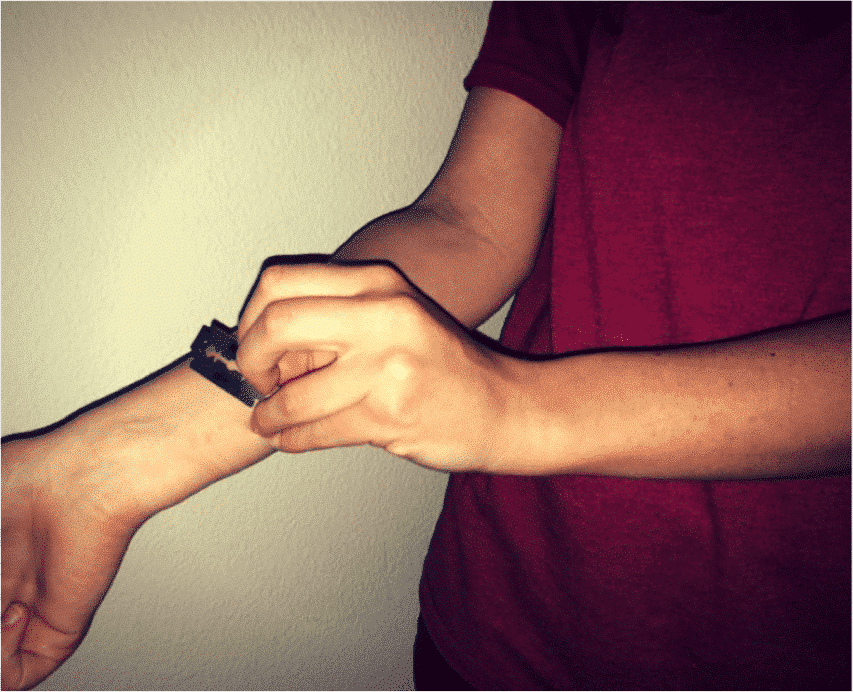
Teenager About to Cut Arm with Razor
Pia was 13-years-old when she cut herself for the first time. She was confused, lonely, and hopeless. Self-harm provided a distraction from her emotional pain and anchored her to her physicality amongst the numbness. She started with a tiny cut, ultimately inflicting deeper and deeper cuts. Even the hours anticipating cutting brought her comfort. She found a community of cutters on an online forum who provided support and caring while also encouraging more dangerous behaviors. She wasn’t alone with her shameful secret. But she wasn’t stopping either … Could your child end up like Pia?

Cutting

Cutting refers to self-harming practice distinct from a suicide attempt. Cutters typically make small superficial cuts on their arms, legs, or parts of the body easily concealable by clothing. Cutting distracts the individual from emotional pain, releases endorphins which may trigger a mood boost, and is often a cry for help rather than an intent to inflict lethal harm (Davis, 2005).

Dr. Bennett often treats teens and adults who self harm. I’ve also seen several cutting incidents working as a paramedic. Because the cutting ritual can take on profound meaning, some injuries are uncomfortably creative. For instance, I’ve seen kids cut shapes, patterns, words, and even sentences into their skin. When I interviewed Pia for this article, she showed me her first “masterpiece,” the word “HATE” cut into her right thigh.

Why cut?

Pia: “I remember a painful time in my childhood when my dad didn’t come home at night. My mom told me he had troubles at work, and that I shouldn’t be worried. But then it started to become a habit, and my dad would be gone most days of the week. I was really attached to him. I missed having a male role model and friend who could tell me what to do when there seemed to be no way out for me. When my parents got a divorce my world fell apart. I felt lonely, hopeless, sad, and misunderstood. I withdrew more and more, lost most of my friends, and started to become depressed. Since I wasn’t able to soothe my emotional pain on my own, I looked for answers online. That was when I found out about cutting.”

***
The most common reasons teens give for cutting are that they’re trying to make themselves “feel alive” instead of the numbness, or they’re trying to distract themselves from intense or overwhelming emotions such as anger or hurt (McCoy, 2009).
***

That was true for Pia. She wanted to have the control and power of harnessing pain whenever she wanted. She said that sometimes when she woke up in the morning, she felt nothing but emptiness. Cutting helped her “feel” her body again rather than just feeling intense emotional pain.

The controversial Netflix show 13 Reasons Why addresses self-harming behavior, with the main character ultimately committing suicide, leaving behind her audio-recorded 13 reasons “why”. The show was a huge success, with children of all ages binge-watching it over spring break without their parents’ consent. I wondered, if this show could be a danger to teens already on the edge?

During an interview for I-heart radio, Dr. Bennett referred to the show and stated that a majority of people have suicidal fantasies at one time or another. She suggested that 13 Reasons Why could trigger vulnerable teens. She lectured in our psychology class that she has seen self-harming behavior be quite contagious in schools and inpatient treatment settings, spreading from teen to teen quickly. Now the Internet is a source of cutting contagion.

Who cuts, and how common is it?

Cutting is a fairly common practice in the United States. There are about two million cases reported annually with approximately 15% of teens reporting some form of self-injury. Studies show an even higher risk for self-injury among college students, with rates ranging from 17%-35% (Mental Health America, 2013). One in five females and one in seven males have engaged in self-injury practices (Gluck, 2016). Ninety percent of people who engage in self-harming techniques start during their teen or pre-adolescent years (Gluck, 2016).

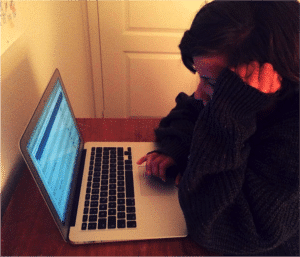
Parent Researching Cutting Epidemic on Laptop

Did the Internet contribute to Pia’s cutting?

Pia: “I remember sitting at my desk. I was supposed to do homework but instead I Googled “how to deal with emotional pain.” Somehow I stumbled on a few websites which mentioned cutting. Pretty soon I was hooked, researching for hours and eventually finding a useful tutorial how to start my first cut.”

Experts say the Internet is the main contributor for teens to not only find out about the various methods of cutting but also to demonstrate or even glorify self-injury (Steinberg, 2014). Forums like “The Cutting-Board” encourage kids to share their concerns and questions about cutting and find useful expertise. Tips and tricks about how to hide their cuts, what do to if someone gets suspicious, or advice when cutting-goes wrong are popular posts. Furthermore, there are several YouTube tutorials of “how to cover up your scars after cutting,” like a video by 14-year-old Julia Ansell.

How to recognize that your child is cutting

Concealing clothes
If your child suddenly starts wearing long sleeves even during hot days, this could be a sign that she is hiding injuries or scars.

Behavioral changes
Social anxiety, depression, and low self-esteem are often comorbid with cutting (Davis, 2005). If your child starts isolating, eating more or eating less, sleeping more, acts lethargic, isn’t interested in his usual interests, or acts sad or irritable, keep an eye out for self mutilation practices.

Spending time browsing for information about self harm and visits on online forums
Kids often use secret terminology to hide their online activities from parents. Hashtag terms like #sue (a synonym for suicidal) or #secretsociety123 are popular code words to discreetly form online communities discussing self-harm (Yandoli, 2014). Sometimes pictures with these hashtags overlap with other self-harming techniques or mental disorders like anorexia (#ana) or depression (#deb).

Possession of cutting tools
Keep an eye out for sharp objects that may be used for cutting, piercing, or burning like razor blades, knives, paper clips, broken glass, scissors, needles, or lighters.

Cuts, bruises, burns, or scars
Kids will occasionally change methods or location if they fear detection. Escalation is rare but can become an issue. Dr. Bennett has treated clients with comorbid mental illness that went as far as breaking joints with a ball ping hammer or engaging in oddly ritualistic mutilation like the practice of suspension (piercing the skin with hooks and hanging from them).

What you can do for your child?

Be empathetic and sensitive
If you see evidence of intentional injury, ask about it in a straightforward, emotionally neutral manner. Of course share your concern, but be careful not to escalate the situation by panicking, threatening, or lecturing.

Be supportive and present for your child
Let your child know he or she can always come to you with any troubles, issues or concerns. Make yourself available and willing to talk when your child approaches, on her terms. Kids often avoid talking to their parents, because they’re afraid that they’ll lose their trust or add an additional stress factor to an already stressful situation, like going through a divorce or financial issues (Steinberg, 2014).

Express your emotions
Be authentic and present. Not only does this model appropriate communication strategies, but your child will recognize that he is loved and important. Tell him that you can get through this together.

Seek help and treatment
Cutting is often an expression of distress from mental disorders, like depression or anxiety. Consult a clinical psychologist who has specialized training with self harm behaviors. Not only can a clinician work with your child to achieve insight and build resilience by teaching emotional coping skills, but she can also provide much needed consult and support for family members. Often times kids will accept influence from a therapist even when they are dismissive of parenting support.

CSUCI Intern, Lisa Sommer Thank you to CSUCI Intern, Lisa Sommer for writing this important piece. Please share your thoughts in the comments below. Self harm forums are common on the dark net. To find out more about that, check out Dr. Bennett’s article, GetKidsInternetSafe Sheds Light on the Dark Net: Drug Traffickers, Child Pornographers, and Nude Selfies.

I’m the mom psychologist who will help you GetKidsInternetSafe.

Onward to More Awesome Parenting,

Tracy S. Bennett, Ph.D.
Mom, Clinical Psychologist, CSUCI Adjunct Faculty
GetKidsInternetSafe.com

*Due to professional discretion, Pia is a fictional name.

Works Cited

Davis, J.L. (2005). Cutting and Self-Harm: Warning Signs and Treatment. WebMD, Retrieved April 23rd, 2017 from: http://www.webmd.com/mental-health/features/cutting-self-harm-signs-treatment#1

Gluck, S. (2016). Self Injury, Self Harm Statistics and Facts. Healthy Place, retrieved April 24th, 2017 from: https://www.healthyplace.com/abuse/self-injury/self-injury-self-harm-statistics-and-facts/

McCoy, K. (2009). When Teenagers Cut Themselves. Everyday Health, retrieved April 23rd, 2017 from: http://www.everydayhealth.com/kids-health/when-teens-cut-themseleves.aspx

Steinberg, S., (2014). What to Do If Your Child Is Cutting. US News, retrieved April 24th, 2017 from: http://health.usnews.com/health-news/health-wellness/articles/2014/02/28/what-to-do-if-your-child-is-cutting

Krystie Lee Yandoli (2014). Inside The Secret World Of Teen Suicide Hashtags. For buzzfeed, retrieved April 30th, 2017 from https://www.buzzfeed.com/krystieyandoli/how-teens-are-using-social-media-to-talk-about-suicide?utm_term=.jtRrkE8Q9#.kpAzK8oX6

Photo Credits

Girl with a Razorblade, 2016 CC0 1.0

Girl on the Laptop, 2016 CC0 1.0

The Underworld of Hashtags: Does Your Teen’s Hashtags Hide a Secret?


Since the 2010 launching of the mobile app, Instagram, users share pictures and videos with their peers like never before. While this social media app provides a fun and convenient way to show off family photos and adorable pets, it can also be a source of worry for parents. Do you worry about who is viewing their child’s photos and what they are posting? If so, you’ll be happy to learn about the possible dangers of hashtags.

What are hashtags?

Hashtags are “#” symbols in front of words or short phrases that drop them into a posting page with the same tag. Sorting content this way allows others to see your picture and any other pictures that use the same hashtag if your social media profile is not set on private. Click on a hashtag phrase like “#Monday”, you would be directed to a page of #Monday photo collections from all Instagram photos tagged with #Monday from various user profiles.

Hashtags seem harmless, should I worry?

Most hashtags are used for fun and harmless sharing (#MomGoals, #GKIS). However, as with any social media trend, teens often use this tool to find and contribute to pages with explicit material. One way to hide this activity from parents is to use vague or shortcut terms.

An unfortunate example of this secret language is for pictures depicting images of self-harm (#cutting) and eating disorders (#mia, #ana). While some profiles provide helpful information to help empower those in distress, others overtly encourage self-destructive behaviors. These online communities are commonly known to share detailed techniques and strategies, provide emotional support, and serve as a launch pad for online friendships. In my clinical practice, these relationships often spiral into emotionally dependent and frequently abusively manipulative pairings that remain hidden and are resistant to protective parent intervention.

Hashtags are used on most social media sites, including Instagram, Twitter, and Tumbler (Whitlock, 2009 & Nock, 2010, as cited in Moreno, 2015). Although many kids go looking for these forums after they’ve already experimented with concerning behaviors, others get started this way (Seko, 2011, as cited in Moreno, 2015).

Until social media sites improve the strength of their content advisory, parents must keep their children safe from viewing explicit content.

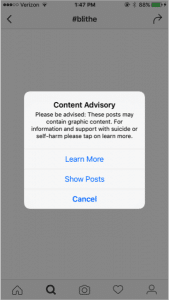
Instagram now has a content advisory that pops up and warns users of content that might be graphic and even provides resources for help with eating disorders and links to helplines. However, just as kids are great at creating sharable online resources, they are also great at staying hidden from parental interference. For example, in a 2015 study that identified similar hashtag meanings on multiple social media sites, vague and hard to identify hashtags including “#mysecretfamily”, “#blithe”, “#Bella” or “#Ben” (a term used for Borderline Personality Disorder), “#Ana” or “#Rex” (used to reference Anorexia), and “#Sue” or “#Dallas” (terms for suicide) (Moreno, 2015). Only a portion of these hashtag terms generated a content advisory warning.

GKIS TIPS for protecting your children from viewing destructive online content:

  • Check out social media site help centers for information. For example, Instagram’s help center provides downloadable privacy and safety guides for parents, teens, and gives information and resources for addressing abuse and eating disorders. 
  • Make sure that your child’s social media profiles are set on private.
  • Have open conversations about what your children view and post online. Remind them that they can talk to you if they do accidently view images, post, or receive something that makes them uncomfortable. No blame, no shame.

By opening up nonjudgmental conversations about what your child may view on social media and mental health issues, you model healthy communication skills, promote stigma free views on mental health, and most importantly, develop a positive and loving relationship between you and your child. If you feel they are too young for these discussions, then they’re too young for social media.

Parenting can be incredibly difficult at times. Parenting a teen struggling with painful psychological issues is particularly scary. In situations like these, many aren’t sure where to turn or what to do. As a psychologist and a mom, I want to remind you that you are not alone. Whether your concerns are about Internet safety or getting a better understanding of where your psychological issues your child may be dealing with, GetYourKidsInternetSafe is here as your resource.

Thank you to CSUCI Intern, Brooke Vandenbosch for teaching us about the #RisksofHashTags. If you’re looking to get a better understanding of issues your teen may be struggling with like suicidal ideation, check out my other article The Death of Robin Williams: Suicidal Impulse, the Media, and Your Obligation As a Compassionate Citizen of the Planet.

I’m the mom psychologist who will help you GetYourKidsInternetSafe.

Onward to More Awesome Parenting,
Tracy S. Bennett, Ph.D.
Mom, Clinical Psychologist, CSUCI Adjunct Faculty
GetKidsInternetSafe.com

Photo Credits

I Died So I Couldn’t Haunt You, CC BY-ND 2.0

Holding Hands, CC BY-NC 2.0

Works Cited

Moreno, A.M., Ton, A., Selkie, E., & Evans, Y. (2015). Secret Society 123: Understanding the Language of Self-Harm on Instagram. Journal of Adolescent Health, 58, 78-84