During the last couple of years, cryptocurrencies and NFTs were one of the biggest trends on social media. They represent a complicated form of financial technology that got the attention of mainstream news media and even had a commercial air during the 2022 Super Bowl. How does it all work? And is it something that I should worry about? We’re going to break down some of the questions you may have about this technology and highlight some of the controversial issues surrounding the social media craze.
What are cryptocurrencies and NFTs?
Cryptocurrencies are a form of digital currency created for use on the Internet. GetKidsInternetSafe previously published the article “What is Bitcoin anyways?” that goes in-depth on the subject, but we’ll cover some of the basics here as well.
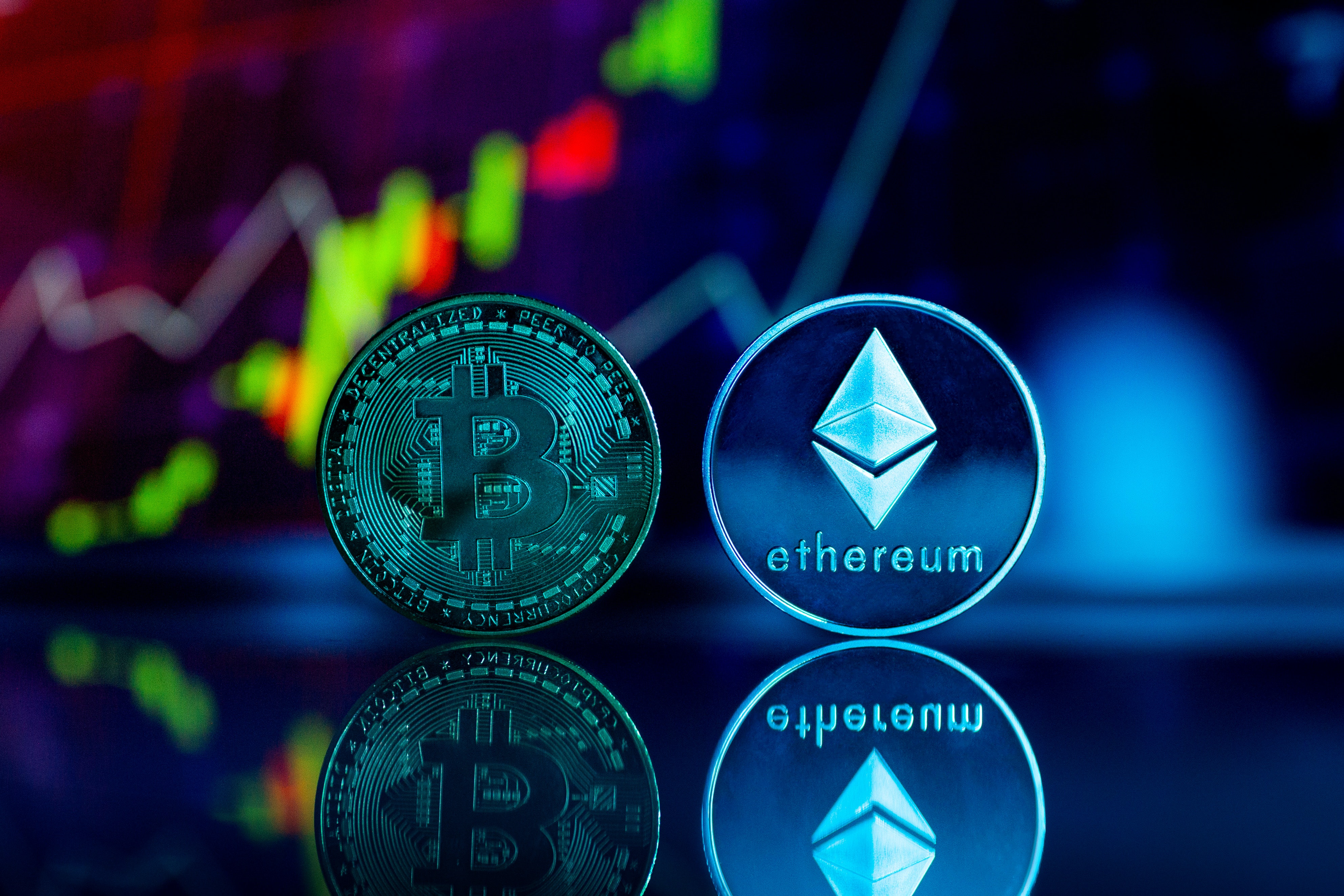
Bitcoin and other more recent cryptocurrencies like Ethereum and Dogecoin were created to have a decentralized form of currency that was not tied to banks or other financial institutions following the 2008 housing market crash.[1] Cryptocurrencies are not stocks but they are often traded in a similar way because of how much their value can fluctuate over time. All cryptocurrencies are managed using a type of program called a blockchain, which is a publicly viewable list of all transactions and activity done with a specific cryptocurrency. All transactions made on a blockchain are verified by the other users, which makes it impossible for anyone to make changes to old transactions without that change being corrected immediately.
Non-Fungible Tokens, more commonly referred to as NFTs, are another technology created using blockchains. NFTs function like serial numbers attached to virtual data and are used to show ownership and authenticity of that data similar to a deed or certificate. They cannot be copied, substituted, or subdivided, and they’re used to create a unique digital object. The most common form of NFTs is images, but the technology can be used for music, videos, documents, or anything else that can be stored digitally.
How did NFTs become so successful?
NFTs are a technology that has been around since 2014[2], but they were brought into the media spotlight in March 2021 when digital artist Beeple sold an NFT collage of his artwork for 69 million dollars.[3]
The trend exploded in popularity afterward, with the next series of major sales coming from original creators of various early internet viral memes selling their creations as NFTs for tens or hundreds of thousands of dollars[1]. In the digital art community, NFTs were also heavily marketed to artists as a solution for online copyright infringement and art theft.[2]
Major investors like Elon Musk[4] and Mark Cuban[5] began to invest in cryptocurrencies, and celebrities like Matt Damon[6] and Larry David[7] have acted in advertisements for the new technology, with one of them playing during the 2022 Superbowl. NFTs had become a lucrative business model in only a couple of months, but this surge in popularity did not last for long.
The Technical Problems with NFTs and Cryptocurrency
As NFTs and cryptocurrencies both began to receive mainstream attention and thousands of new users, various technical problems began to hamper their success. Despite the early successes in March, by June 2021 the market had already dropped by 90%.[1]
Slow speeds
Blockchain technology is not a quick or efficient system for handling monetary transactions, and if a user tried to use their cryptocurrency to make a purchase, they would face wait times of 30 minutes to several hours in a queue before their transaction would be approved[8].
Security Problems
Due to unaddressed security risks in their programming, NFTs became notorious for being stolen by hackers.[9][10] Because blockchains cannot have their history changed, and because they’re unregulated by the government, if your NFTs were stolen this way there was no way to recover them.[8] NFTs also don’t have any inherent connection to copyright or trademark law, so your digital ownership only extended to the NFT program itself, not the artwork that it was connected to.[2]
Another problem caused by the lack of regulation was that the artists who had been the target of early NFT marketing were facing more art theft problems than before. There were no protections to prevent somebody from creating NFTs using another person’s art, and many artists found that their art was already being sold on cryptocurrency apps without their approval or knowledge. In some cases, NFTs were created using artworks from deceased artists without consulting the artists’ families.[11]
Environmental Problems
NFTs and cryptocurrency are also horrible for the environment. Because the process of operating and interacting with a blockchain requires hundreds or thousands of computers to be operating all at once, they consume extreme amounts of electricity. Conservative estimates for the total amount of electrical energy consumed and CO2 emissions caused by cryptocurrency rival those of mid-sized European countries.[12]
The Financial Risks of Crypto
The largest problem with cryptocurrency and NFTs, however, is that most projects were intentionally made to scam people out of their money. These digital assets only have value because of the amount of real money that is inserted into them by investors, and unlike banks or the stock market, they don’t generate additional wealth over time.[13] To make a profit with cryptocurrency, it has to be sold to somebody willing to spend more money on it than what you originally purchased it for.
“Pump-and-dump” scams like this are not only common but encouraged in many cryptocurrency communities as a way to make quick profits.[1] Most artists who began selling their art as NFTs were selling at a loss after transaction fees and costs associated with creating the NFTs.[14] The cryptocurrency apps which handle these transactions are aware of these practices, and many of the security problems mentioned earlier were neglected because their creators profited off of the transactional fees.[10]
How to Protect Yourself and Your Family from Cryptocurrency Scams
While the trend of cryptocurrency and NFT projects being advertised has gone on the decline, there are still pushes for the technology to be used in other parts of the web.
Here are some things you can do to help protect your family from cryptocurrency and NFT-related scams:
Keep an eye on new internet products and services that talk about NFTs, Ethereum, Bitcoin, blockchains, and Web3.0. These are all buzzwords that are commonly associated with each other to help sell the idea of cryptocurrency on social media.
Sign up for the FREE GKIS Connected Family Screen Agreement, which covers the basics of preventing digital injuries and opens a forum of discussion for you and your family to discuss internet safety.
Take a look at the How to Spot Marketing and Cybersecurity & Red Flags Supplements for the GKIS Connected Family Screen Agreement, which can help you to stay safe against identity theft, hacking, and scamming strategies common on the internet.
Thanks to CSUCI intern Brandon Bishop for researching the history of cryptocurrency development and authoring this article.
I’m the mom psychologist who will help you GetKidsInternetSafe.
If you’re like me, you’ve been hearing the word bitcoin a lot lately. How can a topic so fascinating be so confusing to the rest of us? What is bitcoin anyway? Is it good or bad? Should I invest in it? Is it here to stay, or is bitcoin a fad? From its mysterious founder to Dark Net scandal, you won’t want to miss this one.
What is bitcoin?
Bitcoin is a digital cryptocurrency that lives virtually to be exchanged on the Internet. The same way paper bills and metal coins have value, Bitcoin has value because we believe it has value. Bitcoin is not stock in that it has no intrinsic value or relationship to a specific company like stock (Jaffe, 2018). It’s virtual money.
The concept of bitcoin was hatched by a mystery man in 2008 who goes by the pseudonym “Satoshi Nakamoto,” whose worth is estimated to be $6 billion (Bearman, 2017). Nakamoto turned the network alert key of bitcoin over to Gavin Andresen in 2010 and has since disappeared from any bitcoin involvement. Andresen has stated that he immediately worked to decentralize the workings of bitcoin in order to assure its perpetuation. Experts believe that if the identity of this founding individual or group of people were revealed, it could raise concerns regarding bitcoin’s political standing within the company and the economics as well (Bearman, 2017).
How does it work?
You can buy bitcoin by depositing money into your online account and then converting it through companies like Coinbase to purchase your own bitcoins (Popper, 2017). From there, using your private digital key and digital signature, you can buy and sell them, purchase items on the web, or save them in your account and see if the value increases or decreases based on people’s trust in the system. Your virtual wallet stores your credentials necessary to manage your bitcoin holdings.
Who’s in charge of bitcoin?
Unlike traditional American currencies, bitcoin has no trusted central authority regulating its use. Instead, bitcoin is managed using a blockchain, which is a public ledger of bitcoin transactions. This distributed database uses a network of communicating nodes to run bitcoin software. Frequent publication of bitcoin spending is published on all nodes, leaving a confirmed, consistent, and unalterable transaction record. Unspent bitcoin resides on the blockchain with a specific bitcoin address. Transactions can be traced, but the use of bitcoins is mostly anonymous. That’s right, the individuals using bitcoin are unidentifiable except to über experts like the FBI or hackers.
In addition, computer servers use a lot of power to contain and store bitcoins. Bitcoin mining is a complicated process where data from transactions are compiled onto blockchains and then used to solve a mathematical problem to thus release more bitcoins (Roberts, 2018). Experts then locate areas where miners can buy power to run computer servers for the cryptocurrency (Roberts, 2018). It is even known that some bitcoin mines are located in old mining sites where temperatures stay cooler and prevent the servers from overheating!
As bitcoin grows in value and expands to more locations, more power is needed to sustain the servers, which means that the bitcoin miners have been scoping out areas for even more power than when bitcoin first began (Roberts, 2018). One of the areas in which miners have been using since 2013 and still is a large mining location for bitcoin is the Mid-Columbia Basin near the Columbia River, where it is said that this may be “the best place to mine bitcoin in America” because of electricity availability (Roberts, 2018).
To try to cope with the seemingly impossible demand for more mines and more servers, miners have collaborated with one another in mining pools in an effort to combine resources and portion out profits (Roberts, 2018). However, as miners are starting to build larger mines in order to accommodate more computer power, the government is starting to try to regulate the energy being used by bitcoin miners (Roberts, 2018). This is a step back from decentralization, which is something bitcoin has prided itself on since the beginning.
How is bitcoin used?
The majority of transactions using bitcoins are to buy and sell bitcoins with others on the web, but some use this cryptocurrency for more sinister deals on the dark net. In the far corner of the web is a place called the dark net, where anonymous transactions take place for heinous crimes like child sex trafficking, drug deals, assassination deals, and child pornography (Bartlett, 2014). By downloading a Tor browser, one can enter the dark net without a traceable address (Bartlett, 2014). In the dark net online drug market, known as The Silk Road, illicit drugs can be purchased using bitcoin (Bradbury, 2017). Recently more than 400 dark net programs have been seized by the US government, largely because the government couldn’t regulate the currency exchange (Bradbury, 2017).
The Value of Bitcoin
Bitcoin’s value has skyrocketed from $12 in 2013 to $10,000 in 2017 (Popper, 2017). If you invested in bitcoin in its early days, your small investment may be worth tens of thousands of dollars. However, experts believe that bitcoin value is declining in comparison to traditional stock markets (Kharpal, 2018). The changing values of stocks and bitcoin, however, are likely due to completely different reasons (Kharpal, 2018). Unlike economic factors, such as trade, that affect stock market values, bitcoin’s value is affected by user factors like FOMO and FOR (we just made that one up – fear of regulation) (Kharpal, 2018). The future of bitcoin remains controversial. Some experts believe that bitcoin is currently in a speculative bubble and will ultimately die out as a fad; others believe it will stabilize to a new form of currency (Kharpal, 2018).
What are the risks?
About 20% of all purchased bitcoins are lost(Reply All, 2018). On a Reply All podcast, a woman explained that she purchased bitcoins several years ago but couldn’t recover them because the computer she had at the time was broken and she lost her digital key (Reply All, 2018). With the help of a bitcoin hunter, the woman on the podcast recovered her balance, which turned out to be worth less than she hoped. The way to locate bitcoins can be confusing, but essentially bitcoin hunters use software programs to track bitcoins moving from one account to another (Reply All, 2018).
Bitcoin is frequently used for unscrupulous dark net transactions.
Bitcoin can be stolen if a server is breached or somebody gets ahold of your credentials.
Bitcoin’s sustainability is reliant on public confidence (Ely, 2017).
What are the benefits?
Because the cryptocurrency is decentralized and the government has no involvement, bitcoin has a lower inflation risk compared to other forms of money or the stock market (Chokun, 2018).
Bitcoin transactions are anonymous, simple, convenient, and cheap (Chokun, 2018).
Because new blocks are mined all the time, it is very difficult to make modifications to the blockchain, making it highly resistant to attack.
Will bitcoin last? Credible sources indicate both yes and no. At the moment, bitcoin is plummeting, and some experts say that within a decade bitcoin will value at more like $100 (Meyer, 2018). On the other hand, some investors believe that it is not so far-fetched to think that one-day bitcoin could be worth trillions (Hackett, 2017). I guess the only way to know for sure is to wait and see.
Thank you to CSUCI intern Allie Mattina for her awesome work on this complex article! For more information on one unfortunate way that bitcoin is being used, check out the GKIS article, Yes, Your Kids Can Buy Drugs Online. By being aware of the inappropriate ways that teens can use the web, we can start avoiding the problem behaviors before they start.
I’m the mom psychologist who will help you GetKidsInternetSafe.