
Need peaceful screen time negotiations?

Get your FREE GKIS Connected Family Screen Agreement

covid-19

Our Youth Mental Health Emergency

The CDC recently released its Youth Risk Behavior Survey reporting that an alarmingly high percentage of American teens, particularly girls and LGBQ+ youth, are suffering from distressing mental health symptoms. With stressors like isolation from the COVID-19 lockdowns, too much screen use, frightening news reports, increasing college pressures, increasing financial strains on families, and the compare and despair dynamics that arise from social media, kids are feeling the pressure. Child experts and advocates have called for the Biden administration to declare a youth mental health emergency and are begging schools to adopt better trauma-informed health and sex education. What are the contributors, and how can we help?

The Highlights

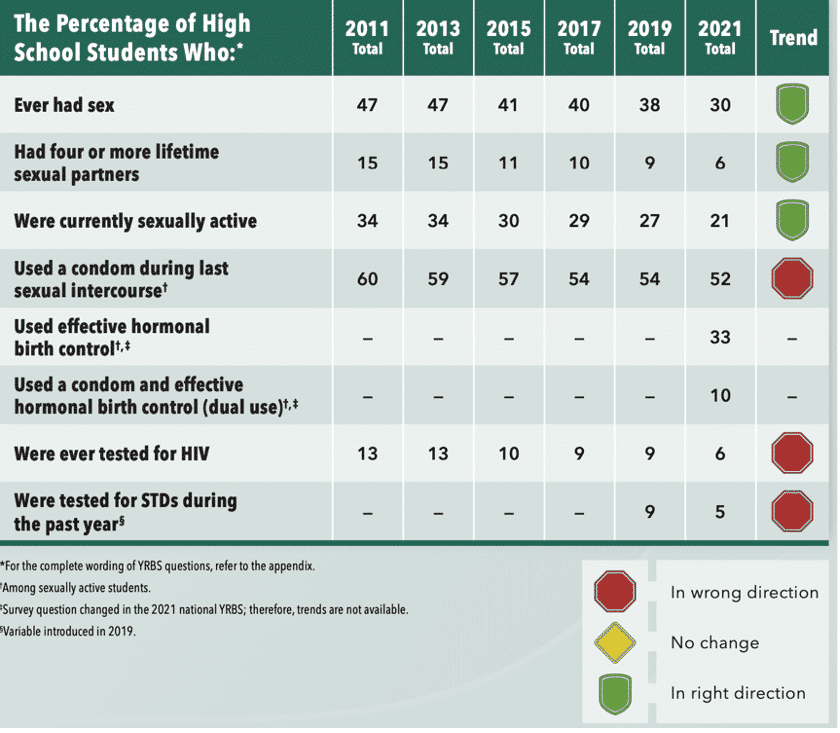
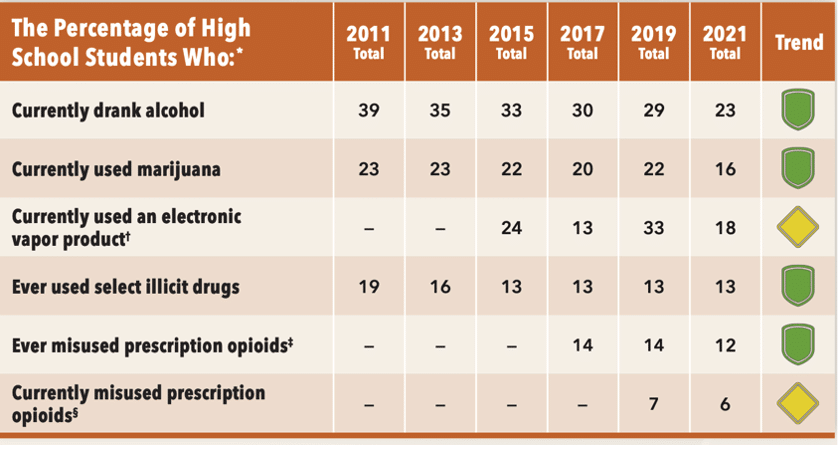
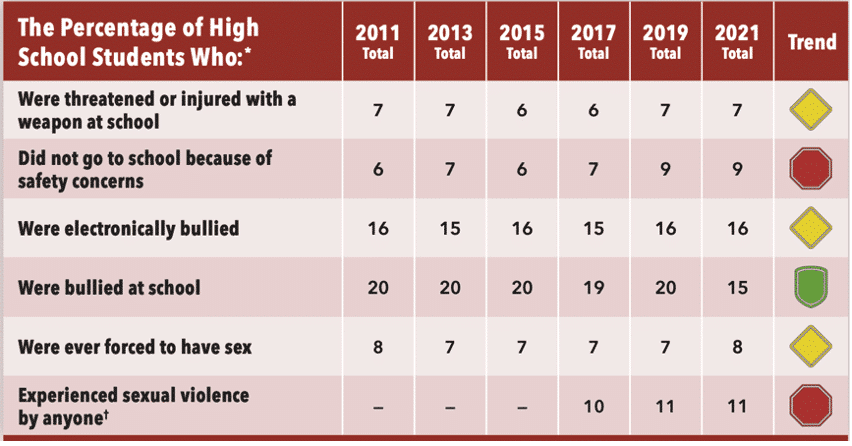
The CDC report data comes from 17,000 U.S. high school students who were surveyed in the fall of 2021 when most schools returned to in-person teaching. The good news is that overall sexual activity, substance abuse, and in-school bullying are down. The bad news is that teen safety concerns due to violence, sadness, hopelessness, and suicidality are up, especially among girls and LGBQ+ students (trans students were not identified for this survey).

Here is the Summary of Findings from The Youth Risk Behavior Survey Data Summary & Trends Report: 2011–2021

Sexual Behavior
Substance Abuse
Experiencing Violence
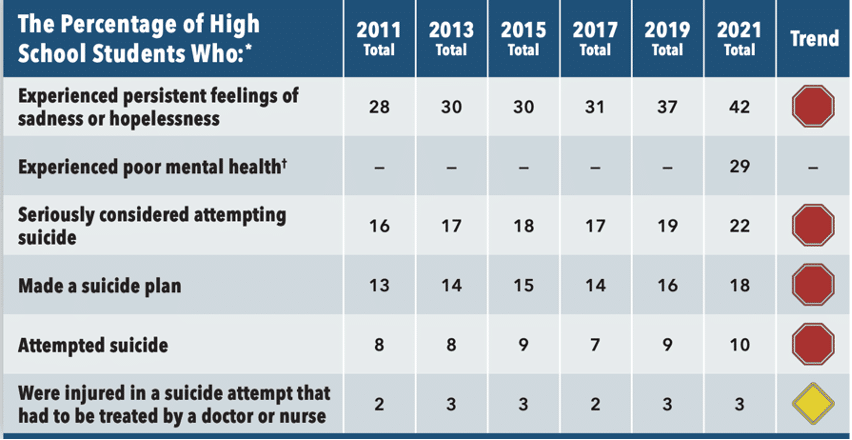
Mental Health and Suicidality
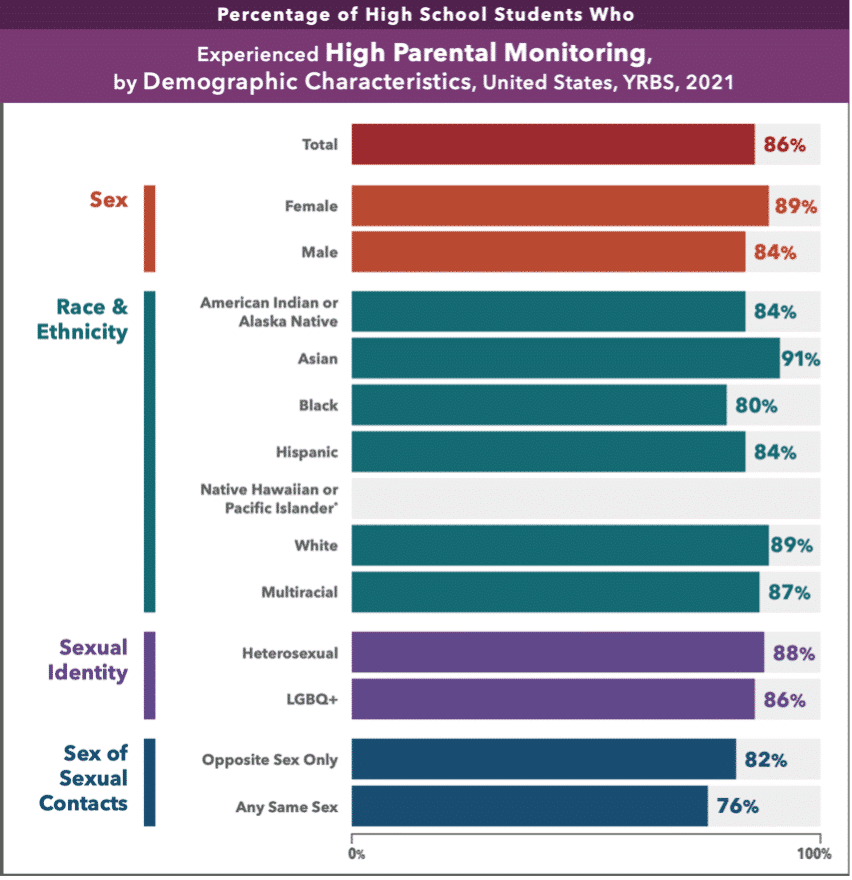
Parental Monitoring
 Teen Girls

The survey suggests that nearly 3 in 5 (57%) U.S. teen girls felt so sad or hopeless that they couldn’t engage in regular activities for two weeks or more. Nearly 1 in 3 (30%) seriously considered attempting suicide—up nearly 60% from a decade ago. And 1 in 5 (18%) experienced sexual violence in the past year—up 20% since 2017.

LGBQ+ Youth

Almost 70% of LGBQ+ students said they felt persistently sad or hopeless, and 20% reported attempting suicide. Fifty-two percent of LGBQ+ teens had poor mental health symptoms in the past 30 days compared to 29% of all teens.

Possible Contributors?

It’s important to consider that the survey occurred at the end of the isolation from COVID-19. Although I am still seeing significant fallout among kids, tweens, and teens, they have recovered somewhat from that dark and frightening time.

We must also consider that this is a survey. Without experiments where we expose one group of teens to possible causal variables (e.g., social media or isolation) and don’t expose a control group, we can’t determine what is causing the distress.

Surveys simply state and analyze subject report. It’s impossible to tell the causes from this type of data. We are left to guess with our observations and experience, forming hypotheses and looking for evidence to support them. As the Founder of GetKidsInternetSafe, a mother, university faculty member, author, and clinician who has treated kids, teens, and families for over 25 years, I have some ideas.

PHONELY: Our kids are phonely. Because we were hunters and gatherers for 90% of human existence, our brains are wired to thrive with face-to-face tribalism. Online relationships just don’t do it for us long-term.

ISOLATION: With the isolation of COVID-19, kids lost friends and confidence and regressed in their social skills.

SOCIAL MEDIA: Social media and the internet offers a constant onslaught of online ads and marketing influencers for kids and teens. This unfiltered exposure can lead to chronic fears of being judged and ridiculed as well as feelings of inadequacy and exclusion. The CDC report demonstrates that there is an epidemic of online bullying and cybersexual violence, especially toward girls and LGBTQ youth.

PARENTING: Parenting strategies have become overly protective based on anxiety and fear resulting in less child independence and more fear of failure. Plus, they spend more time online than with us. It is difficult for parents to overcome the influence of strangers and taking away all screen activities has become nearly impossible.

NEWS: Sensational and divisive news expertly and manipulatively communicates fear-inducing trends like mass shootings, climate change, and inflation. This has got most of us rattled, especially the most vulnerable among us.

FINGER-POINTING: We have tolerated and participated in an ugly, divisive climate of entitlement, bullying, and blame rather than accountability and positive action.

GROUP-THINK: The internet speaks the language of mental health – but this may result in a group-think phenomenon of looping on mental health suffering instead of increasing agency and growth.

LACK OF APPLICABLE EDUCATION: Trauma-informed, evidence-based health and sex education isn’t being offered equitably among out schools. Parents don’t want to leave this important job to schools, but they’re also not doing a great job themselves in many instances.

NOT ENOUGH MENTAL HEALTH SERVICES: There aren’t enough mental health services available to our youth.

LACK OF FAITH AND COMMUNITY: Pulling together as a loving, cooperative team is critical for kids to feel a sense of belonging and community. As our families get smaller and we have fewer extended family to offer support, our kids are left to fend for themselves.

Of course, this is not an exhaustive list. But it does summarize much of the research findings and conjecture that has surrounded these issues. There are more ideas for the list. But for the purpose of solving the problem, how can we take these stressors into consideration as we discuss possible solutions?

Considering the complexity of the question, what can we do to improve the situation? Reverse Engineer!

Reverse engineering refers to the process of looking at possible outcomes (like the causes posited above) and slowly working backward for a solution. Although this is clearly a messy mission, I watch kids regain the mental health ground they lost every day in practice. Despite what some may think, effective psychotherapy isn’t simply listening and reflecting feelings of despair. As a cognitive-behavioral therapist, I employ techniques specifically designed to facilitate positive movement forward. I’ve found that, if I set the tone and get everybody started, parents can take it from there.

Here are some tips for improving mental health and well-being at home:

  • As a family, negotiate a set of measurable goals and revisit them often for direction and motivation. Praise and reward movement forward and maintain and warm and encouraging tone along the way.
  • Use storytelling and a sense of humor to normalize failure and encourage curiosity and confidence.
  • Turn off the news and divisive influencers who are selling toxic ideas and products.
  • Reassure kids that they are capable and loved and that grit is what matters the most, far more than being attractive or innate skills.
  • Encourage kids to detox off their phones occasionally and engage more in real-life exploration and socialization.
  • Stay moderate. Avoid shaming lectures and demoralizing consequences.
  • Offer mindfulness, problem-solving, and communication strategies to help kids gain independence and confidence.
  • Offer outcome- and science-based education that empowers informed action rather than create fear.
  • Support parents in not personalizing child behaviors and help them set fair and reasonable limits with warmth, encouragement, and love.
  • Lead our kids toward post-traumatic growth rather than feelings of helplessness, hopelessness, and fear with expert mentorship, fun, and opportunity.

How can GetKidsInternetSafe help?

I founded GetKidsInternetSafe so I could be part of the prevention effort – rather than just the treatment effort. If you’re not sure where to get started, we have a comprehensive suite of tools for parents, tweens and teens, educators, paraprofessionals, and professionals who work with families and kids.

If you want all of our supplements and courses at a low cost for parents and kids, tweens, and teens, you’ll want our mega Screen Safety Essentials Course! This online course offers a set of four modules that will help you walk your kids through the essentials of screen safety.

I’m the mom psychologist who will help you GetKidsInternetSafe.

Onward to More Awesome Parenting,

Tracy S. Bennett, Ph.D.
Mom, Clinical Psychologist, CSUCI Adjunct Faculty
GetKidsInternetSafe.com

Photo Credits

Photo by Tim Mossholder on Unsplash
Photo by ALMA on Unsplash

Is Pandemic Isolation Destroying Our Social Skills?

I joined Kate Cagle with Spectrum 1 News the other day to talk about what I’ve been seeing and hearing from clients.

Here are some of the things I think are impacting us now that we are getting out:

People haven’t had conversation and relationship practice because of social isolation, and they are a bit rusty.

Kids, teens, and adults in my practice admit that their social anxiety has spiked since they’ve been isolated so long. Plus, many of us are so eager to get out we’re acting a bit unhinged, as if we don’t get everything out now it might be taken away from us again.

All of that social media posting, chat room commenting, and gaming chat behaviors have spilled into our face-to-face lives.

When we are online, we mostly post at people instead of with people. That means that we can take our time to respond or even not respond at all. Also, we don’t have to invite our friends to participate – it’s just assumed they will. These habits are very different from healthy social skills. We’ve seen online skills spill into real life before. For example, I wrote in my book Screen Time in the Mean Time my belief that the role playing and skin-changing on social media and in video games impacted cosplay and identity experimentation for teens in real life. It makes sense that, in that same way, adults are starting to talk like we post. In real life, that looks like an announcement of a series of black-and-white opinions rather than a curious, interactive conversation.

With scary news and questionable data (which we’ve had a lot of in the past year), people tend to look to the loudest voice in the room – that’s usually that person who is aggressively defending an extreme opinion. Not a great setup for a friendly, gracious exchange of ideas.

For too many of us, unhealthy coping mechanisms for stress have snuck in like too much drinking and addiction to conspiracy theories. Neither of these work well in healthy relationships.

Finally, with all of us on Zoom and wearing masks we are missing out on nonverbal cues that help us put the brakes on!


What can we do to get back on track with our social skills?

Before you go out, set a deliberate intention to ask “What do you think?” and commit to taking turns with conversation.

Have some friendly topics prepared to talk about, and stay away from controversial topics like politics and religion!

Give yourself and others some grace as we gradually settle back in to our old “normal.” If we’ve ever needed a time for kindness and patiences, it’s now!

I’m the mom psychologist who will help you GetKidsInternetSafe.

Onward to More Awesome Parenting,

Tracy S. Bennett, Ph. D.
Mom, Clinical Psychologist, CSUCI Adjunct Faculty
GetKidsInternetSafe

Is Virtual Learning Failing your Child?

Children deserve the best possible education and the brightest future opportunities. What parent doesn’t want their child to succeed in life? Many view education as the gateway to success. At the same time, COVID-19 has caused a challenge for our school systems providing quality virtual education. How are our children faring?

The Negatives of Virtual Learning

For younger children, this transition has proved to be difficult and stressful for both students and teachers. Young children have a tough time staying engaged on-screen for long. As a result, their education is likely suffering and they may not be learning the basics they will need for later in life.

There is also a large lack of social interaction for children in this age range. The impact of this might be seen for generations to come, perhaps a rise in social anxiety may be discovered?

What about the older students? The California Department of Education has reported that 2020 had 3,000 fewer high school graduates than 2019.[1] In addition to this shortage of expected graduates, 2021 prospective graduates are enduring their entire senior year virtual. Many students report feeling less optimistic about their future, less motivated to learn, and less confident in their academic abilities. Time will tell how the 2021 graduation rate will be, but it will likely be lower than even the 2020s’ was.

The Positives of Virtual Learning

There are some upsides to virtual learning. First, it’s the safest means of learning during the era of COVID. Education can be redone, learning can happen later, but continuing to protect our children and their teachers from one of the most destructive events in our time is the number one priority. In addition to just the health benefits, the drop-out rate for California has also decreased, with 800 fewer drop-outs than in 2019.[1] This is likely due to the opportunity to learn from home. Virtual learning allows for more flexible learning and more self-responsibility for one’s learning, something that may benefit high school students as they transition to higher education.

Virtual Learning and Parents

If you are ever feeling overwhelmed by virtual learning, pause and try to think about the following points:

It’s temporary! Virtual learning is only temporary. Before too long, our children will be back into the classroom and off of the screens. Don’t let yourself get too upset about something that isn’t going to last forever.

You’re not alone. Almost every parent is experiencing the same frustrations that you are. If you need someone to vent or talk to, reach out to one of your fellow parents. The shared experiences will likely help you both feel better about what is going on.

Don’t blame the teachers. Many of them were thrown into this unprepared and unwarned, just like you and your children were. Some teachers are struggling through this time with their kids just like you. They want to be back in the classroom as soon as it is viably safe to do so too.

Don’t blame your children. They didn’t ask for any of this to happen, and they are likely doing the best they can. They want to be back with their friends on the playground, it might be difficult for them to understand why they aren’t allowed to. Try and remind them, in an age-appropriate way, that this is for their safety and the safety of those around them.

Finally, don’t blame yourself. You have no power over this unprecedented situation. Remind yourself that you are only human and that you are giving it your absolute best. It’s okay to feel out of patience from time to time. Giving yourself and others grace is critical to wellness.

More Resources on Virtual Learning and Online Safety

For more information on children’s internet safety, please check out our social media readiness course for helpful tips and advice to dealing with your children’s ever-growing internet lives. For more advice on helping your child succeed in school, virtual or in-person, please visit our best digital school tips or our top back-to-school apps.

Thanks to CSUCI intern Dakota Byrne for researching virtual learning and co-authoring this article.

I’m the mom psychologist who will help you GetKidsInternetSafe.

Onward to More Awesome Parenting,

Tracy S. Bennett, Ph.D.
Mom, Clinical Psychologist, CSUCI Adjunct Faculty
GetKidsInternetSafe.com


Photo Credits

Photo by Sigmund (https://unsplash.com/photos/TJxotQTUr8o)
Photo by Thomas Park (https://unsplash.com/photos/SS-r7BvCqTY)
Photo by Ahmed Hindawi (https://unsplash.com/photos/bjB2mGI8PtI)

Works Cited

[1] https://www.cde.ca.gov/

#TogetherAtHome Family-Friendly Activity Ideas

I just finished a webinar I offered for moms to support them during our stay-at-home order. In the audience, we had a mom who was seven-months pregnant with a three-year-old as well as moms with school-age kids and teens. During these challenging times, all have unique situations. Some of us are working full-time and struggling to find a free moment, while others are bored and working to find fun and purpose. Some of our kids are best friends, while others can’t seem to get along ever. Some kids are jetting through easy schoolwork while others can’t seem to get anything done. How are you doing? Are you making amazing memories with your time together or struggling to make things happen? Today’s article is about recognizing that the love is in the daily details, but it may take some special effort to notice.

“Seeing” by Annie Dillard from Pilgrim at Tinker Creek (Harper Perennial 1974)

When I was six or seven years old, growing up in Pittsburgh, I used to take a precious penny of my own and hide it for someone else to find. It was a curious compulsion; sadly, I’ve never been seized by it since. For some reason, I always “hid” the penny along the same stretch of sidewalk up the street. I would cradle it at the roots of a sycamore, say, or in a hole left by a chipped-off piece of sidewalk. Then I would take a piece of chalk, and, starting at either end of the block, draw huge arrows leading up to the penny from both directions. After I learned to write I labeled the arrows: SURPRISE AHEAD or MONEY THIS WAY. I was greatly excited, during all this arrow-drawing, at the thought of the first lucky passer-by who would receive in this way, regardless of merit, a free gift from the universe. But I never lurked about. I would go straight home and not give the matter another thought, until, some months later, I would be gripped again by the impulse to hide another penny.

It is still the first week in January, and I’ve got great plans. I’ve been thinking about seeing. There are lots of things to see, unwrapped gifts and free surprises. The world is fairly studded and strewn with pennies cast broadside from a generous hand. But—and this is the point—who gets excited by a mere penny? If you follow one arrow if you crouch motionless on a bank to watch a tremulous ripple thrill on the water and are rewarded by the sight of a muskrat kid paddling from its den, will you count that sight a chip of copper only, and go your rueful way? It is dire poverty indeed when a man is so malnourished and fatigued that he won’t stoop to pick up a penny. But if you cultivate a healthy poverty and simplicity so that finding a penny will literally make your day, then, since the world is in fact planted in pennies, you have with your poverty bought a lifetime of days. It is that simple. What you see is what you get.

I love this passage because it captures so much about childhood joy. Like the puppy-dog-tails and sugar-and-spice nursery rhyme, childhood joy is a magic blending of anticipation, preparation, and imagination. Children build their magic worlds by keeping their eyes open for real-world discovery. And when they find something new and delightful, they turn to those around them to share in their excitement. For young children, this is a ladybug on a blade of grass; and for older kids, this is a giggling walk with friends to get ice cream. Parents can be a part of this magical discovery, or they can be washing dishes. It’s really up to us to be present.

But here’s the thing, we don’t have to entertain our kids 24/7. Contrary to popular parenting lore, our job is not to make our prodigy happy all of the time. Our job is to offer a safe and enriching place in love and guidance, helping them build resiliency skills so they can feel their worth and practice their capabilities. Sometimes that means we are by their sides, and sometimes that means we offer a crafted setting of endless possibilities.

To teach them how to recognize those endless possibilities, we first have to create the framework for meaningful magic and create the lens for them to see through. And I’m telling you now, memory-making family events don’t have to take place in a faraway destination or during a $5000 planned vacation. Magical, meaningful moments worthy of memories don’t cost dollars….they cost pennies. They’re like shiny pennies cradled in the roots of a Sycamore or left by a chipped-off piece of sidewalk. They are gathered in tiny moments of discovery and shared joy. To find them, we just have to have our eyes, and our hearts, open.

VIRTUAL SUPPORTIVE ACTIVITY IDEAS

Take a virtual travel vacation.

  • Create a passport for the virtual trips you will take.
  • Research the things to do once you get there.
  • Visit those places on Google Earth.
  • After the trip your child can draw a picture of something from the trip as a passport stamp.
  • Create a collage of the virtual places you visit.

Create family businesses and then end with a trade show.

  • Decide on your idea and write a mission statement.
  • Design your logo (fun ideas are to look on https://www.fiverr.com/ or https://99designs.com where people hire logo designers online). Pick your brand colors (https://coolors.co is a fun site for that)
  • Design a website (you can design for free for a limited time on https://www.squarespace.com)
  • Pick free stock images for your site or take them on your own (we love https://unsplash.com)
  • Create a budget
  • Source and buy materials for your product
  • Manufacture your product
  • Create flyers and business cards
  • Design and film a TV commercial (don’t forget to hire your celebrities and learn your marketing)
  • Create a sales convention where you each have a sales table where you hawk your wares (you can take turns as founders and customers or recruit family members and friends as customers)
  • Find brand partners
  • Create your store
  • Have a trade show where you buy each other’s wares and services with a budget and fake money you set up ahead of time.

Set up a restaurant in your home.

  • Plan the menu
  • Prepare the food
  • Dress up like chefs and waiters
  • Serve your family guests just as they’d be served in a restaurant (menu, orders, bill payment).

For more ideas to create fun family fun, follow our daily #TogetherAtHome idea posts on the GetKidsIternetSafe Instagram page! To help you out during challenging times, here is a list of linked resources to help you make magic family memory moments while you’re #TogetherAtHome.

ARTS AND CRAFTS

Easy Peasy and Fun

From their website: “Ready for a fantastic crafting session with your kids or students? We have a ton of engaging art and craft for kids to make and you’ll find ideas for all ages and for all occasions.”

https://www.easypeasyandfun.com/crafts-for-kids/


The Best Idea for Kids

From their website: “If you’re looking for easy and fun craft ideas for kids – you’ve definitely come to the right place! We’ve included our best and most popular crafts for kids on this page for you. Kids will love making these simple crafts – and the best part is the preparation for you will always be easy too!”

https://www.thebestideasforkids.com/craft-ideas-for-kids/


EDUCATIONAL/FUN RESOURCES

California Science Center

Stuck at home science

https://californiasciencecenter.org/stuck-at-home-science


Kidspace At Home: Virtual learning and play 

From their website: “Kidspace may be temporarily closed, but curiosity never ceases. Keep the learning going at home with Kidspace curated programming and resources developed to spark connection, creativity, laughter, and inspiration. Join the Kidspace-At-Home journey bringing hands-on joyful learning experiences to families every day. Scroll to the bottom to learn how you can help support our efforts and keep Kidspace strong!”

www.kidspacemuseum.org/events/home-learning-resources


Lakeshore Learning

From their website: “More than 1,000 Free Resources – Bring learning home with printable worksheets, writing prompts, and more.”

The link includes learning at home YouTube video channel for Preschool–Gr. 5.

https://www.lakeshorelearning.com/


EDUCATIONAL VIDEOS AND PODCASTS

An article reviewing podcasts for children

Since every parent is now a teacher, here is an article that identifies 26 podcasts for children in elementary, middle and high school

https://www.weareteachers.com/best-podcasts-for-kids/


Brains On! 

From their website: “An award-winning audio show for kids and families. Each week, a different kid co-host joins Molly Bloom to find answers to fascinating questions about the world. Our mission is to encourage kids’ natural curiosity and wonder using science and history…but there’s no age limit on curiosity, and episodes of Brains On can be enjoyed by anyone.”

https://www.brainson.org/


But Why: A Podcast for Curious Kids

From their website: “But Why is a show led by you, kids! You ask the questions and we find the answers. It’s a big interesting world out there. On But Why, we tackle topics large and small, about nature, words, even the end of the world. Have a question? Send it to us!”

https://www.npr.org/podcasts/474377890/but-why-a-podcast-for-curious-kids


More Podcast identified by iheart.com for kids and families

https://www.iheart.com/podcast/category/kids-family-98/


Ted Talks for Kids

Fun, informative and captivating talks to inspire young minds.

https://www.ted.com/playlists/86/talks_to_watch_with_kids


INTERACTIVE/ANIMATED READING EXPERIENCES

Animated books 

The Very Hungry Caterpillar

https://www.youtube.com/watch?v=75NQK-Sm1YY


and Good Night Moon

https://www.youtube.com/watch?v=vbKoviP0fTQ


Good Night with Dolly 

From their website: “Goodnight With Dolly” will feature Dolly Parton reading a series of Imagination Library books all carefully chosen for their appropriate content at this moment in time.”

https://www.youtube.com/channel/UC0MpwxxTbrBOz1g1X-BynUA


ebooks

From their website: “Looking eBooks for your kids? We have the best collection of free animated eBooks will undoubtedly stimulate your child’s mind, studies and learning pattern. Find these very interesting carefully made free eBooks for kids. These online eBooks touch various subjects and promise to make your child’s learning experience richer. Read and download your favorite eBooks for free.”

https://www..kidsworldfun.com/ebooks.php


INTERACTIVE EDUCATIONAL WEBSITES

ABCMouse

From their website: “Full online curriculum ages 2-8. 10 levels. More than 850 Lessons Across 10 Levels. The Step-by-Step Learning Path presents the full ABCmouse.com curriculum in a carefully designed program of more than 850 lessons in ten levels. As your child completes each lesson, he or she is guided to the next one and is motivated to continue learning by ABCmouse.com‘s Tickets and Rewards System.”

30 days free trial

https://www.abcmouse.com/


Brainpop

https://www.brainpop.com


Adventure Academy 

First 30 days free

https://www.adventureacademy.com/


Jumpstart 

Educational Online games and resources

https://www.jumpstart.com/


RECIPES FOR KIDS

Allrecipes for Kids

Lots of kid’s recipes including a recipe for a Mac & Cheese in a Cheese Waffle Cone on this site

https://www.allrecipes.com/recipes/453/everyday-cooking/family-friendly/kid-friendly/


Food Network 

Recipes for kids

https://www.foodnetwork.com/recipes/packages/recipes-for-kids/cooking-with-kids/recipes-kids-can-make


Raddish

From their website: “Nurturing kids’ confidence in the kitchen and beyond. Browse our free delicious activities.”

https://www.raddishkids.com/?msclkid=eccf57b743d1114567830930babb48ee


VIRTUAL EXPERIENCES AND LEARNING

Aquarium of the Pacific

From their web site: “The Aquarium of the Pacific is currently closed. During this time, we will be offering a variety of live and on-demand programming for our community..”

http://www.aquariumofpacific.org/


Bronx Zoo

Virtual Classroom, Videos and web cams of various animals

https://bronxzoo.com/virtual-zoo


Exploratorium

From their website: “The Exploratorium isn’t just a museum; it’s an ongoing exploration of science, art, and human perception. Explore our vast collection of online experiences to feed your curiosity and education resources supporting online teaching and learning.”

https://www.exploratorium.edu/


La Brea Tar Pits and Museum 

The tar pits and educational resources

https://tarpits.org/


Los Angeles County Museum of Art

From their web site: “Free enriching and inspiring content for you to Watch, Listen, Learn, Read, and Browse at home.”

https://www.lacma.org/


LA Philharmonic 

Musicians, concerts, videos by LA Phil members

https://www.laphil.com/about/watch-and-listen


Los Angeles Zoo

From their website: “Bring the Zoo to You. During our closure, we’ll continue to share cool views of the Zoo, our animal residents, and our dedicated keepers to keep you informed, engaged, and connected while social distancing.”

https://www.lazoo.org/


Monterey Bay Aquarium

Webcams, activities, videos

https://www.montereybayaquarium.org/


Museum of Contemporary Art

From their website: “MOCA Education makes education more collaborative, inclusive, and learner-centered, and nurtures intellectual growth through transformative experiences with contemporary art. Join our team of MOCA educators as they lead different family-friendly activities through interactive workshops, virtual Talking Tours, and classroom curriculum discussions. It is fun for all and particularly helpful for homeschooling!”

https://www.moca.org/


San Diego Zoo 

Videos and web cams of various animals

https://www.sdzsafaripark.org/


ARTICLES/REFERENCE LINKS AND WEBSITES

Fun and Free educational websites for kids’ article with links

https://www.verywellfamily.com/best-free-educational-websites-for-kids-3129084


Game night apps and online games 

Technological ideas for all ages

https://ktla.com/morning-news/technology/


LA Parent magazine

Virtual events, recipes, parenting suggestions, health and wellness, etc.

https://www.laparent.com/


Parents magazine

Parent resource with online articles

https://www.parents.com/


Magazine Subscriptions for Children (not free)

Award-winning, children’s magazine titles. No coupon or promo codes are needed to receive 50% discounts (see link below)

BabyBug Magazine Ages 6 months – 3

Ladybug Magazine Ages 3-6

Ask Magazine: Ages 6-9

Cricket Magazine Ages 9-14

Muse Magazine Ages 9-14


http://shop.cricketmedia.com/Cricket-Magazine-Discount-Offer.html


Other Magazine Titles for Children (just to name a few and not free)

Boys Life

Click

Highlights

Humpty Dumpty

Ranger Rick

National Geographic Kids

Spider

Zoobooks

Join each Tuesday and Thursday, beginning April 9, at 3pm ET for Magination Press Story Time, https://www.facebook.com/MaginationPressAPA/?fref=mentions&__tn__=KH-R

Live storytime events aimed at providing children with emotional support tools to help them cope with anxiety and stress in an entertaining, engaging way. In the first installment, Leah Bowen reads A Feel Better Book for Little Worriers, co-authored with Holly Brochmann, to help children identify a worry and where it might come from, as well as provide them with helpful tools to reduce and cope with worries.

IDEA COLLECTIONS

10 Free Learning Websites for Kids

150+ EDUCATIONAL SHOWS ON NETFLIX

50 PLUS EASY INDOOR ACTIVITIES FOR KIDS

25 EASIEST LOW PREP OBSTACLE COURSES FOR KIDS

Thanks for being amazing. Stay safe and keep collecting those shiny penny moments!

I’m the mom psychologist who will help you GetKidsInternetSafe.

Onward to More Awesome Parenting,

Tracy S. Bennett, Ph.D.
Mom, Clinical Psychologist, CSUCI Adjunct Faculty
GetKidsInternetSafe.com


Photo Credits

Photo by James Besser on Unsplash

Photo by Amy Humphries on Unsplash

Photo by Jennifer Burk on Unsplash