Need peaceful screen time negotiations?

Get your FREE GKIS Connected Family Screen Agreement

childdevelopment

Off the Phone and On the Soccer Field: My Cure for Digital Disconnection

Kids crave connection. Face-to-face interaction and emotional closeness are vital for healthy development—particularly for adolescents.[1] Screen time offers shallow connections and distracts kids from those unpleasant cravings. It also keeps kids so busy that they don’t seek the connection they so desperately need. What if they didn’t have to be so lonely? What if there was a way they could be off their screens, doing something good for their health, and making friends at the same time?  For me, that was playing sports.

The Seed Was Planted

As a child, I was most excited to hang out with my friends, be on my phone, watch TV, or eat sweets, in that order. That was until I joined a team sport.

It all started when my mother asked me if I wanted to join the local soccer team. I was nine years old and against the idea because I didn’t want it to cut into cartoon time on the weekends, and had we gone through the Screen Safety Essentials Course, we wouldn’t have worried so much about the impact of screens on us. But she insisted. I only agreed because my favorite cousins were on the team.

I learned from the first practice that I loved the intense physical activity of soccer, and after a while, I began to really get the hang of it. I felt proud and accomplished. I made great friends on the team. We loved team bonding activities and even began to hang out outside of practice. I loved it so much, I gave it my all and looked forward to it all week.

By high school, I had won medals and genuinely felt like I was good at the sport. I received praise and encouragement for all of my efforts and hard work. It also inspired me to work hard in other aspects of my life. I tried harder in school, was friendlier with classmates, more obedient in class, and more eager to participate in the learning process. According to Project Play, high school athletes are more likely to further their education and even receive higher grades in college.[2] I started seeing everything in the world as a skill waiting to be attained, something that required courage, effort, and training.

Having that view of the world helped me when I sprained my ankle right before the start of my freshman season. While recovering, I could have easily scrolled through Snapchat and Instagram endlessly. But I wanted to make sure I continued to build the bond with my teammates for when I returned. It taught me to wait my turn, keep a positive attitude, remain patient, and support others as they shine. As soon as I recovered, my teammates were more than happy to catch me up to speed, and I rebuilt my strength.

Core Memories That Last

One of my most memorable moments taught me something I will never forget. It was my junior year; we were tied 0-0, with a minute left in the game. My team was exhausted, but as captain, I knew this is where my job was most important. I dribbled the ball up the center, dodging two midfielders and one defender, set it up for my left forward, and yelled, “SHOOT!” She shot and sent it straight into the upper right corner of the goal. Everyone who was there to support us was on their feet, our coaches were throwing their clipboards in the air and hugging each other, and our teammates ran to us for a celebratory hug and a jump around. We spent the last 15 seconds of that game with tears in our eyes and joy in our hearts. We had just beaten a 40-year record for our school!

This is when I realized this would have a lifelong impact on me. It was one of those moments that I’ll look back on happily. It was a lifetime of preparation to become someone people could rely on when things got tough and hope felt lost. It was the moment I truly understood what being a leader meant to me and the impact it had on others.

I hugged and thanked my mother for signing me up for soccer at nine years old. She introduced me to the first love of my life, and I would forever be grateful for that. From then on, I never doubted my abilities to get something done, never lost confidence in myself, and never hurt someone without apologizing or broke something without trying to replace it.

The Impact of The Beautiful Game

Project Play reports that sports, in particular, can positively impact aspects of personal development among young people, keep them away from harmful substances, and encourage cognitive, educational, and mental health benefits.[2] I believe my experience of playing soccer was so much more than just a fun sport or a way to stay active, although both are tried and true. It was a refinement of my character, it was a positive shift in how I viewed the world and myself in it, it was what taught me that rejection was just redirection, and it was a way to build and maintain connections with people I am still close to, at 27 years old.

Why Everyone Should Play Sports

Participation in sports can protect against the development of mental health disorders.[4] These benefits include lowering stress levels, rates of anxiety and depression.[5]Lifelong participation in sports leads to improved mental health outcomes and even immediate psychological benefits which continue long after participation is over with. The improve self-confidence, encourage creativity, and nurture a higher self-esteem. Statistically, adolescents who play sports are eight times more likely to be physically active at age 24.[3]


Thanks to CSUCI intern, Elaha Qudratulla, for sharing an important story about how beneficial playing sports were for her then and how it still helps her today.

I’m the mom psychologist who will help you GetKidsInternetSafe.

Onward to More Awesome Parenting,

Tracy S. Bennett, Ph.D.
Mom, Clinical Psychologist, CSUCI Adjunct Faculty
GetKidsInternetSafe.com


Works Cited:

[1] https://www.uvpediatrics.com/topics/alone-together-how-smartphones-and-social-media-contribute-to-social-deprivation-in-youth

[2] https://projectplay.org/youth-sports/facts/benefits

[3] https://odphp.health.gov/sites/default/files/2020-09/YSS_Report_OnePager_2020-08-31_web.pdf

[4] https://baca.org/blog/does-playing-organized-youth-sports-have-an-impact-on-adult-mental-health/

[5] https://pce.sandiego.edu/child-development-through-sports/

Photos Cited:

[Header] Eva Wahyuni on UnSplash

[2] Olivia Hibbins on UnSplash

[3] Elaha Qudratulla

[4] Jeffrey F Lin on UnSplash

[5] Elaha Qudratulla

https://unsplash.com/

Dr. Bennett’s Developmental Psychology Crash Course (Ages 3 to 6 Years).

The developmental phase of 3 to 6 years old marks the progression from parallel play to group interaction in expanding peer and academic settings (preschool through first grade). Learning continues at an explosive rate with rapid brain development (nature) interacting with a protected and enriching environment (nurture). As children become increasingly familiar with and master activities, their cognitive resources are freed up to grasp an increasingly complex understanding of the world around them. During this time our amazing little beings are blossoming and developing initiative, complex communication, and creativity.

This article offers a developmental psychology review/crash course outlining the developmental tasks children master between the ages of 3 to 6 years old. With this information, you can decide for yourself if screen time would enhance, be neutral, or interfere with your child’s development.

Brain Development

Research on brain structure has been difficult with this age group due to the complexities of sedating children for brain research. However, with more sophisticated brain imaging and recording technologies, we have evidence that the preschool developmental period is characterized by the ongoing “remodeling” of brain tissue. More specifically, brain cells (neurons) grow and migrate, only to die off or be “pruned and tuned” later as the child matures and gains experience (Brown). Brain maturation is affected by experience and interactions between nature and nurture. The better the match between children’s capacities and the demands placed on them, the better the learning. If the mismatch is too big, stress and dysfunction may result (Lenroot). Fortunately, loving parents are expert at ratcheting up difficulty level at a customized rate that best fits their child. It is the perfect partnership!

Here are some quick brain facts to help you customize your parenting genius:

  • At 3 years old, your child’s brain has reached 50% of its adult size already and will reach up to 95% of its adult size by 6 years old (Lenroot).
  • The brain remodels from phylogenetically older to newer brain structures. As lower brain regions develop, they perform scaffolding for later developing, higher brain regions. In other words, when performing a cognitive task, young children must enlist more brain regions for a single task, while older children with more specialization use fewer regions to perform the same task (Brown). This progression of mastery frees brain resources for more and more specialized development. Truly magical to behold!
  • Just as we see a spike in surface area growth of the frontal lobes at age 2 years, we see another between 5 to 7 years. This is consistent with the dramatic improvements in executive functioning (attention, concentration, and organization) that we see at these two phases of development.

There’s increasing evidence that frequent and rigorous exercise, good sleep, good nutrition, unstructured play, one-to-one parent and peer interaction, and time with nature play important roles in the healthy development of executive functioning. Parents would be well advised to structure their preschooler’s day with quality stimulation in all of these areas.

Although educational and prosocial screen media activities are a cognitively- and socially-enriching addition to a well-balanced life, limits are necessary. There is also increasing evidence that too much screen time can contribute to attention problems (Christakis).

  • The brain’s auditory system develops rapidly during these ages, consistent with rapid language acquisition.
  • Consistent with the language and motor advances during the preschool period, rapid myelination occurs throughout the brain, particularly in the areas of the hippocampus (memory) and in the fibers linking the cerebellum and cerebral cortex (fine motor skills) (Lenroot).
  • More effective connections are also established between the temporal, occipital, and parietal lobes, which are brain areas critical for the synthesis of information and processing of temporal, visual, and spatial information.
  • Although little research has been conducted regarding screen-media technology use and brain change in young children, there is evidence of brain structure change with older kids. For example, Hong et. al. report evidence that there is a significant relationship between Internet addiction and the thickness of a child’s medial and lateral orbitofrontal cortex (OFC), similar to changes seen due to drug addiction. The medial OFC is affected by choices involving immediate rewards, and the lateral OFC is affected by choices involving delayed rewards. These areas of the brain also demonstrate similar changes among subjects with obsessive-compulsive disorder. In conclusion, it doesn’t take a brain scientist to recognize that even child programs on screen media are expertly designed to encourage compulsive play. It’s up to parents to run a risk/benefit analysis about whether to allow play at all, to choose appropriate content, and to monitor use time. I suggest you keep it conservative for now. There’s plenty of time to develop expert digital literacy.

Cognitive & Motor Development

  • Preschool children are rapidly developing a self-concept, with both concrete and psychological dimensions (e.g., sociability). Preschoolers are wildly curious and often focused on gaining independence and self-control. As they collect new experiences, expect new behavioral patterns to emerge. For instance, it is very normal for preschool age kids to become preoccupied with the classification and grouping of things. Clients sometimes worry their children have a clinical form of obsessive-compulsive disorder (OCD). I assure you, lining up toys and insisting on rigid rules and routines is common among the preschool age group. Go with it, this too will pass.
  • Piaget theorized that children of this age are in the preoperational stage of cognitive development and start to demonstrate precausal/magical thinking:

In other words, they still have a hazy idea of how their ideas and desires relate to the world around them. They tend to accept what can be immediately seen (concrete appearance and reality), yet unable to reason concepts through (precausal thinking). As a result, they are better at grasping the short-term rather than the long-term outcomes. Flaws in thinking during this developmental phase include egocentrism (self-centered thinking), irreversibility (things operate only one way), and animism (ascribes lifelike qualities to inanimate objects).

 Young children are not confident in their opinions and ideas and are easily led astray by the influence of others. Therefore, even if you’ve provided good information and practiced appropriate response, young children should not be expected to be able to make choices about activities and are unable to adequately protect themselves against predatory peers or adults. They simply don’t have the cognitive resources to do it well yet. So as an awesome parent, you must provide deliberately filtered and protected home, school, social, and digital environments. They are not yet ready to go-it-alone.

  • Reaching conclusions/moral reasoning:

Preschoolers tend to be impulsive and unsystematic in their thinking. They show little understanding of the need for rules and instead play games to take turns and have fun (Piaget). Piaget called this the Premoral Period.

At this young age, they are still only able to hold a few things in memory at once. As a result, they have difficulty identifying and keeping in mind the relevant features of a complex problem. They must rely on what they can see or on hard rules rather than on another’s intent, abstract factors, or the spirit of the rule. Outcome counts for little kids, not the intent. I see many parents overestimate their children’s capabilities, thus giving them too much independence. It’s better to go in slow rather than let your children run amuck, get into trouble that can’t be undone, and then react.

  • Movement:

As with other developmental periods, physical play promotes healthy brain development, particularly in the vestibular, proprioceptive, and tactile sensory system, and results in progressive fine-tuning of gross and fine motor skills. Let those preschoolers run and provide them with fun, enriching social and sporting activities!

Language Development

  • During the preschool and kindergarten years, children’s language ability continues to explode in vocabulary and sentence complexity. Children within this age range are actively learning to tailor their language to their audience. Indeed, frequent and rewarding interaction with others is critical to healthy development.

Evidence suggests that excessive screen time, at the expense of conversational interaction, may result in developmental and language delay (Chonchaiya).

Social-Emotional Development

  • Freud famously theorized that gender identity forms during this developmental period, with sexual impulse being the primary source of motivation.

He believed that gender identity comes from identification with and fear of the same-sex parent as the child increasingly tries to covet the opposite-sex parent. For boys, this conflict is called the Oedipal Complex and for girls, it is the Electra Complex. Don’t be surprised when your son tries to take over mom’s attention and your daughter openly battles for dad’s attention. Working through this conflict is entirely normal.

  • Erik Erikson coined this developmental phase Initiative vs. Guilt. In other words, he hypothesized that children ages 3-6 years are starting to launch on their own while still remaining strongly attached to caregivers. Just as toddlers frequently demonstrate separation anxiety, so do preschoolers. It’s perfectly healthy for your preschooler to be emotionally needy and clingy sometimes as well as start to strike out independently. Be encouraging, cuddly, and patient as your children take their two steps forward and one step back. They’re still experimenting.
  • In regard to perspective-taking, preschool children advance from egocentricity (inability to see a situation from another’s perspective) to theory of mind (ability to understand and predict the behavior and feelings of others).

Social learning research has demonstrated that children are more likely to evaluate and regulate their own behavior if they have had lots of playing time with a warm, mutually responsive parent. In contrast, kids who have spent less time with parents will comply due to parent request rather than an eagerness to comply or cooperate (Schaffer, 512-513). That means lots of playtime with parents to build a mutually warm attachment will result in your child having more of conscience outside of your supervision.

Physical and pretend play helps build a theory of mind, social skills, and emotional self-control, as well as creativity and resiliency.

There is evidence that solitary play, as opposed to playing with others, has a significant negative correlation with overall social skills (Newton and Jenvey, 761-73).

Just as too much screen time can cause delay, appropriate technology use can promote individual and cooperative play in children.

  • Children are now school age and interact with a larger variety of people. Caretakers still have a lot of influence over whom children spend time with outside of school. Remain choosy and vigilant. The quality of peer interaction makes a difference.
  • Preschool children’s pretend play is primarily fantasy practice of cultural roles. They spend a lot of time building upon memorized social scripts, progressively becoming increasingly independent (Cole). Preschool is a time of playing house and practicing gender roles. One of the greatest joys of my career is watching how fathers have become more nurturing caregivers while mothers have an increasing choice in areas of achieved excellence. Raising emotionally literate boys and girls means encouraging compassion, nurturance, hard work, and an open mind. You’ll know what kind of job you’re doing by listening to and watching your child act out your parenting role in fantasy play. I encourage you to make the necessary adjustments in your own parenting behaviors as you go, inching closer and closer to your parenting ideal.
    • Social curiosity increasingly develops as preschool children are now able to use social comparison to assess success and failure, as well as individual performance. They are motivated to identify with others, such as parents, caretakers, siblings, and peers, and learn through modeling and operant conditioning continues (reward and punishment).
    • Based on the theory of Kohlberg, kids this age choose “the right” for self-gratification and in order to avoid punishment (Kohlberg). Don’t be surprised if they use mild aggression or unfair fighting techniques to get their way with family and peers. This is part of the learning process. It’s important that parents don’t retaliate with toxic parenting reactions like belittling, ridiculing, teasing, mocking, or discounting your child. Responding with patience, understanding, and emotional neutrality is key to preserving a positive, hard-earned attachment. Inquiring about their strategy and validating their feelings will help your child learn from the experience rather than avoid you or internalize shame. If they feel your acceptance and celebration of failures that lead to important new learning and skills, they will be more transparent and come to you when they run into challenges.
    • During this developmental phase, little ones learn how to hold a grudge. We see aggression move from simply trying to get ahold of an object to knowingly being aggressive toward a person who’s done them wrong (Cole).

Watch out, parents! Around three-years-old kids start to experiment with name-calling, and tantrums blossom from physical outbursts to verbal ones! I’ve always counseled that the tantrums of three-year-olds are far more impressive (and embarrassing) than the tantrums of two-year-olds. With burgeoning developmental ability comes more impressive tantrums. Wait until you see what your adolescents will be capable of! I celebrate a child’s ability to brilliantly manipulate others while supporting parents on how to stay a step ahead.

BLOGPRESCHOOLWhat Awesome GKIS Parents Provide

  • Children are better adjusted and become increasingly autonomous when parents set standards and provide guidance that is warm, encouraging, and praising without being overly critical of occasional missteps. A sense of humor is EVERYTHING! Enjoy it, mistakes and all.

Theorists call this authoritative parenting, and evidence demonstrates it is better than permissive (i.e., uninvolved) or authoritarian (i.e., overly controlling) styles.

  • Children from stimulating home environments not only achieve better in school, but they also demonstrate a stronger willingness to seek out and master challenges for personal satisfaction.

In order to feel confident providing GetKidsInternetSafe screen media guidelines, I felt it important to provide a crash course review of developmental progression and needs during this developmental phase as they relate to technology use. By reflecting on the stimulation and environmental enrichment your child needs to successfully meet developmental milestones, I hope you feel more confident in your family’s technology decisions as well. If you know other caregivers who may like a brush-up, do me a favor and pass it on! To get the free article download “The Top Ten Mistakes Parents Make With Internet Safety (and How to Recover!)“, click here. I’m the mom psychologist who will help you GetKidsInternetSafe. Onward to More Awesome Parenting, Tracy S. Bennett, Ph.D. Mom, Clinical Psychologist, CSUCI Adjunct Faculty GetKidsInternetSafe.com

Works Cited

Brown, Timothy T., and Terry L. Jernigan. “Brain Development During the Preschool Years.” Neuropsychology Review 22.4 (2012): 313-33. Web.

Christakis, D. A., F. J. Zimmerman, D. L. Digiuseppe, and C. A. Mccarty. “Early Television Exposure and Subsequent Attentional Problems in Children.” Pediatrics 113.4 (2004): 708-13. Web.

Cole, Michael, and Sheila Cole. The Development of Children. New York, NY: Scientific American, 1993. Print. Chonchaiya, Weerasak, and Chandhita Pruksananonda. “Television Viewing Associates with Delayed Language Development.” Acta Paediatrica 97.7 (2008): 977-82. Web.

Erikson, Erik H. Childhood and Society. New York: Norton, 1964. Print. Freud, S. “An Outline of Psychoanalysis.” The Standard Edition of the Complete Psychological Works of Sigmund Freud. London: Hogarth, 1940. Vol 23. Print.

Hong, S. “Reduced Orbitofrontal Cortical Thickness in Male Adolescents with Internet Addiction.” 9.11 (2013). Print. Kohlberg, Lawrence. The Psychology of Moral Development: The Nature and Validity of Moral Stages. San Francisco: Harper & Row, 1984. Print.

Lenroot, Rhoshel K., and Jay N. Giedd. “Brain Development in Children and Adolescents: Insights from Anatomical Magnetic Resonance Imaging.” Neuroscience & Biobehavioral Reviews 30.6 (2006): 718-29. Web.

Newton, Emma, and Vicki Jenvey. “Play and Theory of Mind: Associations with Social Competence in Young Children.” Early Child Development and Care 181.6 (2011): 761-73. Web.

Piaget, Jean. The Child’s Conception of Number. London: Routledge & Kegan Paul, 1952. Print. Shaffer, David R. Developmental Psychology: Childhood and Adolescence. 9th ed. Pacific Grove, CA: Brooks/Cole, 1989. Print

Walker, Lawrence J., Karl H. Hennig, and Tobias Krettenauer. “Parent and Peer Contexts for Children’s Moral Reasoning Development.” Child Development 71.4 (2000): 1033-048. Web. Photo Credit First Day of Preschool by Andrew Dawes, CC by-SA

2.0   Some excellent points made!

Dr. Bennett’s Developmental Psychology Crash Course for Children Ages 0-2 Years.

babygymboree

Last week’s article “Should Babies Be Allowed Screen Time?” offered hard guidelines for parents of babies and toddlers. I went right into the WHAT to do in response to the concerns parents come to me with. For some, that is sufficient. But for others, they want to know more WHY in order to feel confident about my recommendations.

This article offers a developmental psychology review/crash course outlining the developmental tasks children are trying to master between the first two years of their lives. With this information you can decide for yourself if screen time would enhance, be neutral, or interfere with your child’s development.

Brain Development

Brain imaging and recording technology has improved dramatically within the last decade, increasingly providing detailed evidence of brain changes throughout the developmental process. In general, the brain continues its remodeling process from infancy to adolescence, with different brain areas showing dramatic progressive change (neuronal growth) and later regressive change (neuronal elimination). This fine tuning results in more sophisticated abilities with age. (Brown).

The mind is a collection of mental modules (specific mental faculties tuned to particular types of environmental input).  Each module must be stimulated in order to progressively develop. Therefore, nature (the child’s inherited brain hardware) develops in relation to nurture (experience of the environment). Developmental psychologists call this nature via nurture.

    • Along with the increased number and variety of brain cells that grow during infancy, myelination will also continue throughout adolescence (Brown). Myelination is the process of sheathing axons (brain cells) with white matter to insulate them and allow them to conduct the electrical impulses that create “thinking.”
    • In regard to the sequence brain structure maturation, remodeling appears to go from phylogenetically older to newer brain structures.
    • As higher brain structures develop, we see neonatal reflexes disappear while others develop into more complex strings of behavior.
      • In the first two weeks, babies are developing healthy respiration, circulation from the umbilical cord to the lungs, body temperature regulation, and feeding and elimination processes.
      • From three weeks to twelve months, babies are acquiring self-regulated skills of locomotion (crawling and walking), manipulation (hand skills), and self-feeding with solid food. They are beginning to establish a sleep pattern and maintain a sleep–wake cycle, explore sound production in preparation for speech, and establish initial sensorimotor schemes and mastering object permanence. Over time, sleep and behavior patterns change and the baby will develop increasingly complex skills such as visual scanning, reaching and grasping, social smiling, self-soothing, crawling, and walking.

Cognitive & Motor Development

The work of developmental psychologists demonstrate that during the sensorimotor stage of development (0-2 years old), children must physically manipulate objects in a complex environment while simultaneously receiving instruction and stimulation from loving caregivers. With the child’s biological blueprint for learning already in place, environmental enrichment allows the baby to transition from being a reflexive being to mastering purposeful, goal-directed behavior. Parents show the baby how and what to think, slowly building the complexity of teaching with a delighted dance between baby and parent.

  • Research demonstrates that children learn better in collaboration with others rather than alone. For example, children are more likely to engage in symbolic play if they are playing with somebody else rather than by themselves. The more sophisticated the child’s tutor in advancing the complexity of the play, the quicker the child’s skills advance. Working with another person increases the child’s motivation to learn, requires the child to articulate ideas, allows the child to build upon another’s increasingly complex cognitive strategies, and teaches the child how to understand the beliefs and feelings of others (build empathy).
  • It has been hypothesized that babies have mirror neurons in multiple parts of the brain that facilitate imitation and learning. A mirror neuron fires both when an action is observed and when the action is actually executed. In other words, the neuron mirrors the other person’s behavior as if it was actually being carried out. Mirror neurons are thought to be a genetic advantage that allows us to anticipate and understand the actions of others prior to learning the activities ourselves, as if the baby was genetically primed for specific types of learning. Researchers believe that mirror neuron systems develop before 12 months of age and proactively facilitate the learning of empathy and language (Falck-Ytter).

 Language Development

In order for young children to develop all aspects of language, they must have frequent conversational engagement with caregivers. Research shows that parents tend to create a supportive learning environment, starting with parentese (short, simple, high-pitched, repetitive sentences that is awesome at getting baby’s attention), with the parent gradually speaking with longer and more complex sentences just ahead of the child’s ability.

  • Intonational prompts by the parent are often successful at affecting a baby’s mood and behavior.
  • Children of parents who frequently expand, recast, and otherwise extend their children’s speech acquire complex speech more quickly.
    • During their first year, a baby’s burgeoning familiarity with the phonological (sound) aspects of language is laying the foundation for language development.
      • Newborns show preference for mom’s voice over any others.
      • At 2-3 months, infants can distinguish consonant sounds.
      • By 7 months, they have learned the first rule in pragmatics (social language) to not interrupt and wait for your turn to talk.
      • By 8-10 months, babies use gestures and facial expressions to communicate and eventually pair with words and then sentences.
  • Babies are active, rather than passive, learners and, therefore, thrive with interactive stimulation.

Emotional Development

Parental interaction has a profound impact on how emotions develop and what strategies are employed for emotional self-regulation. The better the “fit” between parent and child, the more secure the attachment and the better the child learns to regulate emotion.

  • Babies develop various emotions in their first two years of life, all of which are highly influenced by how parents react. Young children gradually shift from relying on caregivers for emotional regulation to self-regulation.
    • By 6 months old, infants have learned some regulation by turning away or seeking objects to suck with boys being more likely to elicit soothing from caregivers than girls.
    • At 12 months, infants will rock, chew on objects, or move away to soothe.
    • By 18-24 months, we see toddlers requesting action from caregivers, distracting themselves, and actively suppressing anger or sadness.
  • There is even evidence that 12-month olds avoid and react negatively to an object that elicited a fearful reaction of an adult on TV. Watch out parents, even teeny-tiny ones are affected by programming choice!
  • A critical contributor to healthy attachment is the bidirectional, synchronized routines that parents and infants establish over the first few months of the baby’s life. Even as young as two months, babies will show distress by a parent’s lack of emotional responsiveness. (Is it fair to think the child would be distressed watching a nonresponsive character on a screen?) With the coordinated, consistent dance between parent and child, babies learn how to trust the world and build self-regulation. Babies use animated social and verbal expressions, like smiling and crying, to communicate as well as to respond to caregiver expressions and verbalizations. This skill is called social referencing. Babies do best with attentive, delighted, patient caregivers who are present and consistently engaged. The more practiced the dance routine, the better the caregiver and baby get at interpreting each other’s signals and making necessary adjustments, eventually blooming into a mutually satisfying strong reciprocal attachment. The more quality time a caregiver spends developing the dance, the healthier the attachment.
  • Attachment occurs in four phases:
    • 0-2 months – undiscriminating social responsiveness (baby orients to all humans),
    • 4-5 months – discriminating social responsiveness (recognizes familiar people and becomes anxious with strangers),
    • 7 months – active proximity seeking (actively seeks contact with familiar people),
    • 3 years – goal-corrected partnership (has learned to predict the behaviors of primary caregivers and adjusts own behavior to maintain physical closeness) (Bowlby).
  • Inconsistent caregiving due to depression or other caregiver characteristics (history of abuse, unhappy marriage, poverty-stricken, overwhelmed, substance abuse, etc.) are more likely to result in resistant attachment and a child who is clingier, cries, and gets angry in his effort to get emotional support and comfort. Other unhealthy attachment styles result from rigid, self-centered caregiving characterized by impatience, unresponsiveness, and negative feelings about the infant or from overzealous parents who provide too much intrusive stimulation (avoidant attachment). Disorganized/disoriented attachment (also unhealthy) results when the child has experienced neglect or abuse. And to make things even MORE complicated, child temperament and the “fit” between mother and child is the primary contributor to how the insecurely attached child responds to his caregiver.
    • The more secure the attachment, the better the child is at complex and creative problem solving and symbolic play, demonstrates more positive emotions, and is judged by others as more attractive.
  • During toddlerhood, children are learning to develop autonomy versus shame and doubt. During toddlerhood, we see primarily parallel play with peers (playing next to each other rather than with each other) progressing into more complex  interactive socialization. With play, toddlers explore personal boundaries and are starting to develop a conscience.

It’s been awhile since most of us had a developmental psychology class. There’s no better time to review this information than while you’re in the middle of shaping your perfect, tiny little human. I hope this justifies your heroic efforts to manage screen media effectively with your family. I know it gets harder by the year! If you know other caregivers who may like a brush-up, do me a favor and pass it on!  To get the free article download “Three Powerfully Effective Ways to Get Your Kids Internet Safe”, click here.

I’m the mom psychologist who will help you GetYourKidsInternetSafe.

Onward to More Awesome Parenting,

Tracy S. Bennett, Ph.D.
Mom, Clinical Psychologist, CSUCI Adjunct Faculty
GetKidsInternetSafe.com

Works Cited

American Academy of Pediatrics Council on Communications and Media Executive Committee

Bartzokis, G. (2005). Brain Myelination in Prevalent Neuropsychiatric Developmental Disorders: Primary and Comorbid Addiction. Adolescent Psychiatry, 29, 55-96.

Bowlby, John. Attachment and Loss. New York: Basic, 1982. Print.

Brown, Timothy T., and Terry L. Jernigan. “Brain Development During the Preschool Years.” Neuropsychology Review 22.4 (2012): 313-33. Web.

Common Sense Media

 C.S. Mott’s Children’s Hospital National Poll on Children’s Health

Falck-Ytter, Terje, Gustaf Gredebäck, and Claes Von Hofsten. “Infants Predict Other People’s Action Goals.” Nature Neuroscience Nat Neurosci 9.7 (2006): 878-79. Web.

Goswami, U. (2015). Children’s Cognitive Development and Learning. Research Reports: CPRT Research Survey 3 (new Series). http://cprtrust.org.uk/wp-content/uploads/2015/02/COMPLETE-REPORT-Goswami-Childrens-Cognitive-Development-and-Learning.pdf

https://kaiserfamilyfoundation.files.wordpress.com/2013/04/8010.pdf

Mumme, D., & Fernald, A. (2003). 12-month olds avoid and react negatively to an object that elicited a fearful reaction of an adult on TV. Child Development, 74(1), 221-237.

Piaget, J. (1952). The childs conception of number. London: Routledge & Kegan Paul.

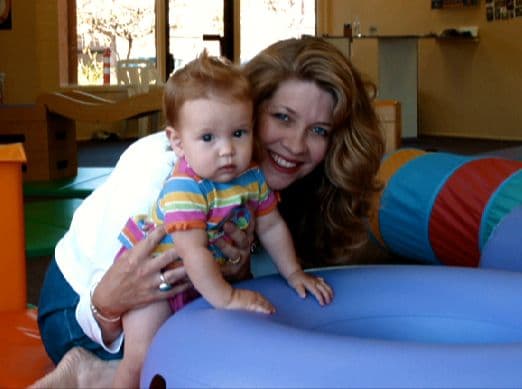
Because giggling babies NEVER gets old: