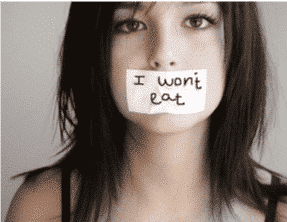
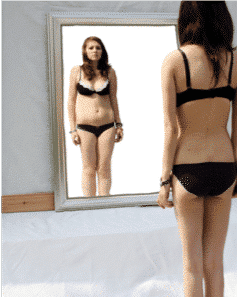
Janessa developed anorexia in 2002 and bulimia a year later. What started as a fad diet quickly took over her life leaving her feeling helpless, ashamed, and isolated with her secret. She discovered an eating disorder chatroom with people who understood what she was going through, a constant feed of support from young women just like her posting recipes, photos, and ideas for thinspiration. She began to compulsively check her feed hundreds of times a day, obsessively comparing herself to others in a desperate competition for thinness. This eating disorder online culture not only normalized her self-harm but also encouraged it. Her compulsive online activities provided an intimate escape that no one in her face-to-face life knew of, not even her therapist. By the time she was 19 years old, Janessa was diagnosed with osteoporosis. By 21 years old, she was buried.
81% of ten-year-olds are afraid of being fat
Bullying about body size and appearance is the most common form of bullying in schools.
25% of American men and 45% of American women are on a diet on any given day.
Americans spend over $40 billion on dieting and diet-related products each year.
Four out of ten individuals have either personally experienced an eating disorder or know someone who has.
What is an eating disorder?
Eating disorders (EDs) are a class of mental illness characterized by maladaptive eating behaviors that negatively impact health, emotions, and general life functioning. EDs have the highest death rate of any mental illness, frequently persisting for years. The most common EDs are anorexia nervosa, bulimia nervosa, and binge-eating disorder.
Eating disordered behaviors typically begin as a way for individuals to lose weight or gain a sense of control over their lives. With a compulsively escalating course, dieting, binge eating, purging, self-starvation, excessive exercise, abuse of laxatives, and compulsive participation with online forums are common.
Who develops ED(s)?
National surveys estimate that 20 million women and 10 million men in America will have an eating disorder at some point in their lives. It’s estimated that 40% of female teenagers have an eating disorder, with more men and younger children falling victim in more recent years. EDs are particularly common with individuals who have difficulty coping with stressors.
Risk Factors
Biological
Psychological
Social
Having a close relative with an eating disorder.
Having a close relative with a mental health condition.
Female sex. Although people of any, all, or no gender can develop an eating disorder, being female increases the risk of developing an eating disorder.
History of dieting or using weight loss tactics
Type One (Insulin-dependent) Diabetes
Perfectionism. Unrealistically high expectations for yourself.
Body image dissatisfaction. Internalization of the thin ideal.
Personal history of an anxiety disorder.
Behavioral inflexibility. Many people with anorexia report that, as children, they always followed the rules and felt there was one “right way” to do things.
Prejudices about weight – The idea that thinner is better
Personal history of being teased or bullied about weight.
A drive to be perfect
Members of the LGBTQ community are at higher risk due to stigma and discrimination.
Loneliness and isolation.
Online Forums
Online forums often times exacerbate these already serious mental illnesses by advocating for ED’s as a healthy way of life and painting mainstream society as condemning, encouraging a “they just don’t understand us” attitude and offering a “we’re in this together” alliance. Compulsive data journaling promotes unhealthy social comparison and competition.
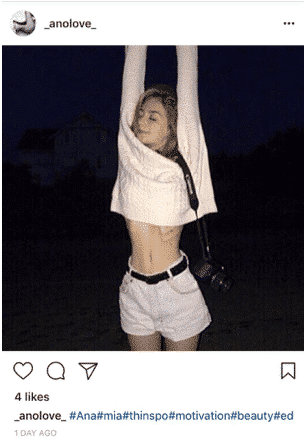
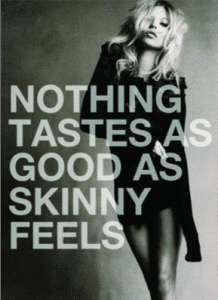
Thinspiration or “Thinspo” is also used to encourage extreme and unhealthy thinness by sharing photos, memes, media, and stories. For example, “Once on the lips, forever on the hips” or “Every time you say no thank you to food, you say yes please to being skinny.” Secret terminology or slang is also used often to hide online activities from parents. Commonly used slang include:
“Ana”: anorexia
“Mia”: bulimia
“Bikini Bridge”: when an underweight woman in a bikini lies down and her hip bones protrude well past their flat stomach causing their bikini bottom to stretch across and gap is formed.
“Thigh Gap”: space between the inner thighs when standing upright with both knees touching as a result of low weight.
Signs Your Child is at Risk for an Eating Disorder
Wearing concealing clothing
Emotional changes suggestive of co-occurring emotional distress like social anxiety, depression, or low self-esteem.
Behavioral changes like social isolation, eating more or eating less, sleeping more, fatigue or low energy, or an overall loss of interest in things they’ve always enjoyed.
Often spending time browsing for information about exercise and dieting or visiting pro eating disorder online forums
How You Can Help
Seek help & treatment
EDs can be extremely dangerous and commonly co-occur with depression, anxiety, social phobia, and obsessive-compulsive disorder. Consult a clinical psychologist who has specialized training with eating disordered behaviors early, don’t wait. Not only can a clinician work with your child to achieve insight and build resilience by teaching emotional coping skills, but she can also provide much needed consult and support for family members. Kids will often accept influence from a therapist even when they are dismissive of parenting support.
Stay calm and matter-of-fact
If you see evidence of eating disordered behavior; ask about it in a straightforward, emotionally neutral manner. Of course share your concern, but be careful not to escalate the situation by panicking, threatening, or lecturing.
Be supportive and present
Make yourself available and willing to talk when your child approaches, on her terms. Kids often avoid talking to their parents, because they’re afraid that they’ll lose their trust or add an additional stress factor to an already stressful situation, like going through a divorce or financial issues (Steinberg, 2014).
Reduce stigma
Shame and guilt can keep individuals tethered to their Eating Disorder longer. It is common for misinformed persons to think that disordered eating is simply a choice. Once EDs take hold, it is very difficult to recover without comprehensive professional treatment.
Helpful Online Resources
NEDA (National Eating Disorder Association) has recently worked with major platforms, including Facebook, Tumblr and Pinterest, to adjust their terms-of-use policies to forbid the promotion of “self-harm” by users.
Eating Disorder Hope provides its readers with extensive information online such as; defining each type of eating disorder, tools for recovery, treatment options, support groups in your area, an much much more.
Eating Disorders Anonymous (EDA provides and outlet of support and fellowship for individuals suffering. EDA is a free online community with the only requirement being that the member is committed to recovering from his/her eating disorder.
Thank you to CSUCI Intern, Katherine Bryan for contributing this article. If you or someone you know is concerned about the effects that media driven beauty ideals online have on our youth please check-out the GKIS article, “I Want To Be Hot When I Grow Up”.
I’m the mom psychologist who will help you GetKidsInternetSafe.
A selfie is a self-portrait shared on texts or social media for attention-seeking, communication, documenting one’s day, and entertainment.[1] The term was first seen in 2002, but didn’t become popular until 2012. By 2013 The Oxford English Dictionary named it “The Word of the Year.”[2] We’ve all been guilty of taking selfies. But it takes education and practice to use good judgment. Today’s GKIS article asks, “Are selfies bad for our mental health?”
Celebrity Selfies
With ads on social and print media, billboards, and television, kids and teens are exposed to thousands of images and videos every day. And, it isn’t obvious how filtered, lighted, contoured, surgically and cosmetically altered, and digitally enhanced the photos are. They aren’t a quick, natural snapshot. They are highly produced and stylized. Kim Kardashian proudly shared that she once took 6,000 selfies during a four-day vacation. Her celebrity sister, Kylie Jenner, also admitted that it sometimes takes up to 500 photos before she gets the right shot.
With such exposure, kids are encouraged to scrutinize their appearance, striving to develop and refine the “perfect” face and body.3 Hyper-sexualized selfies further serve as a negative influence. One can easily get roped into hyper focusing on looks and attracting “likes” and comments as a reflection of worth and popularity.
Selfie Editing Apps
Makeup and selfie editor apps are very commonly used and include features to:
Change eye color
“Slim and trim to selfie perfection”
Enlarge features
Shrink the nose
Plump the lips
Enhance facial contours
And even offer hundreds of pupil templates “to make your eyes look beautiful.”
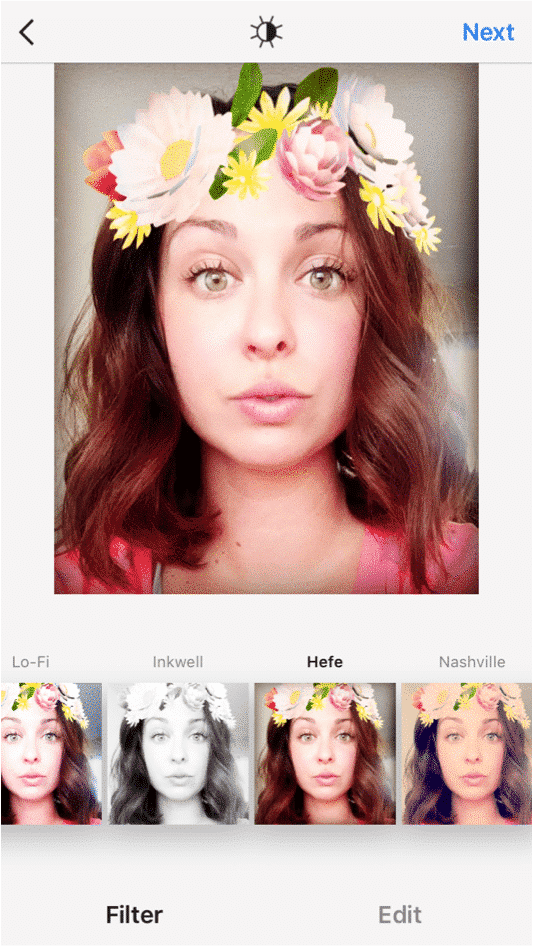
Apps also offer combo features that turn your image into cartoon perfection. For example, the “fairy filter” on Snapchat can change your selfie in multiple ways at once, making your eyes larger and gleaming bright while also smoothing out the skin and whitening teeth.
The Beauty, Fashion, and Health and Fitness Industries
Selfie alteration isn’t motivated simply by entertainment. A far more sinister reason often lurks behind the manipulation of young minds, namely profit.
Each year the beauty industry boasts a profit of 42 billion dollars.[10] Add that to the 30 billion dollars brought in by fashion, health, and fitness and the big business of advertising on social media, and one can imagine the lengths corporations will go to manipulate buyers into buying.[4] The worse we feel about ourselves, the more we buy products to “fix” us.
Do we adopt unrealistic attractiveness standards?
In the past twenty years, anxiety and depression have been rising at an alarming rate. The rates of mental health issues among women have particularly jumped.[5] Social media and the pursuit of perfection are likely contributors.
Not only can media exposure lead to mood issues, but body distortion and eating disorder issues are also on the rise.[7] Forty to 60% of elementary school girls report having concerns about weight.[8]
Body shaming among peers starts young and peaks during adolescence. Both males and females engage in shaming, but they do it differently. Males tend to be more directly aggressive, while females shame through passive-aggressive means like gossip and cyberbullying.[9]
Body image issues can lead to excessive use of diet and exercise products and potentially lead to clinical eating disorders. In the United States alone, 20 million women and 10 million men suffer from a clinically significant eating disorder at some time in their life.[6] Even with awareness and education, prevalence numbers continue to rise.
How can we protect our kids from unhealthy self-perception and distorted body image?
Love and compliment your kids loudly and unapologetically for all they are! This includes their worthiness of love just for being the “perfect,” nondigitally enhanced them.
Reinforce that the self is made up of far more facets than a beautiful face. Likes, interests, skills, and traits make up what’s important about a person, not eye size and hair color.
Discuss the fact that we will be hanging out with our bodies for the long haul, which means we must treat our bodies as our best friends rather than our enemies.
Lead by example. Do you voice your disapproval about your face or body aloud to your kids? If you do, they too will follow suit about themselves. Instead, be loud and proud of the woman or man you are today. Value yourself just as you would like your daughter or son to value themselves.
Implement healthy eating, sleeping, and exercise habits and explain why that is so important for strength and health. I prefer to focus on words like “delicious” and “nourishing” for healthy food to highlight lifestyle factors and frame nutritious food options as a treat, rather than words like “diet,” “cleanse,” or “cheat” that focus on junk food as treats and healthy foods as punishment while aggrandizing shaming fads.
Remind your teen that what they see on social media and in ads isn’t always the real deal. Take an Internet browsing journey with them researching this topic by searching “photoshop hacks” or looking up Jean Kilbourne’s ground-breaking work in this area with her “Killing Us Softly” video series. A must-see!
Thank you to CSUCI Intern, Brooke Vandenbosch for her contributions to this important article! Wonder if only girls are susceptible to body image risk to mental health? Check out, “Body Shame and the Average American Male” for a discussion about how boys are increasingly affected as well.
I’m the mom psychologist who will help you GetKidsInternetSafe.
1 – Sung, Y. , Lee, J. , Kim, E. , & Choi, S. (2016). Why we post selfies: Understanding motivations for posting pictures of oneself. Personality and Individual Differences, 97, 260-265.
5 -Press Association Newswire (2014). ‘Very High Rates of Anxiety and Depression for Young Women. Newsquest Media Group.
6 – Wade, T., Keski -Rahkonen A., & Hudson J. (2011). Epidemiology of eating disorders. In M. Tsuang and M. Tohen (Eds.), Textbook in Psychiatric Epidemiology (3rd ed.) (pp. 343 – 360). New York: Wiley.
7 – Leit, R. (2002). “The Media’s Representation of the Ideal Male Body: A Cause for Muscle Dysmorphia?” International Journal of Eating Disorders, vol. 31, no. 3, pp. 334–338., doi:10.1002/eat.10019.
8 – Smolak, L. (2011). Body image development in childhood. In T. Cash & L. Smolak (Ed s.),Body Image: A Handbook of Science, Practice, and Prevention (2nd ed.). New York: Guilford.
9 – Aslund, C., Starrin, B., Leppert, J., & Nilsson, K. (2009). “Social Status and Shaming Experiences Related to Adolescent Overt Aggression at School.” Aggressive Behavior 35.1: 1-13. Web.