Video games have come a long way since Pong was first released in the 1970’s. Advances in gaming technology can enhance the experience for adults, but for children more realistic games are harder to distinguish from reality. At GKIS, our Social Media Readiness Course is designed to prepare your tweens and teens for the unexpected dangers of video games and social media sites. Our course is backed by Dr. Bennett’s years of experience helping tweens and teens who have already suffered digital injury from the unforeseen dangers found online. In this GKIS article we will cover the evolution of graphics and the steps gaming companies take to make games seem more real.
Video games Are Evolving
Video games are based in technology, and since players got their hands on Pong there has been a push to
advance that technology. Originally, video games were played using bulky arcade cabinets. The first home consoles were very restricted by their hardware. Games were flat and involved a character moving around the screen like a piece on a board. This all changed with the introduction of 3D graphics in the early 2000s. For the first time, video games had physical depth and the characters on screen moved more like a real person would.
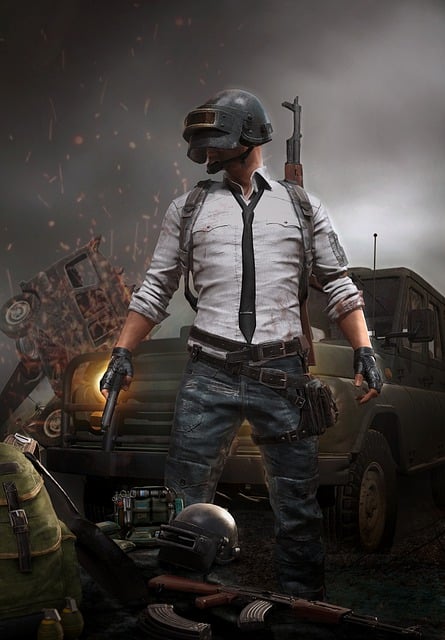
Video games are striving every year to create a more realistic virtual environment. Games now have wind that moves individual leaves on tree branches, light that dances across the surface of the water, and characters that look real from a distance. Modern video games have advanced technology to foster a sense of extreme realism and maximize immersion. With such engaging digital experiences, it is important that children are provided with boundaries so as to prevent screen-time overload and digital injury. Our Screen Safety Essentials Course grants you access to weekly videos with parenting tips and coaching from Dr. Bennett that will help you pull your child out of their digital world and back into ours.
Motion Capture
It can be difficult to program a character to move in a realistic way. The awkward way early 3D characters moved unfortunately hampered immersion. Recently, the gaming industry began to use motion capture technology to solve this issue. Motion capture is a technique whereby a real human being is recorded in a studio as a program captures their motion and applies it to the game character to make the movement look as real as possible.
In a game called LA Noir, you are a 1940’s detective. One of the major objectives of the game is to interrogate suspects and solve crimes. For authenticity, developers created the characters with real facial expressions. The game used an advanced motion capture system to record the real facial expressions of the voice actors portraying the game characters. Players can tell what a character is feeling or if they’re lying based on facial expressions alone. The game uses very real human empathy and natural social cues as a part of the game, offering deeper immersion and better quality overall.
Real Game with Real Fear
Realistic graphics are fascinating when they’re used to make a character blink and breathe like a real person. Immersion is the goal, especially in horror games. Early horror games were limited in what they could create by the consoles of the time. However, as modern technology has evolved, new possibilities have opened for the horror genre.
Games can include motion-captured characters with realistic looks of fear and pain on their face. Horror games originally wanted to compete with the horror movie industry, but horror games now have the ability to do more than movies ever could.
For example, a game called Dead Space takes the classic zombie movie genre and sets it in a futuristic space station. An alien artifact mutates humans into nearly unkillable monsters. The game makes great use of body horror to drive home the alien nature of these dead humans. Body horror is a type of horror derived from twisting the human body into unnatural shapes creating nightmarish monsters. Our mind still sees that the monster is technically human, but is terrified by how wrong it has become. For example, in Dead Space, the zombie you are tasked to fight is a human with an open chest cavity and arms twisted in unnatural positions with sharpened bone where hands used to be. The key feature is that they still have a human face attached to the monstrous form to remind you that they used to be like you.
Immersion in horror games
The main thing horror games have over movies is the personal nature of the narrative and fear within. A zombie movie may be scary to watch as your favorite character fights for their life. However, an immersive game like Dead Space can make you feel like you’re the one fighting for your life. The immersive narrative attempts to draw you into the character’s shoes and, for the time you play, you can believe that you’re really in danger. The narrative takes on a whole new depth as suddenly you’re the one backed into a corner with only a handful of ammo and your wits.
Another dimension is that a game doesn’t guarantee a happy ending. When you run out of ammo, you know that you’re the one who’s going to die. Often when a gamer talks about an experience with a horror game, they speak in the first person. When I first played Dead Space, I remember the adrenaline rush I got when I had no ammo, because I knew I was going to have to fight my way out with my bare hands. The memory of playing a game differs from a movie because it stores itself as if the player had physically been there.
What does immersion mean for kids?
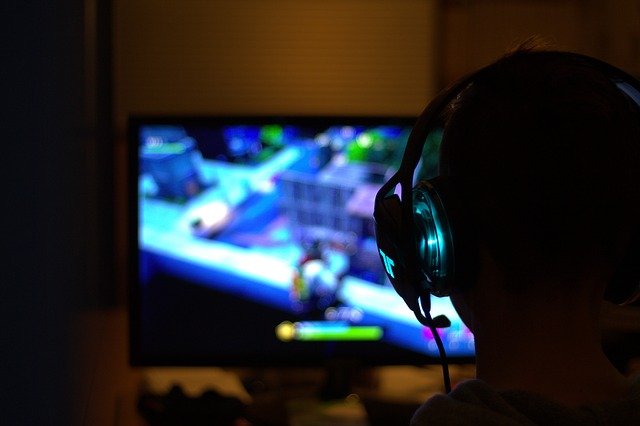
Realistic video games can be frightening and exciting to play. But at the end of the day, a player can still distinguish the game from reality. The same can’t be said for children exposed to the same things. Children have a harder time separating fantasy from reality.
As video games strive to be as close to reality as possible the task only gets harder. An adult who plays a particularly realistic horror game may have trouble sleeping for a night, but a child will suffer far worse than any adult.
Even outside of horror, we have shooter games that strive for realistic blood and death. Sniper Elite is a game that will follow the bullet fired from a sniper rifle through an enemy to show bones break and organs rupture as the bullet penetrates their body. These advances in immersion are great for taking a player into the world of a game, but only as long as that player has developed enough to pull themselves back out.
What can you do for your young gamer?
ESRB Ratings
Most video games come with an ESRB rating on the box to let players and parents know what type of audience the game is suitable for. If a game is rated for an audience older than your child, the game contains content inappropriate for their age group.
Our Connected Family Course is designed to help keep your family connected in a world separated by screens. Backed by years of psychological research our course is designed to keep your family connected and working together to prevent digital injury.
Play games with your kids
Make sure the game your child is playing is appropriate and get some fun bonding time in. You can learn what the game your kids are playing is really like by just spending time with them while they play. If a game is inappropriate, it’ll be hard to hide for long.
Thanks to CSUCI intern, Jason T. Stewart for researching advances in the video game industry and co-authoring this article.
I’m the mom psychologist who will help you GetKidsInternetSafe.
Walker, C. (2010, December 22). Video games and realism. Wake Forest News. Retrieved November 3, 2021, from https://news.wfu.edu/2010/12/22/video-games-and-realism/.
It’s a new augmented reality world. With Nintendo’s July 6th launch of the free smartphone app, Pokémon Go, the virtual gaming world has meshed with our nonvirtual lives on a pervasive scale. Using augmented reality technology, or layering of virtual play onto the real world, game strategists have dialed in on the components necessary to trigger compulsive integrated gaming, and it’s spreading like a virus. Within one week of launch there are millions of downloads worldwide and Nintendo stock has skyrocketed. This scope of cultural popularity is a capitalist’s dream. Even the pasty-white gamers rarely seen outside of their darkened screen dens are roaming the streets in search of Pokémon critters “inhabiting” our streets and businesses. Due to hyper-focused roaming while gaming, parents are afraid of targeted criminal threats, companies are alarmed at security risks, doctors are treating game-related injuries, companies are trying to lure roaming gamers through their doors, and everybody else is having an awesome time capturing virtual pocket monsters. What do you need to know to catch up on the hype and keep you family safe? GetKidsInternetSafe is here to review the basics, the benefits, and the risks.
How does one play Pokémon Go?
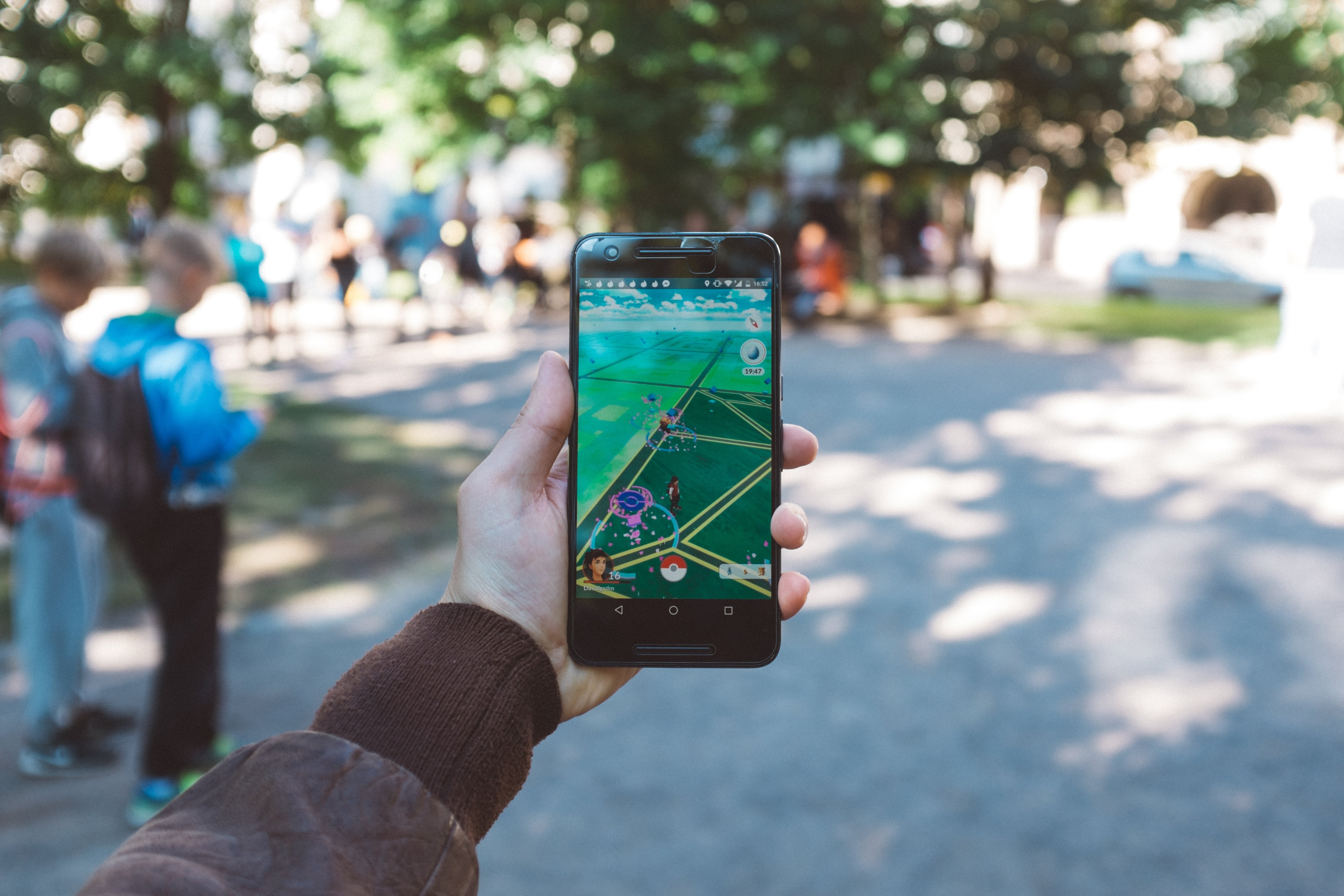
First download the free Pokémon Go app to your smartphone, nickname your avatar, and walk out your door to search for Pokémon characters. In cooperation with Google Maps data, Nintendo has made it possible to view cartoon characters superimposed on your smartphone’s camera screen map in real-life places like parks, schools, and museums. Walk down any street and wait for your smartphone to vibrate if there is a Pokémon ready for capture nearby.
Once spotted, Pokémon characters can be captured and virtually collected in your Pokedex so they can be trained, enhanced, and readied for battles with other players. Each Pokémon character’s value and strength are reflected by its combat points or the color of the circle that surrounds the character. With each capture, the player also receives Stardust or Candy which can be used to power-up your character to make it a more powerful fighter. Poke Stops are special locations where players can find digital items like potions, poke balls, and eggs. Gyms are battle sites available to level 5 and above players who have joined one of three teams, Instinct, Mystic, or Valor. Players also have the option to buy PokéCoins, which is in-game currency used for purchasing power-ups, extra items, and playing enhancements.
What are the benefits of Pokémon Go?
Fun
Exercise, fresh air, and exploration
Socializing and team play
Strategy and technology skills
What are the risks of Pokémon Go?
Data charges
Counterfit apps loaded with malware that put smartphone data at risk
Technology headaches, such as the recent server crash that caused and uproar and resulted in some players reloading the app and losing hard-earned characters
Compulsive playing interfering with home and work productivity
Targeted by marketing businesses promising poke stops or poke gyms on their premises
Trespassing into private, restricted, or dangerous areas (reports of kids searching near a sober living facility that housed sex offenders, cemeteries, and police stations; calling 911 in search of information about access; and another player discovered a dead body while playing)
Injury due to distracted roaming and driving (reports of players walking off cliffs and causing traffic accidents while playing)
Potential for criminal targeting (reports of luring and assault and smartphone robberies)
GetKidsInternetSafe suggestions:
As creator of GetKidsInternetSafe, I have mixed feelings about Pokémon Go. Last night I watched my middle-aged college roommate capture her first Pokémon crab guy on a bustling San Francisco street. Despite my attempts to act too jaded to care, we collapsed into laughter upon her first capture. I have to admit, it was awesome, and I have since narrowly missed downloading it for compulsive play myself. It is glaringly evident to me how fun this app could be. The augmented layering of the virtual world onto our nonvirtual lives is mind boggling with potential.
As with everything fun in life, moderation is key. As parents keen on making sound tech decisions in our homes, we simply need to be informed, aware, and willing to use with moderation. That means teaching our kids how to gather and assess information about the risks and benefits, practice skills for safety and self control, and seek consult when they need information or opinions. If it sounds like a reasonable game to you, I suggest a probationary download. Let your kids know that they can try it on a probationary basis and discuss rules and parameters ahead of time. For instance, make them aware of the safety risks while roaming around tracking for characters. Also protect your credit card information and passwords that may be used for online purchase. A client of mine was stuck with $2500 worth of gaming charges from her ten year-old recently for making that mistake. And if you have teens, there are rampant reports of kids sneaking out at night for unsupervised playtime. Don’t be caught unawares. And my best advice, join in and HAVE FUN to build that powerful parent-child connection. An active, quality relationship with your kids is the best protection from the risks possible.
I’m the mom psychologist who will help you GetYourKidsInternetSafe.