
Need peaceful screen time negotiations?

Get your FREE GKIS Connected Family Screen Agreement

america

Community Learning, Social Shame, and Poorly-Equipped Teens

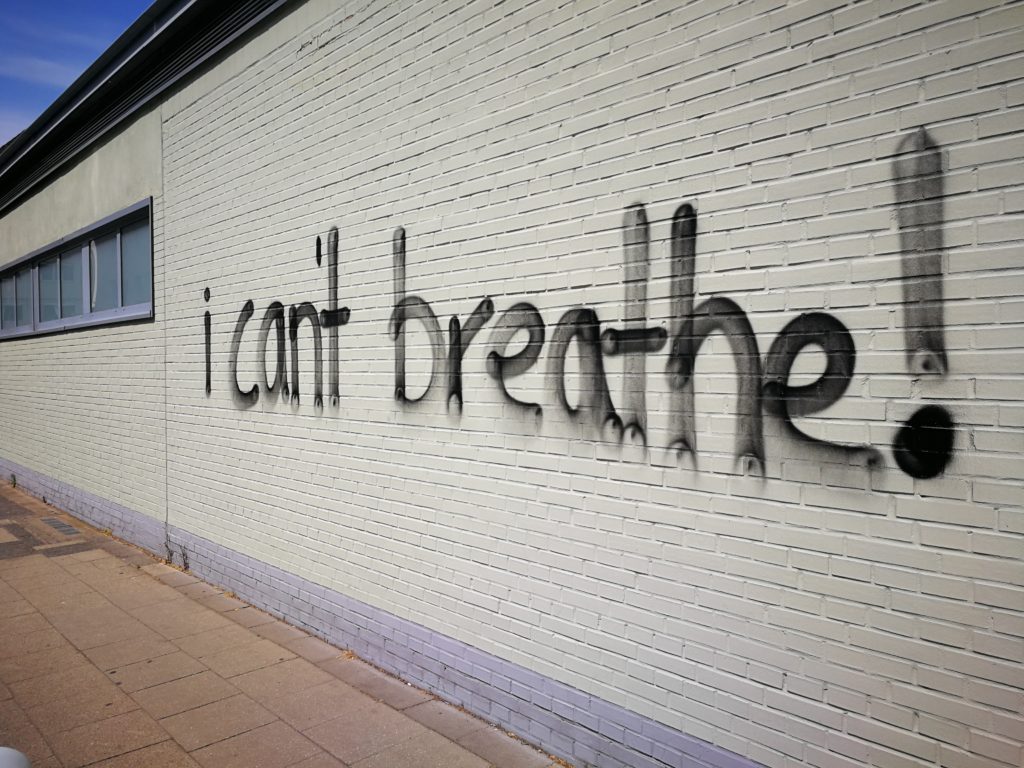
I am deeply saddened on top of many layers of horror and sadness from these last few weeks. While we are all still reeling from the fears of unknowing and weeks of social isolation due to the COVID-19 pandemic, we witnessed the heartless murder of George Floyd on TV as he begged for his life and onlookers pled for his safety. The #blacklivesmatter dialogues that have followed by our leaders, celebrities, neighbors, friends, and families have sparked further insights, horrors, hopes, and healing. From my position of privilege, it is impossible to try on the skin of oppressed black and brown Americans. I do not have the capacity to do so no matter how hard I try. But I really do try. I know from decades of training and experience that none of us walk through this unjust world without prejudice and bias. It is the human condition. We ALL have work to do. Our rage and pain and fear and sadness offer opportunities for insight. Some are taking it in quietly, some are coming out fists up. I choose to believe that important voices are being heard, just as I believe they will unconsciously dim from our awareness when the news cycle becomes stale. We all must commit to keeping our fight against hate, oppression, and prejudice in the forefront of our minds and behavior from here until we breathe our last breath. As a collective, we can make a difference but only with consistent effort, education, and heart.

For this article from my role as a screen safety expert and child advocate, I’d also like to shine a light on another angry mob that feels justified in shaming online postings in passionate pursuit of justice. Last night it was a viral post that appeared in my 5k member mom community Facebook group. I woke up this morning and checked the weather, the news, and Facebook. First on my feed was a post from a young woman outing a pickup truck full of teens flying an American flag. She wrote, “Nothing brings me more joy than exposing racists, these troubled souls were driving by a peaceful protest in Camarillo yelling, “Fuck black lives.” Then she posted the license plate number. Shortly after, a s&^tstorm of comments ensued. The kids were named with the grade they were in and the school they attended. Moms raged that the boys were racists and terrorized a group of peaceful protesters by driving around saying these hateful things. Many blamed the parents and the parents’ businesses were mentioned. A few commenters spoke up saying it isn’t OK to socially shame minors or out their parents. Over 200 comments later, I was mortified.

I reported the post and impulsively posted this response:

I agree that some teen behavior is despicable but posting photos and names of minors on a forum that’s supposed to be for community building is wrong. Being a cyberbullying social shaming mob is the opposite of community building. We teach our kids to be better than this and then we, the adults, do it? As a mother, screen safety expert, and psychologist, I had to speak up as an advocate for kids. Kids make stupid mistakes. It’s our job as experienced adults who have learned from our stupid mistakes to work them through to insight. Instead of leading with compassion, this post could be potentially devastating for their futures. It teaches hate and shame rather than judgment and discernment. Just because a poster feels like they have the right to humiliate and harm those kids does not make it acceptable. Photos, names, and their grade and school?!! That’s called doxing. What you post may be legally actionable. We each need to consider how we’d feel if our child was outed like this. As a collective, we are not law enforcement, judge, and jury of this town. We can do better.

Immediately from there, the admin shut down all comments to my post and took off the other post. I believe this was in support of my message and to stop the bleeding. Several likes and loves have ensued, but the dialogue stopped. Was that the right move to make?

The admin for this group and I have consulted about the bad behavior on this page before. Last time we talked, the kids of the town were cyberbullying and trolling the page with horrific images, one regarding the holocaust. She said she was so upset she threw up. My teen son told me that the kids had waged war on the “Karens” for outing kids on the page in the past with inaccurate claims and unfair vitriol. It sparked a lot of complicated discussions between us as a family. I listened a lot and raised ideas and challenged him. He and I talk a lot about social justice issues and how they are handled online. Recent events have been especially rich in opportunity.

The post went up late last night. It’s unclear if the admin even saw it until this morning. She has an impossible job wrangling angry moms all of the time, trying to offer an open forum but police it with reasonable community guidelines. It’s got to be an impossible and mostly thankless job. She’s even recruited helpers, but it’s tough to discern when a post is offensive rather than an opinion. She strikes me as gracious, generous, and reasonable.

Shortly after the comments were frozen and the post was taken down, I went on to see that one of the moms wrote a heartfelt apology for her son. Although many moms supported her, stating that teens make mistakes and it took courage for her to post, others continued to hatefully blame her and pick apart her apology word-for-word. Once again, this string was a far cry from listening, learning, and healing. I sent her a private message of support saying:

I am deeply saddened by what your family is going through. I have a child your son’s age…not sure if we know each other. Of course, I do not in any way support his behavior. I support the black lives matter movement. But I also passionately advocate for kids of all colors, stages of learning, and momentary headspaces. But I know many truths from many years of training and experience. 1) he has lived in an entirely different virtual world than any of these moms. He was probably thinking that black lives matter is so obvious that its ok to poke fun. 2) He got way too carried away. He was probably jacked up from friend provocation and testosterone and his vengeance for the “Karens” that his generation wants to put down. We’ve run their lives, they’re pushing back. We did it too. 3) He’s only 17 years old. He doesn’t have the experience or brain wiring to anticipate consequences. Hell, most of us cannot see into the future either. My son is 16 yo, and he has so so much to learn still too. So does my 18-year-old daughter. and my 26-year-old daughter. So do I. Still making mistakes to this day, still learning. 4) You’re raising a human being, not a robot. You can’t control his choices. But it’s obvious you are a good mom really trying. Cheers to you for that. 5) It took so much courage to enter that fray. You did what was right. There was no way you could have strung the nouns and verbs together to ease the anger. 6) I could rant all day but I wanted you to know that my compassion, prayers, and mom juju is 100% behind you and your son. He has learning and healing to do. Assaulting him as that poster did was very wrong. I’m so sorry you are going through this. I’m behind you.

The mom went on to a private dialogue with me from there. Her story was that her son was not one who yelled out and that many of the kids were saying “copslivesmatter” and “whitelivesmatter.” Some of them were children of police officers. For the record, I knew the original poster as a little girl. She had her scrapes as a teen too. Small town living indeed. There are always many sides to the story.

When I read my response to her now, I think I probably was too easy. Maybe I was “whitewashing” it and not taking into account how these boys deeply frightened and intimidated others. Do they have a right to free speech when they are acting aggressively? Were they acting aggressively? This was far more than “poking fun.” See? It takes so much awareness and contemplation to recognize our blinders. A fair point is that some would consider my empathetic response to this mom and son to be part of the problem. They would say that quiet compassion isn’t enough. Anger, shame, and even violence are justified due to years of oppression and violence toward Americans of color. That pickup truckload of boys scared people. That kind of behavior blossoms into hate crimes. People of color live with that every day, all of the time. I read another post from the daughter of a policeman who spoke of her fear for his life every day. But she took it a bit further. She recognized that her dad gets to take his badge off at the end of the day and walk around town without fear. So many perspectives to take, so many stories to tell.

I’m not an expert with the #blacklivesmatter movement. But I am an expert on child psychology. We need to listen and challenge more. We need to read, learn, and continue these very hard conversations. We need to lean into the discomfort and ask ourselves what role we are playing. The admins of this Facebook group later came on and apologized for taking the comments down. They invited more discussion and asked for people to message them their concerns. Many in the forum praised them for stopping hateful dialogue. Others said it was an injustice to delete the education from the black moms on the post and their allies. Some said discomfort is necessary and many still felt those boys deserved to be confronted.

I don’t have the answers here. I’m still grappling too. But I am listening and challenging and trying. I believe that shame and violence are not where the learning is at. Community building is where we will achieve the best insight. Until we figure this out, we can do better.


Online Pornography’s Impact on Kids and Teens

Parents in my practice and GetKidsInternetSafe subscribers commonly ask me about the impact of pornography on kids. They comment on how different today’s world is from when we were young. Most people even assume that kids today are more promiscuous than we were. But here is what you may be surprised to learn: even though today’s teens demonstrate more acceptance of casual and what we used to consider deviant sexual practices (like oral sex, anal sex, same-gender sex, and polyamory), teens are more sexually responsible than previous generations. In fact, despite popular misconceptions that teens are hooking up casually, the truth is they are “talking” more than dating and having sex later and with fewer partners than previous generations. They are also more likely to use contraception, resulting in teen pregnancy rates being at an all-time low. That gives me hope that, because of American’s more casual attitude toward sex, we are doing a better job at sex education and supervision. To that end, I’ve included this section of my book, Screen Time in the Mean Time: A Parenting Guide to Get Kids and Teens Internet Safe, free for GKIS blog readers. Hang on to your hats parents, no matter how open-minded you are, you are likely to find some of this information concerning and IMPORTANT!

Online pornography is popular and easily available. We don’t know how popular it actually is though, because a large number of pornography websites are reticent to share traffic numbers. Best estimates are that 13% of web searches are for online pornography.[i] What we do know is that the number of viewers and time spent viewing is growing. A particularly popular single pornographic site, Pornhub’s 2018 Year in Review reported:

Visits to Pornhub totaled 33.5 billion over the course of 2018, an increase of 5 billion visits over 2017. That equates to a daily average of 92 million visitors and at the time of this writing, Pornhub’s daily visits now exceed 100 million. To put that into perspective, that’s as if the combined populations of Canada, Poland and Australia all visited Pornhub every day! …When they’re not busy watching videos, Pornhub’s users enjoy socializing, with nearly 64 million private messages sent and 7.9 million video comments left. … More than 141 million people took the time to vote for their favorite videos, which incidentally is more people than voted in the last U.S. presidential election.Once again, the United States continues to be the country with the highest daily traffic to Pornhub, followed by the United Kingdom, India, Japan, Canada, France, and Germany.[ii]

Furthermore, today’s online pornography is nothing like the images from our fathers’ Playboy magazines. Most pornographic videos are scripted to display fantastical versions of the sexual desires and prowess of men.[iii] Most often, that means scenes with women as sexual objects who are seemingly delighted to be the willing and passive victim of demeaning verbal and physical aggression, often by one or more men at a time. Porn content is rich with violent and fetish acts that bear little resemblance to loving intimacy. As customers satiate to milder versions of pornographic activity, clever content developers produce increasingly risqué content to keep their customers browsing. The top seven Pornhub searches for 2018 were lesbian, hentai, milf, stepmom, Japanese, mom, and teen.

With popularity and ease of access through mobile screens and gaming consoles, many kids and teens intentionally seek and are being accidentally exposed to, inappropriate sexual images and videos. Based on a set of EU studies, Kierkegaard (2008) states that children have access to Internet pornography at the average age of eleven years old.[iv] Not only are kids and teens seeking sexual content for titillation, but many kids are also relying on online pornography as their primary source of sexual education.[v] Alarmingly, I am seeing more and more kids intentionally seeking pornographic content and creating and exchanging nude images and videos. How often are children viewing porn, and, when they do, what kinds of harm may result from that exposure?

Estimates from research studies vary widely, most suggesting that a minority of adolescents actually access online pornography.[vi] However, in one study conducted in 2008 with 562 undergraduates, 93% of boys and 62% of girls reported that they were exposed to pornography during adolescence.[vii] In my clinical experience, it is quite common due to unfiltered smartphone and tablet use among younger children. Studies show that kids tend to consider what they see online as attractive, normative, and risk-free and may go as far as emulating it.[viii][ix] The online worlds of MMORPGs increasingly feature virtual sexual assault and pornographic behaviors, and popular television series deliver increasingly violent content and explicit themes.

Who is most at risk for online pornography consumption?

The typical adolescent online pornography user is a boy who is more pubertally advanced,  a sensation-seeker, and has weak or troubled family relations.[x] Boys are more likely to be exposed at an earlier age, to see more images, to see more extreme images (e.g., rape, child pornography), and to view pornography more often; while girls reported more involuntary exposure.[xi]Statistics demonstrate that female viewing is going up every year. Pornhub’s 2018 Year in Review report stated, “2018 saw the proportion of female visitors to Pornhub grow to 29%, an increase of 3 percentage points over 2017.”[xii] Depression and rule-breaking are also risk factors.[xiii][xiv]

What affects does viewing pornography have on kids?

Research demonstrates that pornography use among children, teens, or adults has been associated with:

  • Cynical attitudes about intimacy, fidelity, and love[xv]
  • Stronger gender-stereotypical sexual beliefs[xvi]
  • Desensitization and habituation with explicit content, meaning the user’s appetite changes over time from less extreme to more extreme forms of pornography to get the same intensity of enjoyment. This also validates deviant sex practices and potentially lowers inhibitions to engage in inappropriate sexual interactions online and offline[xvii]
  • Attitudes supporting violence against women[xviii]
  • More permissive sexual attitudes, especially in regard to the place of sex in relationships[xix][xx][xxi]
  • Greater experience with casual sexual behavior[xxii][xxiii]
  • Earlier sexual intercourse[xxiv]
  • More sexual aggression, both in terms of perpetration and victimization[xxv]
  • Three times more sexually aggressive behavior when exposed to nonviolent porn[xxvi]
  • Twenty-four times more sexually aggressive behavior when exposed to violent porn[xxvii]
  • A clinically impairing addiction, called Hypersexual Disorder.

Causal research would require purposely exposing children to pornographic content. Because that is not safe or ethical, all research studies about child exposure to online pornography are correlational. We cannot conclusively say whether online pornography causes certain attitudes or behaviors. Obviously, the correlation findings quoted above are concerning. Blocking kids from online pornography is common sense. Not only is viewing pornography an issue, but more active sexual role playing online also makes kids vulnerable to sexual predators. These attitudes and behaviors are impactful in the short term and may also lead to problematic life-long trauma and intimacy issues.[xxviii]

If this information is useful to you, please share it with friends and family. Too many of us bury our heads to the reality of online pornography and child access. There’s so much to know! If you are looking for a one-source guide to screen risk, benefit, and the parenting strategies that can strengthen your parent-child relationship while keeping them safer, pick up a copy of Screen Time in the Mean Time on Amazon. And for a step-by-step guide to setting up your home for enrichment and screen safety, you won’t want to miss my Connected Family Course. Parents tell me all the time how much they’ve appreciated having the information for prevention rather than hearing it AFTER they end up in my psychology office. Education matters!

I’m the mom psychologist who helps you GetKidsInternetSafe.

Onward to More Awesome Parenting,

Dr. Tracy Bennett

Works Cited

[i]http://www.forbes.com/sites/julieruvolo/2011/09/07/how-much-of-the-internet-is-actually-for-porn/#434a4de761f7

[ii]https://www.pornhub.com/insights/2018-year-in-review#us

[iii]Brown, J., & L’Engle, K. (2009). “X-Rated: Sexual Attitudes & Behaviors Associated with U.S. Early Adolescents’ Exposure to Sexually Explicit Media.” Communication Research36, 129, 133.

[iv]Kierkegaard, S. (2008). Cybering, online grooming & age-play. Computer Law & Security Report, 24(1), 41–55.

[v]Kanuga, M. & Rosenfeld, W. (2004). “Adolescent Sexuality & the Internet: The Good, the Bad, & the URL.” Journal of Pediatrics & Adolescent Gynecology17, 117, 120

[vi]Peter, J., & Valkenburg, P. (2016): Adolescents & Pornography: A Review of 20 Years of Research, The Journal of Sex Research, DOI: 10.1080/00224499.2016.1143441

[vii]Sabina, Chiara, et al. “The Nature and Dynamics of Internet Pornography Exposure for Youth.” CyberPsychology & Behavior, vol. 11, no. 6, 2008, pp. 691–693., doi:10.1089/cpb.2007.0179.

[viii]Rich, M. (2005). “Sex Screen: The Dilemma of Media Exposure & Sexual Behavior.” Pediatrics116, 329, 330.

[ix]Zillmann, D. (2000). “Influence of Unrestrained Access to Erotica on Adolescents’ & Young Adults’ Dispositions Towards Sexuality.”Journal of Adolescent Health27, 41, 42.

[x]Peter, J. & Valkenburg, P. (2016): Adolescents & Pornography: A Review of 20 Years of Research, The Journal of Sex Research,DOI: 10.1080/00224499.2016.1143441

[xi]Sabina, Chiara, et al. “The Nature and Dynamics of Internet Pornography Exposure for Youth.” CyberPsychology & Behavior, vol. 11, no. 6, 2008, pp. 691–693., doi:10.1089/cpb.2007.0179.

[xii]https://www.pornhub.com/insights/2018-year-in-review#us

[xiii]Wolak, J., Mitchell, K., & Finkelhor. D. (2007). “Unwanted & Wanted Exposure to Online Pornography in a National Sample of Youth Internet Users.” Pediatrics119.2: 247-57. Web.

[xiv]Ybarra, M., et al. (2011). “X-Rated Material & Perpetration of Sexually Aggressive Behavior Among Children & Adolescents: Is There a Link?” Aggressive Behavior37, 1, 3, 7.

[xv]Zillmann, D. (2000). “Influence of Unrestrained Access to Erotica on Adolescents’ & Young Adults’ Dispositions Towards Sexuality.”Journal of Adolescent Health27, 41, 42.

[xvi]Peter, J. & Valkenburg, P. (2016): Adolescents & Pornography: A Review of 20 Years of Research, The Journal of Sex Research, DOI: 10.1080/00224499.2016.1143441

[xvii]Zillmann, D. (2000). “Influence of Unrestrained Access to Erotica on Adolescents’ & Young Adults’ Dispositions Towards Sexuality.”Journal of Adolescent Health27, 41, 42.

[xviii]Hald, Gert, Martin, et al. (2009). “Pornography & Attitudes Supporting Violence Against Women: Revisiting the Relationship in Nonexperimental Studies.” Aggressive Behavior35, 1, 3, 5.

[xix]Peter, J., Valkenburg, P., & Schouten, A. (2006). Characteristics & motives of adolescents talking with strangers on the Internet. Cyberpsychology & Behavior, 9, 526–530.

[xx]Peter, J. & Valkenburg, P. (2016): Adolescents & Pornography: A Review of 20 Years of Research, The Journal of Sex Research, DOI: 10.1080/00224499.2016.1143441

[xxi]Zillmann, D. (2000). “Influence of Unrestrained Access to Erotica on Adolescents’ & Young Adults’ Dispositions Towards Sexuality.”Journal of Adolescent Health27, 41, 42.

[xxii]Peter, J. & Valkenburg, P. (2016): Adolescents & Pornography: A Review of 20 Years of Research, The Journal of Sex Research, DOI: 10.1080/00224499.2016.1143441

[xxiii]Zillmann, D. (2000). “Influence of Unrestrained Access to Erotica on Adolescents’ & Young Adults’ Dispositions Towards Sexuality.”Journal of Adolescent Health27, 41, 42.

[xxiv]Peter, J. & Valkenburg, P. (2016): Adolescents & Pornography: A Review of 20 Years of Research, The Journal of Sex Research, DOI: 10.1080/00224499.2016.1143441

[xxv]Peter, J. & Valkenburg, P. (2016): Adolescents & Pornography: A Review of 20 Years of Research, The Journal of Sex Research, DOI: 10.1080/00224499.2016.1143441

[xxvi]Ybarra, M., et al. (2011). “X-Rated Material & Perpetration of Sexually Aggressive Behavior Among Children & Adolescents: Is There a Link?” Aggressive Behavior37, 1, 3, 7.

[xxvii]Ybarra, M., et al. (2011). “X-Rated Material & Perpetration of Sexually Aggressive Behavior Among Children & Adolescents: Is There a Link?” Aggressive Behavior37, 1, 3, 7.

[xxviii]Villani, S. (2001). “Impact of Media on Children & Adolescents: A 10-Year Review of the Research.”Journal of the American Academy of Child & Adolescent Psychiatry40, 392, 399.

Photo Credits

Photo by pawel szvmanski on Unsplash

Photo by AC De Leon on Unsplash

Photo by Josh Hild on Unsplash