Need peaceful screen time negotiations?

Get your FREE GKIS Connected Family Screen Agreement

Access Hollywood

Online Teen Slang: Should We Worry?

I’m curled up on a weathered leather couch in a beautiful loft barn we rented for the weekend. A last of summer cozy couples’ retreat in the rolling hills of wine country. We are waking up to soft braying of ponies, early morning foggy walks in vineyards ripe for harvest, and a leisurely breakfast of fresh eggs, hot mint tea, fresh squeezed watermelon and orange juice, and buttery warm banana bread left by our generous hosts. Later we are meeting our friends for a delicious farm to table lunch from local farms and orchards. Best of all…a weekend of fun with old and new friends before a busy school year starts. Crazy grateful for the rejuvenation from the sunshine and laze of summer.

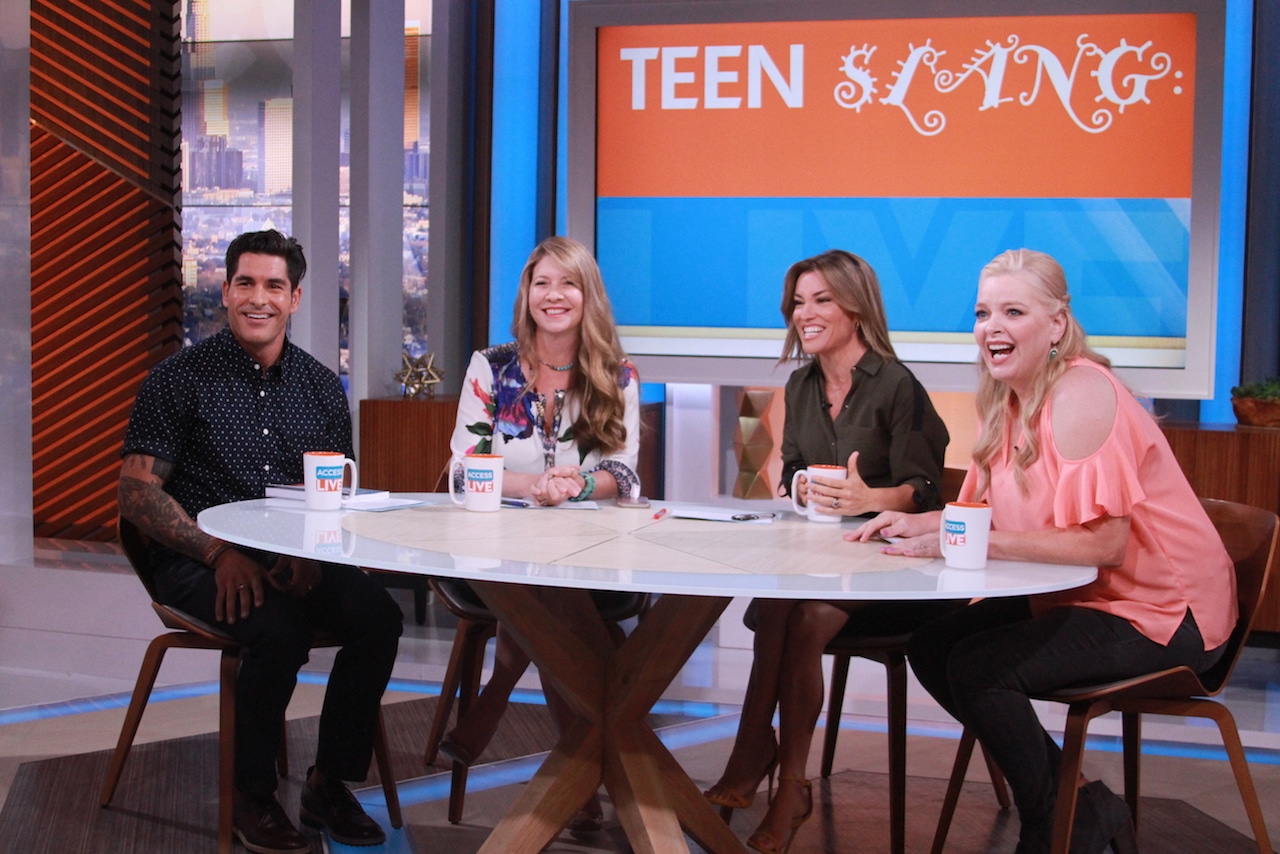
Now that my kids are teens, we are able to sneak away sometimes, guilt-free. If you have little ones and can’t seem to sneak off for weekends yet, don’t despair. It’s coming one day. And when you do, you’ll spend much of it fondly remembering being frazzled and sleep-deprived with your little ones. Each phase of parenting has its challenges and its pleasures. In the spirit of sharing and friendship, I’m taking fifteen minutes out in this sweet little farm kitchen to share the fun content producers of Access Hollywood Live helped me develop for my segment Monday on Online Teen Slang: Should We Worry? I hope you’ve set aside time each week to curl up with steaming hot tea for a moment of solitude to read your GKIS article. They are written to gently pepper you with useful information about tech, parenting, and safety so you can teach during screen-free dinners with you and yours. ❤️ Now on to the basics of teen online slang.

Why is slang always changing? Is it to be ‘cool’ with friends?

Slang is an expression of culture. Youth culture changes rapidly and is based on popular memes, songs, and movies. Part of the excitement is that you have to be an integral part of the culture to keep up. No parents!

Teen Slang: The Bad News

Often reflects and teaches concepts you may not want your child to know.

Can be used to hide from parents and plan secret and even dangerous activities

Can be vulgar, offensive, or cruel.

Teen Slang: The Good News

Young people who use slang are striving to form their own, independent, adult identities.

Sharing slang provides a sense of belonging, and being ‘in-the-know’with friends.

Using slang is a celebration of being young and having fun.

Every generation creates its own slang, but why does it seem so different now? Has it evolved in the age of social media and smartphones?

Slang is not new. But with the web, kids have a bigger, private, more versatile playgroundto live in. They juggle lots of virtual identities, each with its own characteristics, slang, activities, and community on demand with thousands of members of their tribe connected at once. We had our neighborhood buddies and the telephone. Big difference.

Should parents attempt to use their teens’ slang as a way to try to relate to their kids, or is that getting into majorly uncool territory?

If you want them to roll around in agony and openly insult you, you should totally use their slang.

Should parents be worried about the slang their teens are using now, or is it no different than if they think back to when they were younger?

It’s different. It’s more dark and vulgar for sure.But the teens I see in practice and the ones I’m raising are still good people. They’ve just habituated to a more troubling slang culture overall. Parents should be worried if their kids are too “thirsty”to belong, because that would result in being too eager to join in and take risks. They should be worried if they’re too secretive. They should be worried if there’s evidence of sneaking and dangerous defiance. Otherwise, have fun with it. Of course, correct them when they cross over the line, but stay engaged. Allowing them some privacy is also important.

Another topic we want to touch on is the cultural sensitivity issue of using slang — many of the terms originate in African American or LGBTQ communities — how mindful should people of other communities be of this before being quick to just use any term?

In-groups are delicate. If a person intrusively hijacks slang from a group they haven’t earned a place in, it can look aggressive or demeaning. Slang provides information about boundaries and belonging.

How can people make sure it’s appropriate to use a term before they start using it?

Do your research before using slang, like observe and ask others, Google it, err on the side of caution.Teens brutally police each other to follow social morè’s, which may even slip into bullying. Let your teen know you have their back 100%, even when they make stupid mistakes. Even better, teach them that mistakes are part of learning and you expect them often. Rather than shame them when they’re hurting with a lecture, take them for a smoothly, show deep compassion, and share stories about how common and healthy mistakes are. Sometimes providing a fun distraction while it passes is what they need.

How to Spot Red Flags in Teen Slang Use & What to do About it:

  • Talk to your teen often. Let them DJ in the car and share funny videos to stay connected. Keep up on their friends and interests. Be you but with humor. Encourage their independence but reassure them you are being them 100%.
  • Keep an eye out for concerning behavioral changes like increased isolation, poor hygiene, reckless behavior, or darkened moods are things that may signal trouble.
  • Block dangerous websites and monitor screen use.
  • Bookmark helpful websites, like Urban Dictionary, and set google alerts.
  • Look out for defensiveness and changing the browser quickly or erasing it.
  • If you’re worried and they won’t talk to you, consider psychotherapy. It’s shocking the influence I have with teens as they blatantly reject their parents with the same advice. It can really turn the situation around.

Want to know which slang terms to pay attention to and if slang use leads to teens having sex? Check out my earlier article Online Slang That Parents Need to Know.

I’m the mom psychologist who helps you GetKidsInternetSafe.

Onward to More Awesome Parenting,

Dr. Tracy Bennett
Investors Urge Apple and Parents Petition YouTube to GetKidsInternetSafe. Has the GetKidsInternetSafe Revolution Begun?

This has been a big week for grassroot efforts to GetKidsInternetSafe. First was the petition urging YouTube to delete the account of wildly successful YouTube celebrity, Logan Paul, after he tastelessly posted a video showing him giggling alongside a suicide victim. Second was an open letter from two investors urging Apple to help parents with screen management due to screen addiction rates among children. Although research is scrambling to get current, there is substantial evidence that kids are being exposed to harmful content and addicted to their mobile screens. These two precedent-setting moves reflect growing concern and awareness about the very aspects that spurred me to create GetKidsInternetSafe; that technology is profoundly changing childhood and even brain development. After her inspiring Golden Globes speech about our influence on kids, we need Oprah to help us get the GetKidsInternetSafe Revolution some momentum!

In the introduction of my book Screen Time in the Mean Time: A Parent Guide to Get Kids and Teens Internet Safe, I describe how childhood and parenting has made a profound shift.

In modern times, child screen use has had a greater impact on the American family than anything since the abolition of child labor in 1938. Parenting has become a full-time preoccupation. Kids don’t labor for parents, parents labor for kids. Because of what we perceive as society’s high expectations of parents, raising healthy, happy kids has become overwhelming. We are expected to faithfully care for and entertain our children most of our waking hours without complaint. Although parents are waiting later to have kids and having fewer kids per family, with both parents working and the disappearance of extended family help, we have fewer supportive resources than ever before.

Even with little support, we have been accused of “helicopter parenting” to keep our kids safe and successful. We too often expect our kids to earn 4.0 GPAs, awards in robotics, and trophies in sports. Cs aren’t “average” anymore, now they’re a mark of parents not helping enough with homework. Our fear that we aren’t doing enough trickles down to our kids in the form of encouraging lectures and, too often, scathing shame and disappointment. We know this is too much pressure. So in between the “enriching” activities we work so hard to provide, we allow them leisure time…more leisure time than any children in history.

Parents are no longer willing to order their kids to go play outside until the streetlights come on. It’s too scary knowing what we do about child predators, bullying, sex, and drugs. To keep kids safe, we shelter them inside our houses to save them from the world’s perils. Instead of running amok like we did with hordes of neighborhood kids creating spontaneous, street-smart missions, they watch screens. And while they’re on their screens, we’re also on ours. Screen time gives us much needed breaks and provides what we hope is enriching content and a primer in digital literacy. But the troubling behaviors our kids demonstrate while compulsively viewing videos, social media, and video games eerily resemble signs of addiction. And we are the dealers, providing screens too often while they’re too young. We are hooked too. We feel guilty, but it’s often the best we can do. Screen technology has transformed childhood and parenting.

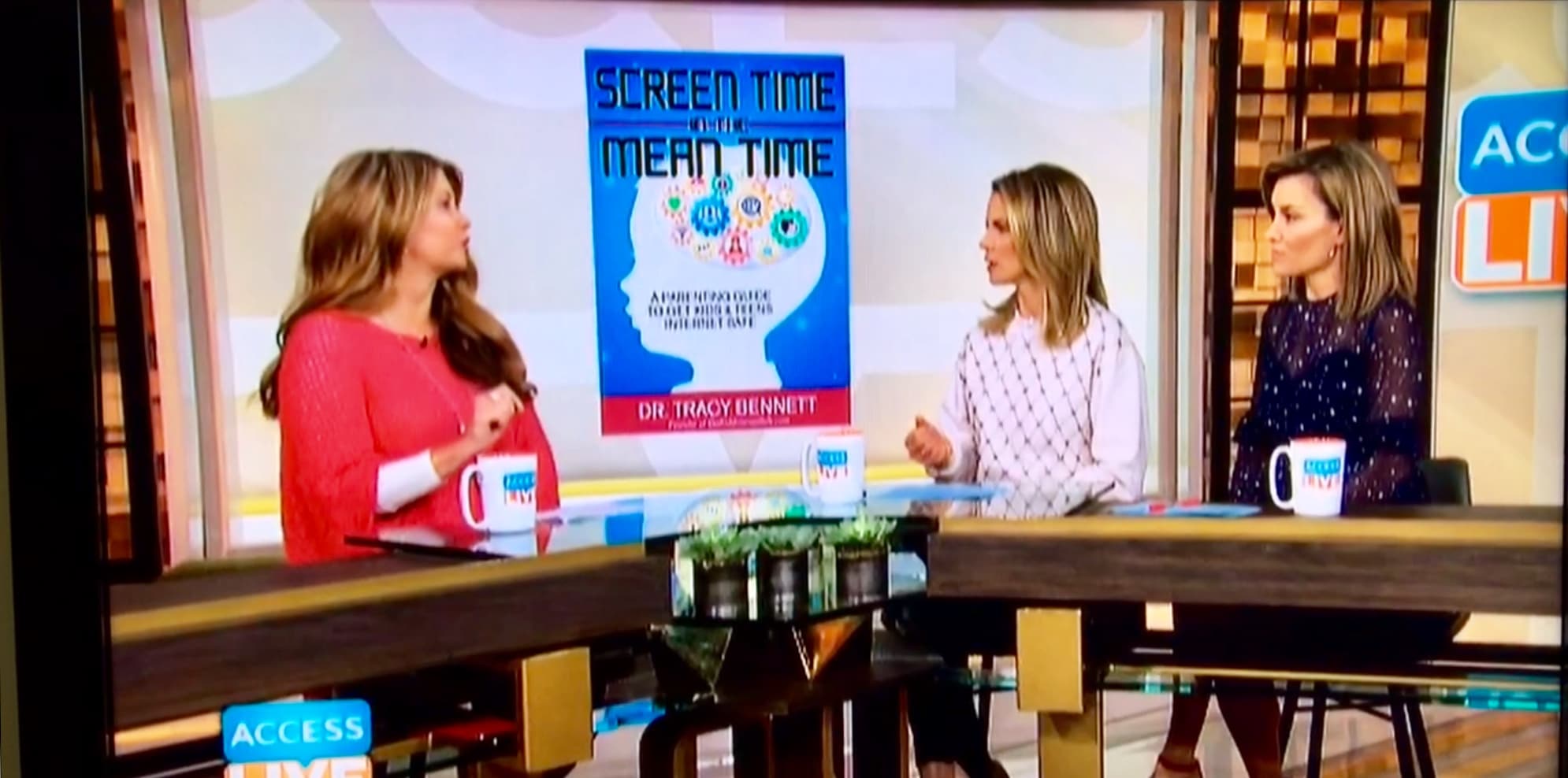
Thursday, Universal’s Access Hollywood Live, again hosted me as their parenting expert to talk about America’s concern about the negative impact of inappropriate video content through YouTube. As I stated on the program, the content that gets through is tantamount to child abuse, and kids don’t have insight into their psychological vulnerabilities. It is up to parents to filter and monitor. But we all know that there isn’t a tool strong enough to keep out sneaky algorhythms and celebrities and corporations bent on viral views that translate to big profits. We need help…and soon!

In their open letter to Apple, activist investors Jana Partners and the California State Teachers’ Retirement System (Calstrs), detail how surveys and studies definitively demonstrate that “it is both unrealistic and a poor long-term business strategy to ask parents to fight this battle alone.” They go on to say, “Imagine the goodwill Apple can generate with parents by partnering with them in this effort and with the next generation of customers by offering their parents more options to protect their health and well-being.” With their $2 billion dollar’s worth of Apple shares, their message is bound to get Apple’s attention.

Let’s be honest here. There is a rich clubhouse of companies that share the responsibility of the wellbeing of the world’s screen-watching kids. Youtube and Apple, yes, but grassroots activitists like myself are also reaching out to collaborate with other influential tech-giants like Facebook, Twitter, Instagram, Snapchat, Google, Amazon, and Disney, among others.

Until we come up with technology tools and sensible legislation protecting our kids from destructive violent and pornographic content as well as distracting, brain-changing, addictive use habits, we are stuck to do our best. Like I said on nationally syndicated television Thursday, how about we start by making our voices heard!

Here are the talking points from my AHL visit with fellow concerned moms, Natalie Morales and Kit Hoover:

Logan Paul has 15 million subscribers. He posts a 15-minute video a day, getting 300 million views a month (making 12-15 million dollars off these videos). His eager subscribers are primarily young people. How do you monitor?

With good old-fashioned supervision, location parameters, and rules to start. No screens in bedrooms, bathrooms, or behind closed doors. Dock mobile screens at night and set a Wi-Fi curfew. The GKIS Family Living Agreement helps get parents on-track.

YouTube does have a “safety” mode, but that doesn’t always prevent your child from seeing this content. Is it more about having a conversation as a family? How should you approach this?

There is a YouTube Kids site that also helps, but yes, it is about having conversation as a family, and a lot of it. Recognize that kids don’t yet have the experience to understand psychological vulnerabilities. Use current, fact-based information like that offered for free and delivered weekly on GetKidsInternetSafe to keep the conversation going. Saying “don’t do that” isn’t enough. Follow the specific conversation starters and sex ed tips offered in Screen Time in the Mean Time to ensure your kids know the difference between sensational content designed for profit (fake news) and content that reflects real-life, factual scenarios.

You have to be 13 years or older to use YouTube, but many of his followers are under the age of 13 (including Kit’s son)….

Exactly. We are all guilty of monitoring failure. We simply can’t supervise our kids 24/7, nor is it appropriate to do that. Social media platforms say 13 years old is required for use, but that is based on privacy issues rather than sound psychological reasoning. Accidental exposure is the most common type, but recognize that kids and teens are developmentally curious and bold; they’ll go looking for distressing material.

Is there a problem with kids being desensitized from these type of videos? Some kids who viewed this may have thought nothing of it.

My GetKidsInternetSafe articles detail how desensitization and even PTSD symptoms can result from livestream video viewing by kids and adults! Not only should Logan Paul have had x-generation team members to help him with common sense and compassion in that Japanese “suicide forest,” but our kids need a support team too. The victim ended his life in deep despair and his family members are destined to maintain it in their grief. Parents must specifically teach empathy and  compassion and recognize that viewing violence and flippantly talking about issues like suicide can create real risk, like suicide contagion – a dangerous cry for help.

People are calling for Youtube to suspend Logan Paul’s account after posting this video. Do you think that’s the right move? Are you surprised Youtube hasn’t taken action?

The truth is that YouTube profits from viral videos, and you can’t help but wonder how often does profit get in the way of ethical constraint or human compassion. I think that parents need to advocate for better safety measures on all the livestreaming platforms. In my practice, I treat kids who are commonly viewing violent pornography, imitating life-threatening stunts, and engaging with human traffickers, hate groups, and child predators. The research is showing that seeing hours of livestream news video, like what we saw with the Las Vegas shootings, can be more psychologically distressing than being a live witness to the tragedy! We can prevent this, and more can be done.

What can you do today?

Decide on a course for getting kids Internet safe by advocating with your favorite organization, like GetKidsInternetSafe.

At the time of this publication, the “Delete Logan Paul’s YouTube Channel” petition by an unknown author on Change.org had over 465,000 signatures. I personally wish the petition was addressed to YouTube with a plea to tighten their security measures rather than publicly shame Logan Paul. Although he is on a well-earned break, he took the video down himself. Before he did that, it still got over 6.5 million views and is currently being shown by other YouTubers who are at once shaming him for his judgment while simultaneously rebroadcasting the videos. Really folks? Hypocrisy in action.

Clean up your own screen use habits.

We are all habituated to picking up our phones in the meantime, whether it be waiting in line or during soccer practice. Let’s all make a little more effort to stay in the present with our kids and risk being alone with our thoughts. Remember what that used to be like? 🙂

Get educated by reading books like Screen Time in the Mean Time.

While we all spend the meantime on our phones, the mean time is being fueled. There are online risks to kids that most parents have never dreamed of. The future is here and despite how many of us, like Kit Hoover, wish we could go back to kick-the-can days, digital literacy is necessary for academic progression. Our kids won’t hear of no-screen weeks, nor will we. That means we need to get brave and educated. You may think you’ve heard it all, but I’m certain my information will help you make a more comprehensive and sensible safety plan and bring you closer to your kids. At the end of the day, what matters is that we do a good job raising great kids. Nothing is more important than that.

I’m the mom psychologist who helps you GetKidsInternetSafe.

Onward to More Awesome Parenting,

Dr. Tracy Bennett