Need peaceful screen time negotiations?

Get your FREE GKIS Connected Family Screen Agreement

#vegasstrong

Graphic Livestream Horrors

Popular livestream video platforms, like Facebook Live, Twitter, Instagram, and Periscope, can put viewers at psychological risk with graphic content that’s impossible to moderate or filter. Last week we learned the history of news coverage, including livestream during the recent Las Vegas shooting. Today’s article covers how quickly and dramatically easily-accessed video content has changed with a constantly increasing viewing audience. Is violent livestream video detrimental to our psychological wellbeing? #Vegasstrong

How is livestreaming different from news coverage?

We are all disheartened by the unprovoked mass murder of country concert attendees in Las Vegas recently. Constant bombardment with graphic news coverage left many of us reeling. No longer do news outlets need a reporter on-scene to get dramatic live coverage. Private citizens stream photos and videos from their smartphones real time on the Internet, while outlets choose and air the most dramatic content available.

Graphic news coverage is a relatively new phenomenon. Prior to smartphones, network executives edited out content that would upset viewers. Community standard determined the selection process, with ethics and consumer preference in mind. Livestreaming does not undergo this filtration process. It’s raw, authentic, and very real. Viewers can hear, see, and observe the terror of victims real-time without actually being there.

Livestream Horrors

Imagine the horror of watching a mass murder unfold real-time, helpless to do anything about it. This is exactly what happened to hundreds of Internet and television viewers of recent Las Vegas livestreams. As people livestreamed themselves enjoying the concert, the scene quickly changed. Viewers watched on in horror as the chilling events unveiled. This is not the only case of a tragic event captured on livestream.

In April 2017, Steven Stephens livestreamed himself shooting a 74 year old man on Facebook Live in Cleveland. In the video, Steven is seen in his car saying, “Found me somebody I’m going to kill — this guy right here, this old dude.”  Steven then exits the car and kills Robert Godwin Sr. on the spot. The video was on Facebook live for three hours with hundreds of viewers before it was finally taken down.

In a similarly disturbing incident, a man in Thailand livestreamed himself murdering his daughter.  The recording showed Wuttisan Wongtalay hanging his 11 month-old daughter by the neck from the rooftop of a building. The footage was on Facebook Live for twenty-four hours before it was taken down. Wongtalay later committed suicide off camera. Facebook called this “an appalling incident.”

In another criminal event, Obdulia Sanchez, 18, livestreamed herself on Instagram driving under the influence with two 14 year-old girls in the back seat.  After losing control of the vehicle, she shakes her sister, dead in a pool of blood, pleading, “Jacqueline, please wake up.”

Another particularly noteworthy livestreaming event occurred in January 2017, when four people broadcasted a 28-minute livestream video as they tortured a mentally disabled man. They taped his mouth shut and threatened him with a knife as they beat him, made him drink from the toilet, and cut off a part of his scalp. The first perpetrator to be tried, nineteen year-old Brittany Covington, pleaded guilty to the hate crime and received four years probation where she was ordered not to use social media.

Tolerance of Violence?

Information reaching us faster alerts us to a more accurate reality. This can be beneficial when considering the authenticity of news. But at the same time, instant access to unfiltered media may be desensitizing us to violent imagery. According to the World Health Organization, “Rules or expectations of behavior … within a cultural or social group can encourage violence.”

Children and adolescents who are curious and thrill-seeking seek out content to be shocked, scared, or more “in-the-know.” Other times viewers come across this content by accident. Each of us have our own complicated profile of risk. Perhaps the normalization of violent livestreams reduces our sense of safety, even sensationalizing issues like assault, murder, and suicide. Copycat behaviors seeking notice can also be a problem.

The fact that there are thousands of disturbing videos circulating the Internet at any time makes one question how it got this bad. As a nation, we are becoming more tolerant of viewing violence on-screen. Many argue that certain types of violent videos must be publicly available for informational and educational purposes. In response to this, most Internet platforms have specific rules for how violent videos are filtered.

For example, Facebook now has guidelines regarding which violent videos are permitted to stay on the website and which are removed. Videos of violent deaths are not always taken off the site, because they can help bring awareness to issues such as mental illness or war crimes. Videos in this category are instead marked as disturbing content and blocked from minors. Facebook also permits users to livestream themselves attempting suicide or committing acts of self-harm. The justification for doing so is because they do not want to censor freedom of expression or punish someone in distress. If a person does livestream a suicide attempt, the video documenting the incident may not be taken down if it is deemed newsworthy.


Youtube also has challenges filtering inappropriate content. Dr. Bennett was invited as a parenting expert on Access Hollywood Live to discuss the poor judgment of celebrity Youtube Logan Paul after he posted video of a suicide victim hanging in Japan’s notorious “suicide forest.” Although Logan took it down after receiving criticism, over six million of his followers, mostly young people, saw the footage and Logan’s poor taste of giggling uncomfortably throughout. People are increasingly willing to post scandalous content in order for it to go viral. After all, that mean’s BIG profits. Dr. Bennett called for parents to talk to their kids and advocate for better safety monitoring on video and livestream social media sites.

Find out how graphic livestreams may affect mental health in Mara Pober’s last article of her three-part series, “Live Streaming Can Cause PTSD in Adults and Children.”

I’m the mom psychologist who helps you GetKidsInternetSafe.

Onward to More Awesome Parenting,
Dr. Tracy Bennett

Works Cited

4 charged with hate crimes in Facebook Live beating of man with ‘mental health challenges’

How Facebook decides what violent and explicit content is allowed

Jailed woman says she livestreamed aftermath of deadly crash to raise funds for sister’s funeral

Las Vegas shooting FRONT ROW at country music concert live stream

Man livestreams murder of baby daughter on Facebook before committing suicide

Nationwide manhunt for suspect in Cleveland Facebook video murder

Post Traumatic stress disorder

Photo Credits

Eye By Richard Broderick

Girl on Computer Notebook

Gun

From Newspapers to Livestreaming: Is Instant Access to News Good for Americans?

Internet technology has brought us instantaneous access to global information. We see the latest news coverage in seconds with convenient notifications on our smartphones. Personal posts on Facebook delivers everything, including beheadings by ISIS and mass shootings like the tragedy in Las Vegas. Unregulated and increasingly pushing the boundaries of decorum, shocking information and violent images and videos constantly slice into our everyday lives. We at GKIS believe this comes at a grave price to our feelings of security and overall mental health, particularly for kids. Trigger warning: please beware that this post includes graphic news images.

Photojournalism: The First Graphic Images to Reach the Masses

Graphic popular news content is a relatively new phenomenon. Before the Internet, people primarily accessed news from newspapers. The first printed newspaper was written in Germany in 1605. The first newspaper photos in the 1850s were wood-engravings used for printing purposes rather than actual printed photographs. Though these images were not true to life, they still conveyed messages to the masses.

Roger Fenton, one of the first war photographers, captured images of the Crimean War in 1854. His photos revolutionized photojournalism. Due to the limited photo technology of the time, he could only capture stationary objects. As a result, his photos were often staged and depicted landscapes or posed people. He avoided taking pictures of dead bodies and bloodied soldiers.

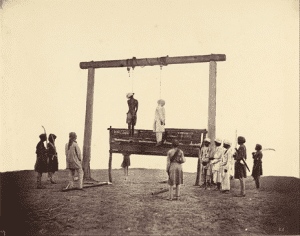
In 1857, photographer Felice Beato pushed the envelope further to more graphically expose the devastation of war. He captured what may be the first popularly published photograph of a human corpse.

In the late 1800s, newspapers developed a more efficient method of printing photos, called half-toning. These are the black and white images many of us are familiar with. By the 1920s this technology was very sophisticated and could produce high quality images which proved vital for eliciting public response.

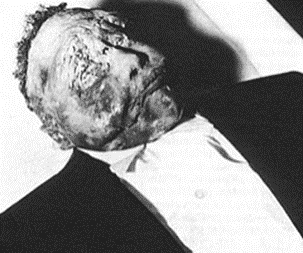
A poignant example of graphic news coverage evoking public response was the Emmet Till incident in 1955. Emmet was a 14-year-old African-American boy who was senselessly lynched when a white woman claimed that he had disrespected her. Her husband and his brother abducted Emmet and beat and mutilated him before tossing his body into a river. When his body was discovered, Emmet’s mother allowed journalists to photograph his severely disfigured body. These disturbing images outraged the public and brought light to injustice in the South. Emmet became the face to The Civil Rights Movement.


News Video Coverage: A Revolutionary Medium

The introduction of film media added an even more sophisticated layer of interaction between news reports and the public. The first filmed news coverage, called Newsreel, was prominent from the 1910s to the 1960s, before Americans had televisions in their homes. Newsreels were short documentary-style films reporting on current events, most often shown before motion pictures in movie theaters. They tended to be informative and non-graphic in nature, often used as propaganda to influence public opinion on war and politics.

When televisions became common in American homes in the 1960s, TV stations began producing their own newsreels. Soon there would be entire programs dedicated to news, marking the beginning of nationwide news broadcasting stations like CBS.

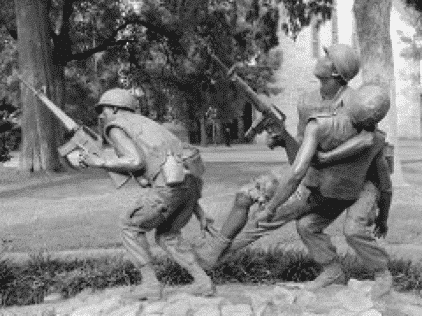
In the 1970s, innovative technologies emerged that could record audio and video for television broadcasting, called electronic news gathering. With the onset of the unpopular Vietnam war, news broadcasters covered the battlefield in graphic detail. This exposed the world to raw and real depiction of the brutalities of war, fueling anti-war sentiments.

For example, on March 27, 1970, CBS News aired a graphic report with correspondent Richard Threlkeld. In the clip, Richard accompanies several soldiers patrolling the jungles of Vietnam. Suddenly shots fire, and Richard and the soldiers take cover. One of the soldiers, Kregg Jorgenson, is shot in both legs off camera. With gunfire sounds in the background, Richard briefly interviews the heroic soldier who earned his fourth Purple Heart that day.

In more recent memory, the graphic videos of 9/11 traumatized a nation. Millions of television viewers were entranced by the continuous hours of disturbing footage. Particularly horrifying were the images of victims jumping from the burning towers to their deaths. Richard Griffiths, the senior editorial director at CNN, ruminated with his colleges about whether or not to air “The Jumpers.” Ultimately, they decided to show a four-second clip of a person falling before impact. This decision was met with universal disapproval as audiences were shocked and deeply upset. How far is too far in television journalism?

Livestreaming: The New Frontier

With the advent of smartphones, we now have immediate, continuous access to the unregulated Internet. Not only can we conveniently view video coverage, but we also can take and share it real-time. Livestreaming is the ability to transmit live audio and video footage over the Internet. Popular livestream mediums are Facebook live, Twitter, Instagram, and Periscope.

The problem with livestreams is that it’s impossible to moderate and filter graphic content. It’s raw, authentic, and very real. Captured livestreaming incidents have included rape, torture, and murder. Most recently, the world looked on at the horrifying livestreaming videos of victims during the Las Vegas shooting. Viewing livestreamed events can feel like you’re actually there but helpless to do anything to aid victims. Just as we saw with 9/11 coverage, audience response has been emotional and, in some instances, symptomatic of secondary trauma.

Thank you Intern Mara Pober for giving us a great overview of photojournalism and how the tide has turned. Stay tuned for her article next week, “Graphic Livestream Horrors” to learn why  viewing graphic video content can contribute to clinical distress for all of us, particularly children.

I’m the mom psychologist who helps you GetKidsInternetSafe.

Onward to More Awesome Parenting,

Dr. Tracy Bennett

Works Cited

Felice Beato Biography

How “Electronic News Gathering” Came to Be

Newsreel archive

Vietnam War, 1970: CBS camera rolls as platoon comes under fire

https://www.youtube.com/watch?v=89_3DgW_7mg

9/11: ‘Jumpers’ from the World Trade Center still provoke impassioned debate

Photo Credits

Emmet till before and after the incident:

Before:

https://www.flickr.com/photos/11304375@N07/2534273093/in/photostream/

After:

https://www.flickr.com/photos/11304375@N07/2534273097/in/photostream/

Felice Beato

Twin Towers

Iraqi Girl