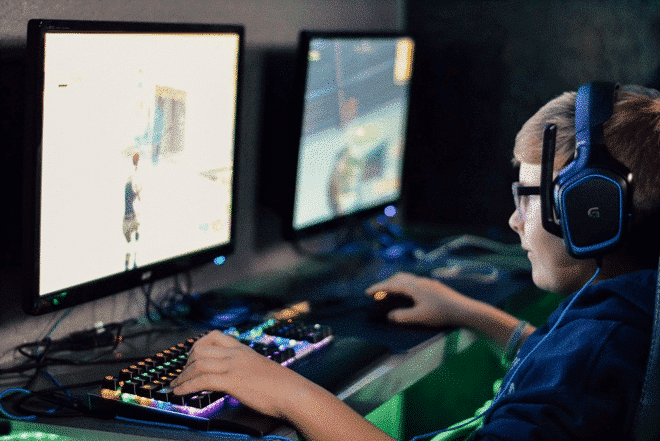
In 2018, the gaming industry reported 30-billion-dollars in revenue with 2022 earnings expected to reach 50 billion![1] Much of this profit comes from the pockets of vulnerable kids and teens. To help your kids learn about the risks of online play before they get into trouble, we created the Social Media Readiness Online Course. Set up like driver’s training (but for the internet), each module is followed by a mastery quiz. That way, when your child earns their graduation certificate, you know they’ve learned what they need to have better judgment when faced with difficult online choices. For today’s GKIS article, we’ve uncovered another tricky trap that introduces vulnerable players to dangerous gambling behaviors, the loot box.
Microtransactions
In the old days, the only expense to gamers was the cost of buying the gaming device and the video game. Now video games require players to make additional purchases within the game to advance. A common and profitable expense comes in the form of microtransactions.
Microtransactions are in-game purchases of opportunity, goods, and game currency. Two types of microtransactions are desirable to players, fun pain and skill games. Fun pain purchases refer to a second chance opportunity. Skills games remove obstacles during stressful game situations. Microtransactions typically occur in the form of game currency.
Game Currency
Game currency refers to the virtual money or points necessary to progress in the game. For example, NBA 2k offers VC (Virtual Currency), Call of Duty provides CP (Call of Duty Points), Fortnite offers V-Bucks, FIFA offers FIFA coins, and Apex Legends offers Apex coins. One advantage to offering game currency is that it can have its own value. By giving a different name and image to currency, it’s easier for players to lose track of spending. Tempting marketing ploys are also common, like free offers, larger package discounts, limited time offers, and loot boxes.
Loot Boxes
Loot boxes have become a massive moneymaker for game publishers. A loot box refers to a box of virtual items (like stickers, skins, camos, weapons, in-game currency, or another loot box) that players buy before they know exactly what it contains.[4] It’s like a surprise bag that promises an advantage over other players.
Sometimes players get a disappointing loot box; while other times they win big. Creating different values to the loot boxes creates what researchers call the near-miss effect. That means the brain fires with an “almost win” in the same way it would for a win. Kids being hit with the near-miss effect are highly motivated to keep spending until they reach their dream loot box jackpot. What happens if they get their dream? They desperately keep spending to win again!
Do loot boxes introduce kids to the addictive features of gambling?
If it seems to you that the desperate quest triggered by the near-miss effect sounds like gambling, you are right. It’s one thing for adults to gamble, but it’s an entirely different thing to sneak gambling features into child activities. Because kids’ brains are still developing, they are particularly vulnerable to forming addictive behaviors.
Here is what loot boxes have in common with other gambling activities:
Exchange of money or a valuable item
Unknown outcome that can change based on future events
So is child gambling now a thing? According to the Gambling Health Alliance, it is.
They report that:
41% of gamers under the age of 18 have purchased a loot box
75% of gamers report that they’ve felt regret for loot game purchases
48% of gamers have hid the amount spent on in-game microtransactions
76% of gamers believe that loot boxes should be made illegal for minors[3]
Publishers That Incorporate Loot Boxes
Apex Legends by Electronic Arts
Call of Duty: Black Ops 4 by Activision
Counter-Strike: Global Offensive by Valve & Hidden Path Entertainment
FIFA ’17-20 by Electronic Arts
Fortnite by Epic Games
Gears of War 4 by Microsoft Studios
Halo 5: Guardians by Microsoft Studios
Injustice 2 by Warner Bros.
League of Legends by Riot Games
NBA 2k21 by 2k Sports
Overwatch by Blizzard Entertainment
PlayersUnknown’s Battlegrounds by PUBG Cooperation
Star Wars Battlefront II by Electronic Games
Furthermore, Activision and Electronic Arts have current patents on motivation to spend.[2]
How can you protect your kids from getting tricked into online gambling?
First, keep up with our free GKIS blog articles by subscribing in the orange box on the top of our GetKidsInternetSafe Home Page.
Start a healthy, informative dialogue as a family about the traps of online activities. We guide you through everything you need to know with our free Connected Family Agreement. It comes directly to your email once you subscribe to our home page.
Once your family learns the basics about online digital injury risks and how to be smart on your devices, you’ll definitely want to add our injury and the psychological wellness strategies to build health and resilience. GKIS supplements How to Spot Marketing, and our Cybersecurity and Red Flags.
And finally, as mentioned before, if you have tweens or teens our Social MediaReadiness Course offers the valuable information needed to avoid digital.
Too busy to figure it all out step-by-step? We’ve got you covered! Our GetKidsInternetSafe App takes you through all of our GKIS course content (including everything listed above) in quick and easy 5-minute weekly videos created by our own Internet Safety Expert, Dr. Tracy Bennett. A ten-minute commitment a week to avoid costly digital and psychological injuries down the road may be the most important opportunity for family safety we’ve ever offered. Your first 30 days are completely free. Click here to find out more so you don’t miss out!
Thanks to CSUCI intern, Christian Sandoval for gambling activities in video games, and for co-authoring this article.
I’m the mom psychologist who will help you GetKidsInternetSafe.
Onward to More Awesome Parenting,
Tracy S. Bennett, Ph. D.
Mom, Clinical Psychologist, CSUCI Adjunct Faculty
GetKidsInternetSafe
In my 25 years of psychology practice, I have treated many kids and teens victimized by online predators and cyberbullies. And in many of those cases, there were steps the parents could have made to prevent this type of digital injury. First, parents must block inappropriate games and content using the rating system and parental controls. Second, teach the red flags that kids must look for to spot dangerous inquiries. That’s why I created the Cybersecurity and Red Flags Supplement to add to our free Connected Family Screen Agreement (available on the home page of GetKidsInternetSafe.com). Finally, maintain a close parent-child relationship with ongoing topics for learning (offered in your GKIS weekly articles). To help, parents have to learn what’s out there and accept that kids will make mistakes. Today’s article will discuss the risks in the multiplayer gaming world, expertly written by a young female gamer.
What is a multiplayer game?
“Multiplayer games” refers to video games where an individual player can join a team in defeating a computerized enemy or can battle it out against other gamers. To play multiplayer games, Xbox and PlayStation require gamers to purchase memberships.
Battle Royale Style of Gaming
Battle royale is a relatively new genre of multiplayer gaming that can have over 100 people competing on a large map. These games embody a survival element as players are dropped onto a map with little armor or weapons. Players can either battle their way through the game with friends or fight solo. The ultimate goal is to be the last player standing.
Before the likes of Fortnite and PlayerUnknown’s Battlegrounds, battle royale was a concept heavily influenced by the popular movie The Hunger Games. In the early days, the only way to play battle royale was by downloading modifies to a base game. This modification was extremely popular in Minecraft as it added an extra dose of flair and made the game more challenging and intriguing.
Brenden Greene made battle royale mods for the hit games DayZ and Arma III, which quickly became huge sensations. In 2017, he released PlayerUnknown’s Battlegrounds, which paved the way for other games like Fortnite and Apex Legends.[3]
Who plays multiplayer games?
In 2018, 28% of gamers were under 18 years old, 45% of gamers were female, and 55% were male.[5] Although multiplayer games are entertaining and fast-paced, there are dangers young gamers could be exposed to including chatting with random strangers, bullying, and child grooming by sexual predators.
Create a party for you and your friends.
One of the ways kids can gain access to voice chat over the PS4 console is to be invited via “party.” Partydirectly sets up friend invites using your friends list. People can also request to join a party, but the creator has the option to deny specific player access. On PlayStation, the creator must specify whether the party is private or open to the public. Opening to the public will allow anyone to join the voice chat, meaning child players could be exposed to bad actors.[4]
Xbox one has the same features, except if the person receiving the invite does not accept it within a five-minute window, Xbox Live will cancel the invitation, and the person who sent the request will have to resend it.[5] Voice chat can be a great way for socially isolated or anxious kids to connect with others. However, there are dangers as well.
Meeting Strangers in the Lobby
A lobby is where players wait to join a team game in multiplayer games. This feature is also known as matchmaking because it randomly assigns players to teams.
While in the lobby, you can communicate with other joining players. In some instances, you can also check out what the other player characters look like and view their cache of weapons. You can also communicate with other players in the lobby if you have the microphone enabled.
When I play multiplayer games, I disable the microphone feature (mainly by not plugging my headset in), unless I am playing with friends because, even as an adult, I don’t feel comfortable chatting with strangers online.
Bullying, Abuse, and Harassment
People can be cruel over voice chat for no reason. Insulting gaming skills or using racial slurs and sexual comments are typical. I’ve been in lobbies where players threaten to find and kill you as a form of intimidation. Younger kids seem to get the brunt of it.
While scouring the Internet for answers as to why kids are harassed on gaming platforms, I came across blogs and forums dedicated to how annoying young children can be online. A majority of these posts were made by people in their late teens or older. One of the biggest complaints is the profanity and racist comments from younger gamers. While many gamers just hit the mute button, some will take it to the extreme and harass the younger kid until they leave.
As a female gamer, I’ve experienced an unbelievable amount of harassment and abuse, ranging from people calling me names to more extreme measures like asking for sexual favors or making inappropriate noises.
Predators
According to ABC News, predators are grooming kids by making friends with them online and then gaining their trust so that they can meet in person. Fox News has also reported that Fortnite has recently become a favorite place to target young kids because of the volume of people who are playing online all at once.
The interactions between the young child and the predators are not always sexual. For instance, Breck Bednar was 14 years old and loved to play video games with a tight-knit group of people. The only person that was unknown to the group was Lewis Daynes, an adult who developed a strong relationship with Bednar over time. This chilling and disturbing “friendship” came to an end when Daynes lured Bednar to his home and killed him.[6]
Parental Features on Gaming Consoles
There are many ways to keep child gamers safe while playing video games and many of these features are available on the gaming console itself.
Thank you to CSUCI intern, Kassidy Simpson for providing parents with the information they need to help keep their kids safe on multiplayer games. If you learned something fun from this article, please “like” our GetKidsInternetSafe Facebook page so other parents can find us!