Need peaceful screen time negotiations?

Get your FREE GKIS Connected Family Screen Agreement

infants

Screen Use by Infants and Toddlers. How to Optimize Learning and Minimize Risk. Part 3 of a 3-Part Series.


Parenting is seriously hard work, even in the digital age. After all, we not only have to supervise their offline worlds, we must monitor their online worlds as well. Prying little eyes off screens with delicious content is tough stuff. It’s impossible to attend to every tiny aspect of our children’s lives, including what they are exposed to on televisions, computers, smartphones, and tablets. Furthermore, it’s not only screens that interact with our kids. Today’s “connected” and “smart” toys provide data, gather data, and even learn data in order to offer customized, consumable content to keep your child playing (and buying). Fun cartoons, entertaining apps, and talking dinosaurs and Barbies are designed to keep kids happy. Sometimes these activities are so expertly designed kids will even choose these activities over one-to-one time with mom and dad. But we know from Part 2 of the series, sitting your child in front of a screen or smart toy for hours at a time can be detrimental to their intellectual and emotional development. How exactly should we “limit” exposure for “the individual child,” as the American Academy of Pediatrics (AAP) suggested? And what is the “right” way to expose our infants and toddlers to tech and screen media? Let’s take a look at what the experts have to say.

Suggestions from the AAP

Infants and toddlers require one-ton-one, bidirectional interaction with caregivers in order to develop cognitive, language, and social-emotional skills (Radesky & Christakis, 2016). Because their memory and attention skills have not completely developed, they are not able to learn through media in the same manner as they do through interactions with others. The AAP has confirmed that there is limited research on the benefits of media, and that excessive use has negative consequences. Therefore, limitation is key.

Here are some additional guidelines outlined by the AAP:

  • Create a family media plan, like our FREE GKIS Connected Family Screen Agreement. This interactive tool allows you to customize screen guidelines for every child in your household, starting as early as 18 months. The AAP discourages use for children under 18 months.
  • Avoid solo media use in children age 18-24 months.
  • Do not introduce technology early if it is not necessary. When children enter school, they will soon be introduced to the technological world and will adapt quickly.
  • Avoid fast-paced programs, apps with lots of distracting or violent content. Test out apps and games before using them with your child.
  • Encourage your child to share their feelings or interests when you use media-play together.
  • Turn off screens when they are not being used so your child is not able to consume media passively.
  • Keep bedrooms, mealtimes, and parent-child playtime screen free. You can even turn on a “Do Not Disturb” option on your iphone to avoid incoming calls or messages from popping up at inconvenient times (Radesky & Christakis, 2016).
Suggestions from the NAEYC

According to the National Association for the Education of Young Children (NAEYC), infant media exposure should be used to facilitate learning (2012). Because infants learn primarily through play with adults, children, and toys, technology tools must be used in the context of these interactions as well. Infants require tools that allow them to freely explore and manipulate their environment, which draws them to games that have buttons, switches, and controls. Tools should also be safe, sturdy, and not easily damaged (NAEYC, 2012).

Here are a few more suggestions and examples:

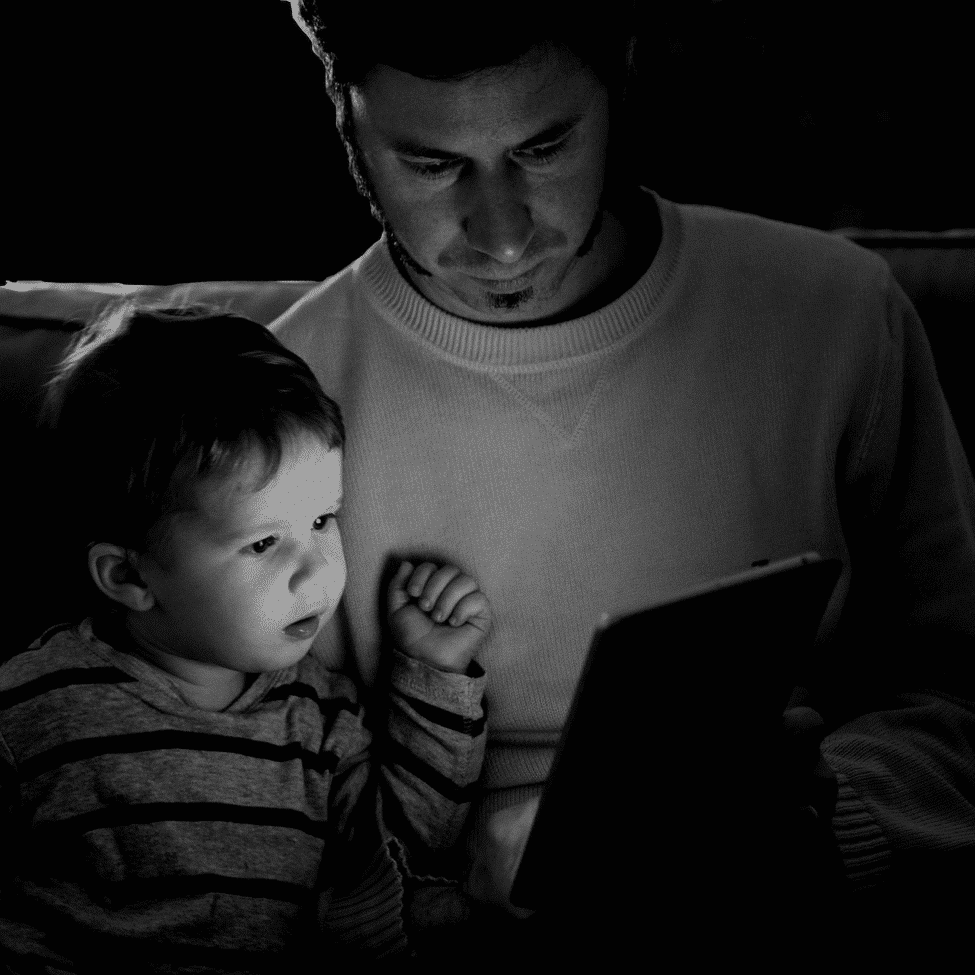
  • Allow your infant/toddler to explore digital materials with you or another adult as a mediator. Sharing technology with your child and interacting with them while doing so allows for increased vocabulary skills, observation of appropriate behaviors with media, literacy, and more.

GKIS Quicktip: Use video-chat to interact with your child to let them explore areas unknown to them (with another adult on the other end). Explain your surroundings to them and introduce them to new ideas.

  • Avoid passive screen time. Although some parents believe baby videos calm their child in times of turmoil, there is little research suggesting infants and toddlers learn from watching videos alone. If infants are upset, they need hugs and soothing, not technology.

GKIS Quicktip: Avoid using television programs like Baby Einstein to soothe your child and distract them from the problem. Instead, talk to them, identify the source of their distress, and physically provide your child with a sense of security.

  • When appropriate, use technology as an fun, active tool that provides your infant or toddler with access to images or videos of what they may or may not see in their own environment

GKIS Quicktip: Provide images or videos on a tablet of family, friends, animals, toys, or even other children from around the world to expose diversity. As your child looks through these images, explain the pictures to them. Talk to them about the people, animals, or objects   and create a story about what they see.

  • Incorporate assistive technologies for children with special needs and/or developmental delays.

GKIS Quicktip: For toddlers with Autism Spectrum Disorder, try using GoTalk Pocket. This assistive technology in the form of a remote, works as a communication device for children. Teach your toddler to press the buttons on the remote for what they need. This remote will then verbally project the word, allow for practice of communication skills.

  • Track your child’s progress.

GKIS Quicktip: Record your child’s progress with media use by audio or video on your phone or computer. You can even record the entire play-session to determine your child’s interests and abilities to build upon in future sessions (NAEYC, 2012).

Non-Media Alternatives

Although I’ve offered great tech options, it may be best to avoid screen use entirely for education purposes between the ages of 0 to 2.

Here are several universally known and time-withstanding conclusions that we as a concerned GKIS parenting community can agree on:

  • Reading to your toddler boosts language ability and strengthens parent-child attachment.
  • Talking to your baby throughout daily activities improves language and emotional development and overall intellectual functioning.
  • Singing, playing, and smiling are never discouraged when engaging with your child (Hoecker, 2014). Nothing in your life will translate into more precious dividends.

Thank you Alanna Daytona, CSUCI intern, for putting together these important tips for smart tech use. No matter the age of your child, it’s never too late to implement screen media strategies that enrich, rather than interfere with intellectual development. For step-by-step instruction on how to get started on the right foot, check out our GKIS Connected Family Online Course.

I’m the mom psychologist who will help you GetYourKidsInternetSafe.

Onward to More Awesome Parenting,

Tracy S. Bennett, Ph.D.
Mom, Clinical Psychologist, CSUCI Adjunct Faculty
GetKidsInternetSafe.com

Works Cited

GoTalk Pocket – Go Talk Pocket. (n.d.). Retrieved from http://www.autism-products.com/ProductDetails.asp?ProductCode=1298886&gclid=CNSUzq3K49ACFQ9EfgodvKsPyA

Hoecker, J. L., M.D. (2014, April 12). Infant and toddler health. Retrieved from http://www.mayoclinic.org/healthy-lifestyle/infant-and-toddler-health/expert-answers/baby-einstein/faq-20058099

NAEYC. (2012). Technology and Young Children. Retrieved from https://www.naeyc.org/content/technology-and-young-children/infants-and-toddlers

Radesky, J., & Christakis, D. (2016). Media and Young Minds COUNCIL ON COMMUNICATIONS AND MEDIA. Pediatrics, 138(5). doi:10.1542/peds.2016-2591

Photo Credits

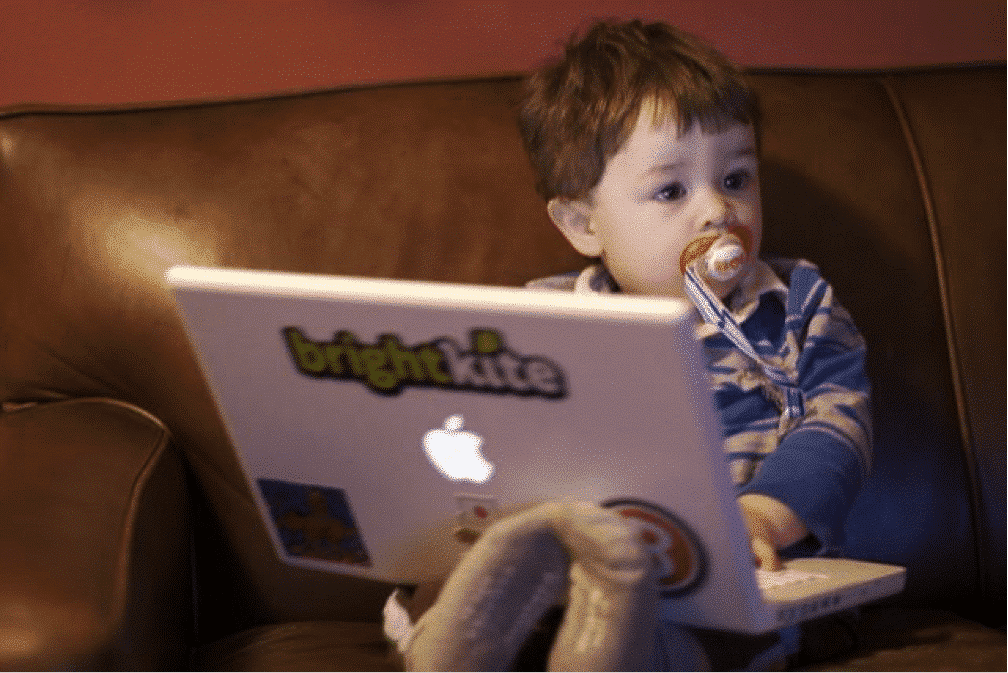
A Boy and His Mac by Tom Carmony, BY CC 2.0
Concentrazione by Mbeo, BY CC 2.0

Happy Mother’s Day by Elvis Kennedy, BY CC 2.0

Screen Enrichment for Infants and Toddlers – Part 2 of 3

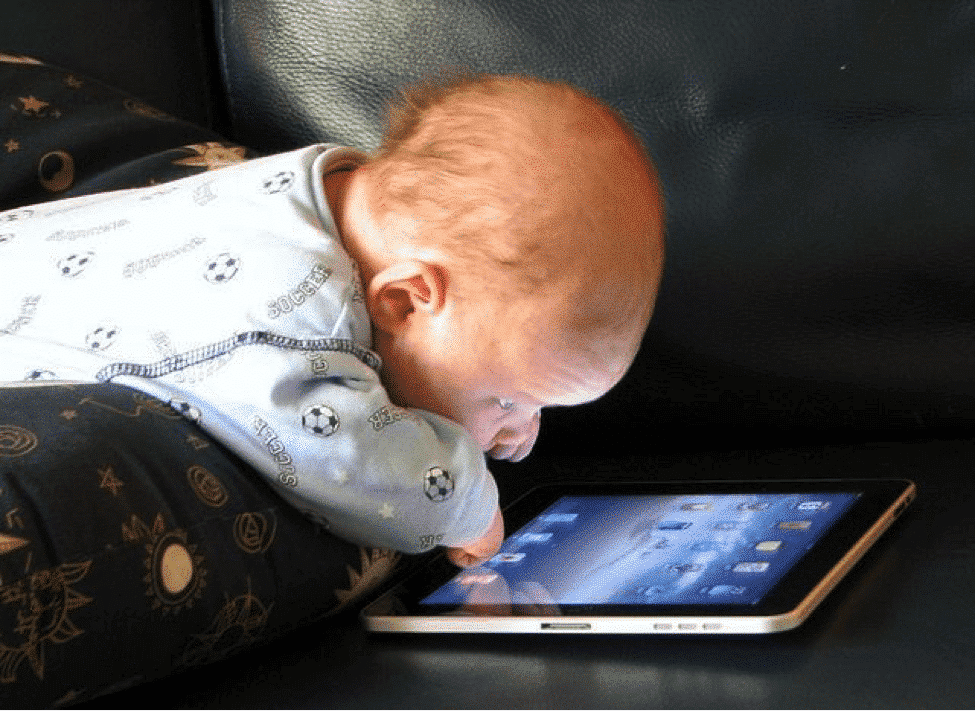
Baby participating in screen time

I’m happy to report that Alanna’s conclusions were consistent with mine in my earlier GKIS article series on infant and toddler development. However, it gets complicated! In part one of the series, “How A Mom-Entrepreneur’s Dream Became the Multimillion Dollar Baby Einstein Company” we reviewed the development and booming success of the Baby Einstein Company based on hopes for launching digital education for infants and toddlers. In this article, you will learn how Baby Einstein’s monopoly faced competition in the early 2000’s and whether Mrs. Clark’s hopes were evidenced in the psychological research. In other words, is screen media use by children aged 0 to 2 beneficial or detrimental to development?

Current Rates of Screen Use by Infants & Toddlers:

It is increasingly commonplace to see infants and toddlers interacting with screen media. A survey conducted by Common Sense Media found that between 2011 and 2013, the rate of children under the age of two who have used a cellular device rose from 10% to 38% (Rideout, 2013). More recent surveys demonstrate that one-third of children have scrolled, watched a television program, and/or played games on a smartphone before their second birthday (Kabali et al., 2015). This is partly because parents are becoming more reliant on screens to entertain and teach their older children – and now, infants and toddlers. A 2005 study found that one in five of children aged 0 to 2 even have a television in their bedrooms! Seventy percent of these same children were engaging in media use beyond the designated guidelines outlined by American Academy of Pediatrics of the time (Vandewater, Rideout, Wartella, Huang, Lee & Shim, 2007). Is this access to technology an awesome opportunity or is it harmful to young minds?

Passing the Torch

Just as Baby Einstein enjoyed enormous profit based on parental hope, so have more recent competing companies like Leapfrog. For example, Leapfrog’s mission is to “create award-winning educational solutions that delight, engage and inspire children to reach their potential…with solutions that are personalized to each child’s level.” Leapfrog sells DVDs, videos, and even tablets specially designed to facilitate pretend play and teach math skills, social skills, and creativity to infants and toddlers. According to the online resource Enterprises (2016), Leapfrog boasts huge annual profits to the tune of $67.2 million.

In addition, the company Brainy Baby, markets to parents of infants and toddlers with interactive DVDs that offer lessons about spelling, counting, reading, shapes, animals, and even foreign languages. However, unlike The Baby Einstein Company, the educational value of Brainy Baby’s products have been supported by university conducted, peer-reviewed research. Their website boasts about findings that have shown their products enable children to learn 22 times more than a child not exposed to the products. However, it is important to consider the company sells a variety of outlets for education, including books, flashcards and games, not just DVDs.

Infant participating in screen time

What the American Academy of Pediatrics (AAP) Suggests:

When I began writing this article, I intended to provide a comprehensive view of the pros and cons of screen use in children aged 0 to 2 (the target age for Baby Einstein Company videos). However, upon diving into the university library resources, I was disappointed to find that little research has been done on the topic. In fact, without ample research, risk versus benefit of screen media use among little ones remains controversial.

Even the well-respected American Academy of Pediatrics (AAP) have altered their views on screen use without evidence-based conclusions. Between the years of 2011 and 2014, the AAP released a statement saying “the AAP discourages media use by children younger than 2 years.” However, in order to avoid alienating parents of young children and to be more in-line with case study experience, they changed their statement in 2015 suggesting that “parents set media limits for their children based on the individual child” (Center on Media and Child Health, 2015). According to the AAP, this change was enforced because from their perspective “scientific research lags behind the pace of digital innovation” (Shapiro, 2015).

The Research:

Taking a look at Piaget’s classic theory on the stages of development, children age zero to two are undergoing the sensorimotor stage. In this stage, learning largely revolves around movements and sensations as well as receptive and expressive language (McLeod, 2015). According to Dr. Vic Strasburger, a spokesperson for the American Academy of Pediatrics, babies require face-to-face interactions in order to learn and are not able to achieve this type of stimulation solely from watching television or videos or even interactive screenplay. Not only does screen use risk replacing critical learning opportunities at the moment of use, it may also interfere with crucial wiring being laid down in their brains during the early stages of development. A deficit of face-to-face interaction due to too much screen time may result in long-term learning delay (Park, 2007).

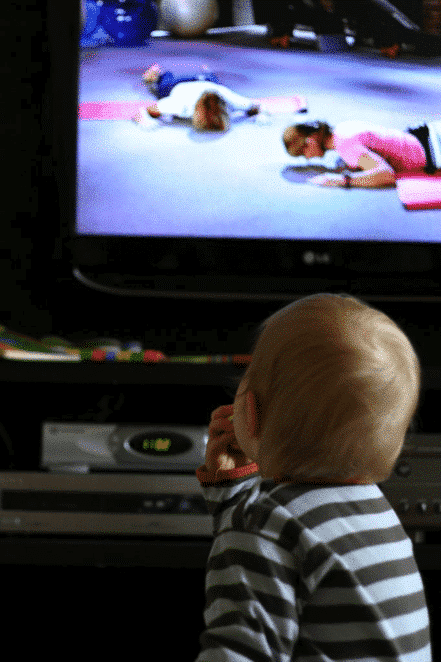
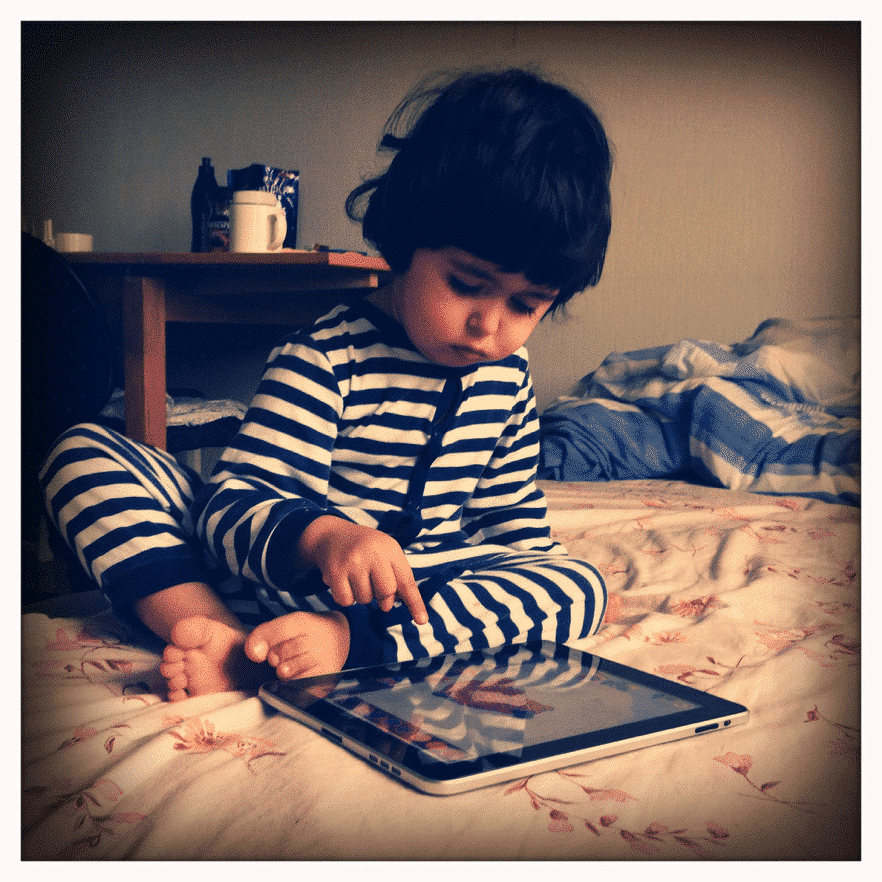
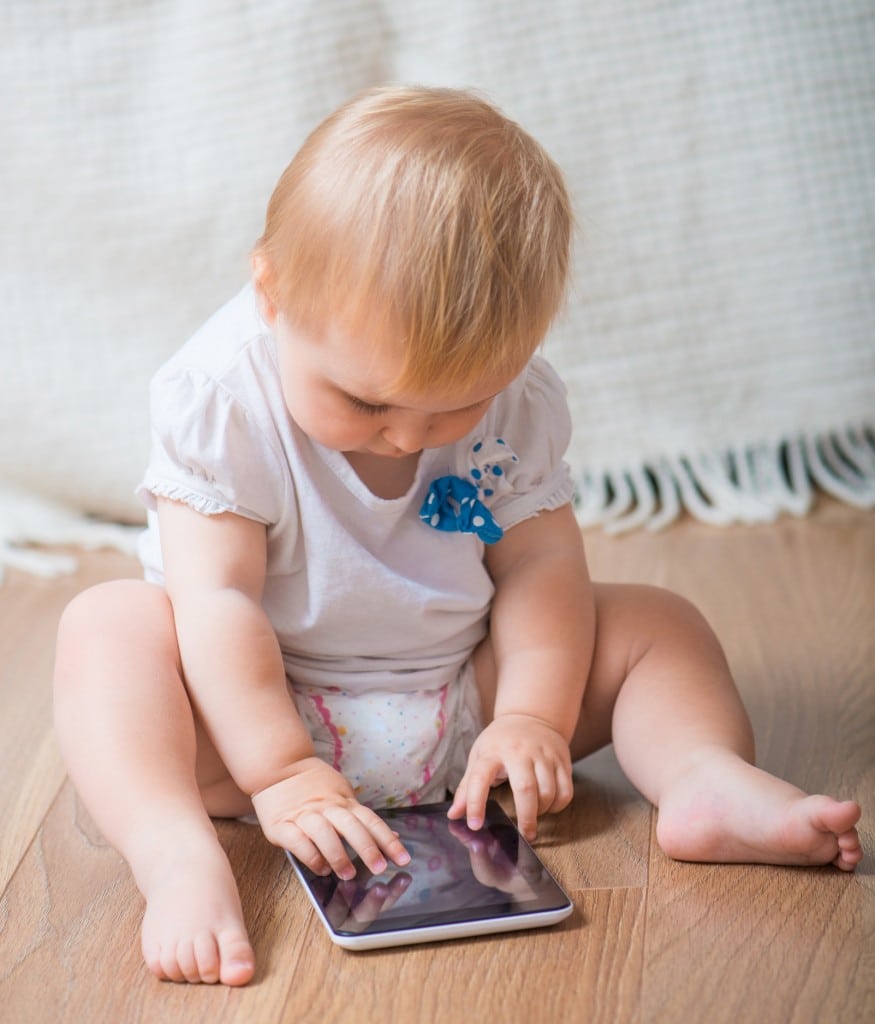
Toddler having screen time

Here is what the early research concluded about Baby Einstein and infant development:

  • A 2007 study of children ages zero to two (who were viewing approximately 2.3 hours of television per day), concluded that infants with more exposure to Baby Einstein videos actually had weaker language development than their less exposed counterparts (Zimmerman, Christakis & Meltzoff, 2007).

Here are findings from more recent research:

  • There was no clear negative association between media use and language development.
  • Infants with no exposure to media actually had lower levels of language development than those with some exposure, suggesting that perhaps moderation is key.
  • That expressive language was enhanced, but not receptive language. In fact, no influence at all existed in the older toddler age groups (Ferguson, 2014).
  • In another study conducted in 2014, increased amounts of media exposure in infants have been linked to problems with self-regulation, meaning they have more difficulty monitoring their behaviors, thoughts, and emotions (Radesky, Silverstein, Zuckerman, & Christakis, 2014).

What Does It All Mean?

It is important to note that unlike the 2007 study, the 2014 follow-up study did not test infants exposed only to Baby Einstein videos, but a variety of different screen content. Sesame Street (which has been proven to have educational value) as well as Spongebob Squarepants (having little-to-no educational value) were even included in media viewing (Ferguson, 2014). Both studies were also correlational, meaning that they relied on survey results from parents rather than an experimental design, which demonstrate causal effects. This type of data can often be unreliable as parent memories of their child’s media exposure is not always accurate, leaving the applicability of the research limited. It can even be inferred from these studies that relying on videos alone, such as Baby Einstein, do not translate to intellectual growth. Rather, it is how we as parents use media to facilitate learning that determines if and how our children learn.

Using screen media in moderation, especially interactive activity like video conferencing and touch media, may elicit more interest in learning from toddlers. Also, repetition of concepts may be easier to achieve on screen with the supervision of a parent to help facilitate learning (Kirkorian, Wartella, & Anderson, 2008). Different modalities for education create new pathways for storing information. These pathways lead to better fact/concept retrieval later on. Since our children’s brains “remodel” throughout our lifespan with a “use it or lose it” system, screen media may enrich experiences, thus building new neuronal pathways that can be built upon for deeper and more varied learning potential.

What’s Next?

Although the modern education of children is beginning to rely heavily on the use of multimedia, there is a limited amount of research on the potential benefits or harm that can result from screen use in the toddler age group. As technology continues to become incorporated into our daily lives, media exposure of children is nearly inescapable. If the scientific research currently available provides little information about the subject matter, then it is up to us to share as much information as possible for the best education of our infants and children.

CSUCI Intern, Alanna Dantona Congratulations and thank you to Alanna Dantona, CSUCI intern, for co-authoring this awesome GKIS article! Part 3 of this series will discuss the future implications of the technological movement in education in further detail, as well as more information about recommendations for you parents about how to appropriately implement media use in your child’s life.

I’m the mom psychologist who will help you GetYourKidsInternetSafe.

Onward to More Awesome Parenting,

Tracy S. Bennett, Ph.D.
Mom, Clinical Psychologist, CSUCI Adjunct Faculty
GetKidsInternetSafe.com

Works Cited

Brown, A. (2011). Media Use by Children Younger Than 2 Years. Retrieved from http://pediatrics.aappublications.org/content/128/5/1040

Center On Media and Child Health. (2015). Media Use by Children Younger Than 2 Years. Retrieved from http://pediatrics.aappublications.org/content/128/5/1040

Enterprises, I. L. (2016). LeapFrog Reports Second Quarter Fiscal Year 2016 Financial Results And Other Actions. Retrieved from http://www.leapfrog.com/en-us/learning-path/videos/best-toys-for-2-yearolds

Ferguson, C. J., & Donnellan, M. B. (2014). Is the association between children’s baby video viewing and poor language development robust? A reanalysis of Zimmerman, Christakis, and Meltzoff (2007). Developmental Psychology, 50(1), 129-137. doi:10.1037/a0033628

Hilda Kabali, M.D., pediatric resident, Einstein Medical Center, Philadelphia, Pa.; Jenny Radesky, M.D., assistant professor, pediatrics, Boston University School of Medicine, Boston, Mass.; Susan Neuman, Ph.D., professor and chairwoman, Teaching and Learning Department, Steinhardt School of Culture, Education and Human Development, New York University, New York City; presentations, April 25 and 26, 2015, Pediatric Academic Societies, San Diego, Calif.

Kirkorian, Heather L., Ellen A. Wartella, and Daniel R. Anderson. “Media and young children’s learning.” The Future of Children 18.1 (2008): 39-61.

McLeod, S. A. (2015). Sensorimotor Stage. Retrieved from www.simplypsychology.org/sensorimotor.html

Park, A. (2007, March 06). Baby Einsteins: Not So Smart After All. Retrieved from http://content.time.com/time/health/article/0,8599,1650352,00.html

Radesky, J. S., Silverstein, M., Zuckerman, B., & Christakis, D. A. (2014). Infant Self-Regulation and Early Childhood Media Exposure. Pediatrics, 133(5), e1172–e1178. http://doi.org/10.1542/peds.2013-2367

Rideout, V. (2013). Zero to Eight: Children’s Media Use in America 2013 | Common Sense Media. Retrieved from https://www.commonsensemedia.org/research/zero-to-eight-childrens-media-use-in-america-2013

Shapiro, Jordan (2015) Retrieved from http://www.forbes.com/sites/jordanshapiro/2015/09/30/the-american-academy-of-pediatrics-just-changed-their-guidelines-on-kids-and-screen-time/#670c06af137c

Vandewater E.A., Rideout, V.J., Wartella, E.A., Huang X.,Lee J.H., & Shim, M. (2007) Digital Childhood: Electronic Media and Technology Use Among Infants, Toddlers, and Preschoolers. Pediatrics, 119 (5) e1006-e1015; DOI: 10.1542/peds.2006-1804

Zimmerman, F. J., Christakis, D. A., & Meltzoff, A. N. (2007). Associations between Media Viewing and Language Development in Children Under Age 2 Years. The Journal of Pediatrics, 151(4), 364-368. doi:10.1016/j.jpeds.2007.04.071

Photo Credits

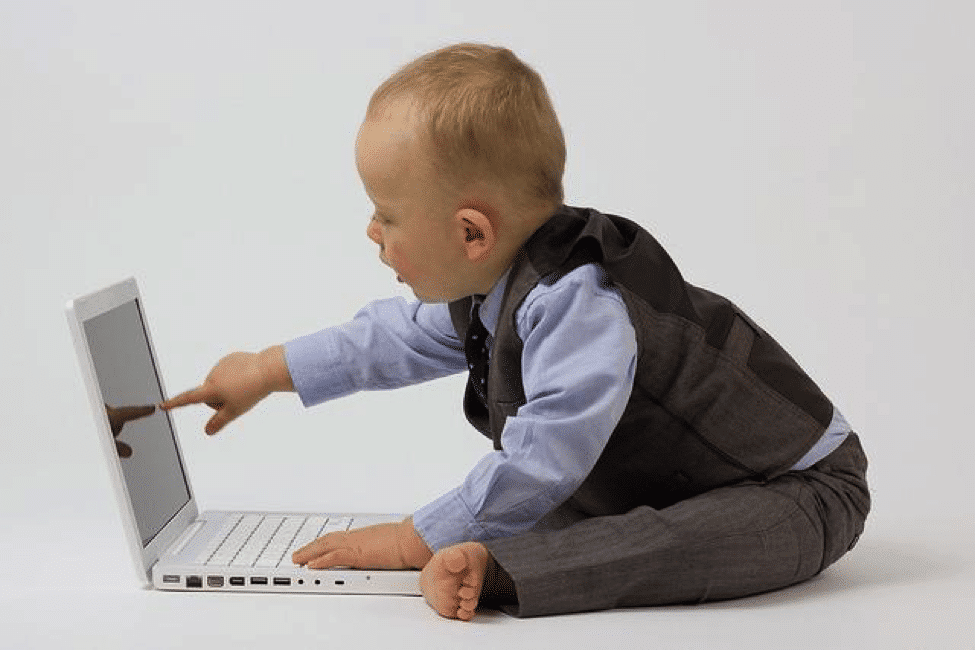
Business Baby Pointing by Paul Inkles, CC BY 2.0

Baby Sees The iPad Magic by Stephen Paine, CC BY 2.0

Watching TV by Visa Kopu, CC BY 2.0

How A Mom-Entrepreneur’s Dream Became the Multimillion Dollar Baby Einstein Company. Part 1 of a 3-Part Series.

When my CSUCI intern, Alanna Dantona, expressed her interest in researching and writing about the history of educational software for infants and toddlers I was thrilled. As a mother of a 22 year-old, I was one of the parents who plunked her infant down in front of Baby Einstein videos in the 1990s, with the hopes of stimulating intellect and creativity. Fast-forward to the software available to infants and toddlers today and one sees a fascinating trajectory in hope and profit, indeed. Read part one of this three-part series to learn about what Alanna uncovered about screen content intended to help infants and toddlers learn. Not only will it help you with the teeny ones in your life, but this article is also a fascinating tale of hope, entrepreneurship, and brain development among we hopeful, screen-addicted cyborgs.

Technology on the Rise

Tech innovators are constantly creating new screen activities to make our lives better and easier. With immediate information access at our fingertips, we are getting increasingly dependent on our screens for outsourcing tasks, including childcare and academic tutoring. Parents spend BIG money for educational and entertainment screen content ever since the first “intellectual development videos for baby” were introduced by the Baby Einstein Company in the late 1990s. Despite a scarcity of research demonstrating benefit, the child toy and software market continue to flood the market with more products each year, increasingly targeting infants and toddlers as consumers. How did this get started and what do we know today?

The Beginning of Baby Einstein

Julie Aigner-Clark, founder of the Baby Einstein Company, developed the idea for the multimedia brand after leaving her teaching career to become a stay-at-home mom. As a mom of an infant daughter, she became discouraged by the lack of media available to expose children to music, poetry, and art. Determined to introduce her daughter to the subjects she once taught in her own classroom, Mrs. Clark created a personalized educational video using borrowed film equipment, toys, classical music, and computer editing software.

After spending approximately a year and $15,000 creating the first Baby Einstein video, Clark started to market her new invention aimed at enriching baby’s intellectual and emotional experience. She sent her first tape to a catalog company, but received no response. She hung in there though, and by a stroke of luck later met a buyer from that same catalog at a trade show. The company loved her work so much they ordered over 100 copies and sold every one. Baby Einstein was launched. In the first five years in business, Clark earned a profit of $22 million for her video sales (Garrard, 2009).

Through her desire to educate her infant daughter, Clark unknowingly sparked a video revolution in the field of early childhood education. In an effort to compliment the explosive brain development that infants and toddlers undergo in their first three years of life, she sought to enrich their language and literacy skills and promote creativity through use of colorful, moving art materials in synch with classical music. Catchy and clever characters such as “Vincent Van Goat” and “Bach the Rabbit” were created to be particularly attractive and marketable to young children and their parents. By offering videos with content not typically taught through traditional instruction, she was able to establish a wildly popular brand that still has name recognition today (Thomas, 2007).

The Disney Deal

Julie Aigner-Clark was not only a great inventor, but she also had a head for good marketing. Along with selling the public on the Baby Einstein brand, she also sold them on her personal brand as an entrepreneuring mom. In a stroke of genius, she personalized her products by including a segment at the end of each video, where she introduced herself as a hard-working middle class mom who believed fully in her mission to enrich the intellectual lives of babies and toddlers. Moms all over the world felt a kinship with Julie, wanting their babies to benefit from her vision and sharing and supporting her venture as well. When the Disney Company considered the purchase of her company in 2001, they learned through focus groups that there was little need for further advertising, because word of mouth from mother-to-mother was enough to substantially increase sales (Thomas, 2007).

In 2001, Julie Aigner-Clark and her husband sold the Baby Einstein Company to the Walt Disney Company for $25 million dollars. It would seem that if a multi-billion dollar company took over, the program must have some educational promise. Right?

Did Baby Einstein Videos Enrich Baby’s Learning?

Despite the appeal and wild success of Baby Einstein, the research failed to demonstrate that Baby Einstein videos did what was promised to consumers. As a result, the Campaign for a Commercial Free Childhood (CCFC) pressured the company into providing a $15.99 refund to anyone who purchased a Baby Einstein video between June 5, 2004 and September 4, 2009. Furthermore, the Baby Einstein website agreed to no longer offers DVDs or videos. Due to ethical labeling requirements, they can also no longer label their videos as “educational.” It appears that the Baby Einstein generations did not produce Einsteins after all . . . but what about today’s screen products?

Congratulations and thank you to Alanna Dantona, CSUCI intern, for co-authoring this awesome GKIS article! Want to know WHAT the research found and what this has meant for other companies that produce educational software for young children? Check out part two of the three-part series, “The Downfall of Baby Einstein.”

I’m the mom psychologist who will help you GetYourKidsInternetSafe.

Onward to More Awesome Parenting,

Tracy S. Bennett, Ph.D.
Mom, Clinical Psychologist, CSUCI Adjunct Faculty
GetKidsInternetSafe.com

Works Cited

Baby Einstein Recall: Refunds Offered on Educational DVDs. (2009, October 26). Retrieved from http://study.com/articles/Baby_Einstein_Recall_Refunds_Offered_on_Educational_DVDs.html

Garrard, C. (2009). Big Idea: Meet the Creator of Baby Einstein. Retrieved from http://www.parents.com/baby/development/intellectual/baby-einstein-creator/

Thomas, S. G. (2007). Buy, buy baby: How consumer culture manipulates parents and harms young minds. Boston: Houghton Mifflin.

Photo Credits

Untitled By Venturist, BY CC 2.0

Mason Watching Baby Einstein by .imelda, BY CC 2.0

Baby Einstein by Pablo Orezzoli, BY CC 2.0

Should Babies Be Allowed Screen Time? Sensible GetKidsInternetSafe Screen Media Guidelines for Children Ages 0-2 Years.

Baby having screen time

Despite recent recommendations from the American Academy of Pediatrics (AAP) to discourage media use for children younger than 2 years old, little ones are spending on average one hour a day in front of screen media, with daily use consistently increasing (American Academy of Pediatrics Council on Communications and Media Executive Committee; Common Sense Media). Does this pose a real risk, or is this discouragement along the lines of just not optimum?

Last weekend on a getaway with my husband, we saw a group of women enjoying an afternoon glass of wine while their toddlers sat strapped into strollers gazing at iPads. What initially struck me was how these women could afford the sedative effects of wine with babies so young. I remember my toddlers draining every ounce of energy I had by the afternoon. As much as I would have loved it, day drinking would have rendered me useless for mothering. Upon reflection, I perhaps should have been more concerned with the fact that developing babies were passively staring at screens instead of crawling on the grass between delighted mommies.

Don’t get me wrong, I’m not judging. If I would have had an iPad available during that stage, I’m certain I would have used it. But I’d have felt guilty about it and craved guidelines about how much was OK and why. Credible authorities like the AAP recommend no to little screen time for infants and toddlers, but the why is a harder question to get at with research still in its infancy.

As a university professor, I’m compelled to give this advice about babies and screen time: “No screen time AT ALL. The frequent synchronized dance between parent and child is key to healthy cognitive, motor, language, emotional, and social development and must not be interrupted. An infant’s brain has a critical window for learning. Mutually interactive input during this phase of development should be optimized. Furthermore, despite a large number of screen media education programs for infants and toddlers on the market, educational merit of such programs remain unproven (American Academy of Pediatrics Council on Communications and Media Executive Committee). Parents, hold off on allowing your children to view screen media until they reach preschool age. And perhaps more importantly, keep your own use at a bare minimum. Attend to your developing babies instead.”

As a mother, I’m compelled to say: “Pffft. Technology is not the enemy. YOU try to keep a little one stimulated every second of the day and tell me a break here and there isn’t warranted. Yes, no use during infancy; but how about occasional 10-minute sessions for toddlers ages 1-2 years when mom and dad are desperate to eat more than three bites at a restaurant. Lighten up and incorporate limited screen time when necessary to an already enriching day.”

******

And finally, as a psychologist I suggest moderation. Without question, frequent parent-child interaction is irreplaceable as a support to all types of healthy development. The mother’s and child’s brains are designed to be exquisitely responsive to each other for progressive learning. Hours of eye gazing and verbal and nonverbal encouragement is an intricate dance that builds mutual attachment and teaches the child about the responsiveness and safety of the world. With caregivers soothing and modeling, the child builds self-regulation skills; learning that builds brain structure and will affect him throughout his lifespan.

Furthermore, if the infant is seeking interaction, it is reasonable to believe that watching a person talk AT him without response may be confusing and even distressing to the child, perhaps contributing to attachment problems research has demonstrated with nonreactive, depressed mothers. The child should be reinforced for interactive behaviors, not ignored because the audience is an actor on a screen. We certainly don’t want a child to slow down or stop trying to elicit interaction because of a learning history with failed attempts.

On the other hand, children are resilient and typically participating in a variety of stimulating activities. Occasional, brief parent time-outs are unlikely going to result in catastrophic learning gaps. Furthermore, interactive technological like Skype and FaceTime may give the child access to attachment figures and stimulating activity of pure reciprocal joy they might otherwise have to go without. Just remember that like infants, toddlers are demanding of attention for excellent reason – they need it for healthy development! Also, parents lose time (and don’t realize it) when they get lost in the vortex of technology, so moms and dads need to keep an eye on their own screen media diet as well.

In conclusion, research has demonstrated that excessive screen time use by young children may result in developmental delay. Anecdotal evidence suggests with the explosion of new handheld devices available, more children may be getting negatively affected than ever! Furthermore, educational merit of little ones using screen media remains unproven. The less young children are in front of screens instead of interacting with the real world and real people, the better. Screen media’s inability to read and respond to infant response is a significant handicap and one could imagine how confusing, and perhaps influential, that may be to a young child. However, if parents occasionally allow use of television, phones, or tablets to entertain a child with appropriate content for a short period of time, such as Skype or FaceTime, the baby will probably not experience significant negative effect.


 I suggest these sensible GKIS guidelines:

    • With the exception of occasional interactive media use with parent monitoring, no screen time before one year old. And once your child is 1-2 years old, limit screen exposure to short intervals with appropriate content.
      This means 10 minutes a day max. 3D toys they can hold and manipulate are better, and person-to-person contact is best!

    • Choose interactive (Skype, FaceTime) rather than passive screen media whenever possible.

    • Get used to saying “no” to your child and meaning it.
      Just because the baby reaches for it, doesn’t mean it’s in her best interest to have it. If you are an awesome parent, you’ll be saying “no” for the next 18 years…a lot! Get used to it.

    • Model a healthy media diet yourself.
      Your energy is best spent chasing babies in and out of blanket forts than day drinking with your girlfriends. Remember that infants and toddlers are laying down extensive neurological hardware that needs quality support. As the parent, you provide the necessary scaffolding for development. Despite efforts to “erase the video deficit” (the one-way nature of screen media) by installing questions and pauses in children’s television programming, only a parent has the exquisite sensitivity to respond to a child’s ever-changing cognitive and emotional needs. 

      If you’re feeling guilty because you’re attending too much to your screen media instead of your child, listen to that inner voice and make adjustments. Infancy flies by and critical learning windows close. You’ll miss it when it’s gone, and your child may too in the form of developmental delay. Soak in all you can before they get to school age. You’ll have plenty of time for day-drinking once they’re grown.

    •  Set up conservative media guidelines from the get-go by considering how your rules may change in the future.
      I see parents get into trouble, because they are too liberal while their children are young, then get resistance when they later try to scale technology use back as the children become more sophisticated in their ability to seek inappropriate material. Rather than giving a lot of rope and pulling it back in response to a crisis, instead gradually dole it out as your child develops. That means very little media time with young children. If they grow up with rules, it is less likely that they will resist it later. Imagine the gradual opening of a funnel. Start by allowing a little and increase screen access as they gain impulse control.

    • Use good judgment with screen media content as well as exposure time.
      There is evidence that, just as a lack of stimulation is harmful to development, so is overstimulation with screen media. Brain research shows that screen media stimulates the pleasure center in the brain (dopamine in the nucleus accumbent) much likes drugs of addiction. While your littles are building their neurological framework, overstimulation may change brain structure. We aren’t yet sure how, but do you want your baby to be the guinea pig?

I hope this helps with your decision about whether to allow your 0-2 year old access to screen media. Nothing is better than making an educated decision and attending to your loving instinct. After considering the developmental variables, what is your opinion about infant/toddler use of screen media? Please pass this information on to any friends or family with young children. If you’d like some step-by-step instruction on how to get started on the right foot, check out my Connected Family Online Course. In 10 easy steps you can stage your home so your kids get the best learning enrichment from screen time while avoiding risk!

I’m the mom psychologist who will help you GetYourKidsInternetSafe.

Onward to More Awesome Parenting,

Tracy S. Bennett, Ph.D.
Mom, Clinical Psychologist, CSUCI Adjunct Faculty
GetKidsInternetSafe.com

Works Cited

“Managing Media: We Need a Plan.” American Academy of Pediatrics, 28 Oct. 2013. Web. 24 May 2014.

Media Use by Children Younger Than 2 Years.” American Academy of Pediatrics Council on Communications and Media Executive Committee, Pediatrics, Vol. 128 No. 5, November 2011.

“Zero to Eight: Children’s Media Use in America.” Reviews & Age Ratings. Common Sense Media, 25 Oct. 2011. Web. 24 May 2014.

Photo Credits

Baby Fat Cheeks by Aikawa Ke, CC by-NC-SA 2.0

THIS TED TALK BY DR. DIMITRI CHRISTAKIS IS EXCELLENT PARENTING EDUCATION: