With the Covid-19 pandemic creating an unexpected need for online school, tech has been forever integrated into our children’s everyday curriculum. Teachers recognize that kids benefit from tech tools, and schools now offer individual devices for kids as young as elementary age. We’ve become reliant on screen devices at home too. Smart assistants, like devices that support Alexa, Google Assistant, and Siri, get us fast answers to questions in seconds. But is it helpful to outsource the brainwork we should be doing ourselves? What if you’re a kid who hasn’t yet mastered independent reasoning? Does relying on a screen device impair learning rather than help us develop it? Are teachers aware of how much kids are outsourcing learning to their devices? If you worry that your child is using tech too much, our Screen Safety Toolkit offers a resource guide so you can tighten up screen time supervision and management.
What are smart assistants?
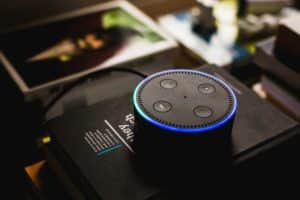
Smart assistants are tech devices, like phones, portable screens, watches, and speakers that use software to perform verbally requested tasks.[1] Among the most popular are Alexa, Google Assistant, and Siri.
As of 2021, about 47% of smartphone users in the United States are Siri-equipped iPhone users.[2] In 2020, close to 70% of smart speaker users in the United States used Alexa-equipped Amazon Echos.[3] The prevalence of these two smart assistants has created an encyclopedia of knowledge accessible just at the sound of our voices. In fact, Amazon promotes using Alexa for that very purpose.
Last year, Amazon ran an ad that showed a father asking Alexa what year Pompeii was destroyed. Once he receives his answer from Alexa, he shares it with his daughter who is clearly doing homework at the dining table. She then turns to ask him for the name of the volcano. He responds by turning back to the Alexa device. Although this ad intends to demonstrate a fun interaction between father and daughter, it also demonstrates how smart devices are being used to cheat on assignments and get easy answers.
Are kids using smart devices to cheat?
The modern generation of students is smart, and they know how to use the technological resources they are given. But they also know how to use them to cheat and get away with it.
A college student I interviewed recalls a run-in with a fellow classmate who had Siri turned on during a test in high school. “We were in the middle of a test in my AP European history class, and suddenly the iPhone of the girl sitting next to me begins speaking. You can hear Siri say, ‘The War of 1812 was…’ before she abruptly turned it off. The teacher immediately turned to her and said, ‘Make sure all phones are turned off please.’ The student turned bright red, so I think she definitely learned her lesson.”
This instance of cheating occurred in 2017. Since then, opportunities for cheating with smart devices are more common than ever. A recent high school graduate recalls taking tests during Covid-19. “The teachers would make us all have our cameras on, but they wouldn’t require us to be unmuted since it would be a distraction. Since they couldn’t hear us, anytime I would get stuck I would just ask the Alexa sitting in my room. Sometimes my friends and I would even Facetime each other and use my Alexa together whenever we felt confused. I honestly would never study for tests because I didn’t see a point when I could just get the information from Google so easily.”
For a student who is struggling, smart devices provide the perfect assistance for quick and easy answers to questions while simultaneously being practically untraceable. Other forms of cheating leave behind indicators or evidence, but smart assistants don’t.
It is a given that cheating is bad, but you may not know of the many downsides to cheating that go beyond academia. A recent study by a Harvard-Duke research team found that cheaters tended to engage in “self-deception,” meaning they would view their high performance as a sign of high intelligence, which may not actually be true. They see a high score, and even though they cheated, they believed that they are smart enough to have earned that score.[4] Another study found that when our kids cheat, they deprive themselves of the happiness that comes from independent accomplishment.[5] Smart devices are helpful tools, but when their assistance turns into dependence, kids begin to create a world where there actually at a disadvantage.
Take away or manage smart devices during class or homework time using resources from our Screen Safety Toolkit.
Advocate for your kids and communicate your preferences about tech integration with teachers and school administrators.
Offer valuable information and support for your learning community by suggesting a screen safety webinar from Dr. Bennett, our Screen Safety Expert, at your school and church.
Set up tech-free learning challenges for the whole family like a family game or trivia night.
Encourage creativity, curiosity, confidence, and a love of learning by offering a variety of fun educational materials and outings.
Optimize health tech integration for the whole family with the parents-only and family coaching videos from our Screen Safety Essentials Course.
Thanks to CSUCI intern, Katherine Carroll for researching kids cheating using smart assistant devices and co-authoring this article.
I’m the mom psychologist who will help you GetKidsInternetSafe.
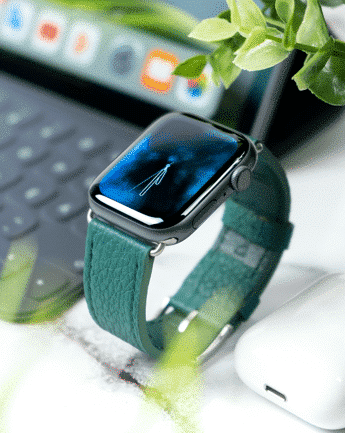
Imagine having a personal assistant on your wrist to help you respond to messages, make calls, and track all types of fitness data. The newest wearable technology, like smartwatches, can do all of that and more. Wearable technology is advancing so rapidly that we are consumed by it. But being consumed can have its downsides for some people. Is wearable negatively affecting your health or helping your productivity?
What is wearable technology?
Wearable technology has been around for decades. In the 1970s, the calculator wristwatch and the Sony Walkman were launched. In the 1980s, the first digital hearing aids came on the market. In current times, major advances have been made in the wearable technology. From Bluetooth headphones to activity trackers to the Apple Watch to Snapchat Spectacles, wearable tech is wildly popular and keeps growing[1]
One of the most popular forms of wearable technology is fitness trackers. Fitbit is one of the leading contributors to the wearable technology industry. In 2018 alone, the company sold over fourteen million activity trackers. Currently, Fitbit has several different devices on the market including a weight scale that graphs your week’s weight, wireless headphones, watch activity trackers, and even activity trackers designed specifically for children.[2]
We at GKIS believe in smart screen use. To that end, we offer smart courses, like our Connected Family Course and our Screen Safety Toolkit, to help families dial in on the sweet spot of fun learning with a reasonable balance between virtual and screen-free activities. We recognize that screen technology can be a benefit in communication, learning, storage, and efficiency. It can be entertaining, helpful, and motivating. That is why we don’t encourage screen-free parenting. Instead, we believe that education, awareness, insight, and smart planning are behind best-used principles. The same applies to wearable tech. By considering these pros and cons, you’ll be best equipped to dial in on what’s right for you and better informed to facilitate smart management with your kids.
The Pros of Wearable Technology
One major positive aspect of wearable technology is health and fitness tracking.
Activity trackers continuously collect users’ health and fitness data including the number of steps taken, heart rate, calories burned, foods eaten, and sleep quality, among other things.[3] Health data can be important for people managing health issues because the data generated can give you a better understanding of behavioral patterns and motivate you to stay on the right track toward health and fitness goals.
Documented data can also help you communicate more effectively with your doctor.
Personal safety is another positive aspect that wearable technology provides.
Many pieces of wearable technology automatically track GPS and can notify an emergency contact if it detects something that went wrong. For example, an Apple Watch can detect a hard impact and will notify emergency services in the area and then text the emergency contact.[4] This is an important safety feature that has the possibility to save lives. While not all wearable technology has the ability, many of the activity trackers record the GPS of the device.
The Cons of Wearable Tech
One of the cons of wearable technology is product marketing, specifically persuasive upsells for further products.
Upsell refers to offering consumers additional products or upgrades after they’ve already made a purchase.[5] Wearable technology upgrades include new and improved devices and access to additional services. For example, Fitbit offers a subscription service that offers daily insights about fitness habits, access to workout programs and coaching exercises, and a wellness report developed by doctors.[6] The features of the subscription program seem intriguing, but the reality is that many people will stop using the features but continue to pay for the subscription.
Another negative aspect of wearable technology is compulsive data tracking or excessive checking and tracking of data.
Dr. Bennett says she has treated clients who suffer from behaviors characteristic of exercise addiction with wearable tech enabling unsafe patterns.* She elaborates that, not only can data tracking become too much of a priority over other life activities, but users can also fall into a compare and despair cycle. Rather than measuring feelings of satisfaction and well-being and promoting a healthy body image, some people are vulnerable to comparing their data to a “standard” data set that is general for the entire population. Seeing how their data compares to the standard may trigger chronic anxiety because the user is duped into thinking they are not performing as well as they should. Wearable tech users must seek expert medical advice instead of comparing their data to a standard that may not apply to their specific characteristics.[7]
A third negative aspect of wearable technology is the notifications that cause a distraction to the user.
On most smartwatches, notifications appear for messages, emails, and health statistics. Receiving those notifications may cause the user to get distracted from what they were previously focusing on. When tasks are constantly getting interrupted by notifications, we lose our ability to prioritize tasks. We also burn more oxygenated glucose, our brain’s fuel, when we frequently toggle between tasks. This can leave users irritable, fatigued, and less productive overall.
We at GetKidsInternetSafe believe that interrupting notifications should only contain time-sensitive information that needs to be addressed immediately rather than ads urging you to worry, stress and spend more money.[8] Dr. Bennett encourages batching notifications. This means setting certain windows of time to browse through all notifications at once instead of interrupting daily activity several times a day.
Thank you to GKIS intern, Makenzie Stancliff for alerting us about the risks of wearable technology. Check out the Screen Safety Toolkit for information on safety systems and apps and tips on building your own screen safety toolkit for your children.
I’m the mom psychologist who will help you GetKidsInternetSafe.
*Although exercise addiction is not officially recognized as a behavioral addiction by the American Psychiatric Association, many clinicians see impairment due to excessive fitness tracking and exercise that significantly interfere with healthy life functioning.
Photo Credits
Photo by Daniel Korpai on Unsplash
Photo by Carlos Muza on Unsplash
Photo by Charlotte Karlsen on Unsplash
Works Cited
[1] The Past, Present and Future of Wearable Technology. (2016, November 17). Retrieved from https://online.grace.edu/news/business/the-past-present-future-of-wearable-technology/.
[4] Use Emergency SOS on your Apple Watch. (2019, September 19). Retrieved from https://support.apple.com/en-us/HT206983#.
[5] Upsell. (n.d.). Retrieved from https://www.thefreedictionary.com/Upsell.
[6] Langley, H. (2019, August 28). Fitbit Premium: How the new subscription service will get you fit and healthy. Retrieved from https://www.wareable.com/fitbit/fitbit-premium-guide-how-it-works-7534.
[7] Keller, B. (2014, November 12). Self-tracking, to the point of obsession. Retrieved from https://www.invivomagazine.com/en/corpore_sano/tendances/article/66/self-tracking-to-the-point-of-obsession.
[8] Spinks, R. (2018, October 8). One simple thing you can do for better mental health: turn off your push notifications. Retrieved from https://qz.com/quartzy/1416069/turn-off-push-notifications-for-better-mental-health/.




 Thanks to CSUCI intern, Katherine Carroll for researching kids cheating using smart assistant devices and co-authoring this article.